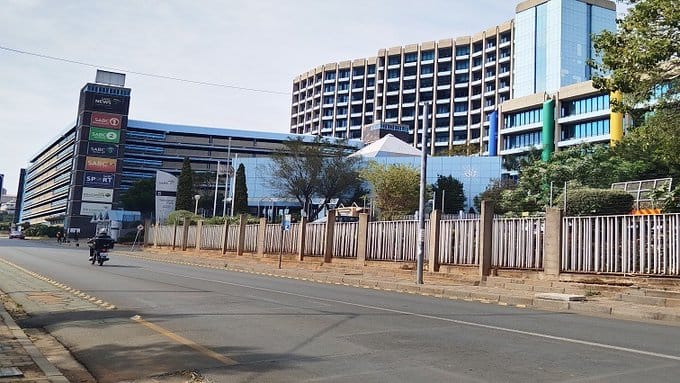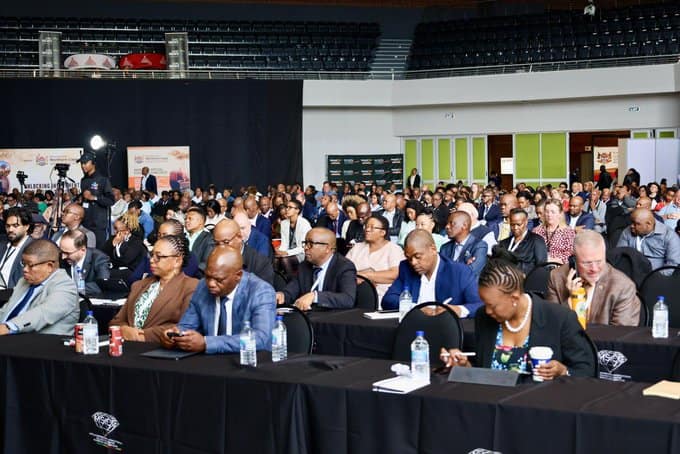
The sun rose over the Big Hole on Tuesday morning, casting its golden light across a city that has seen booms and busts, fortunes made and lost, dreams realized and shattered. But inside the Kimberley Diamond Pavilion, something different was happening. Something that felt, to many of the delegates streaming through the glass doors, like a new beginning.
The first day of the Northern Cape Investment and Jobs Summit 2026 had concluded on a high note, with provincial leaders, business executives, international investors, and community representatives united by a single message: the Northern Cape is open for business, and the time to invest is now.
By the time the final session ended and the last networking handshake was exchanged, the summit had already exceeded expectations. Preliminary figures released by the provincial government showed that investment commitments had topped R8 billion on the first day alone, with more announcements expected over the remaining two days of the summit. But the real story was not just the money. It was the mood.
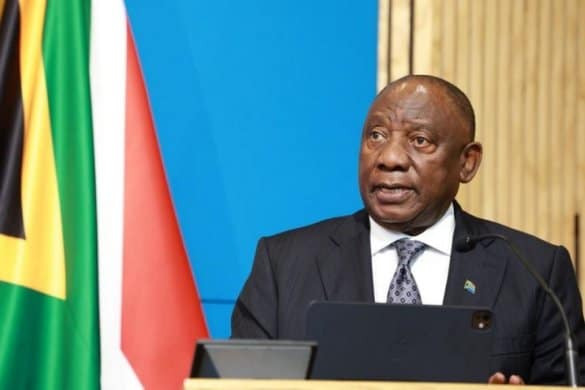
“There is a feeling in the air,” said Northern Cape Premier Zamani Saul, addressing a packed plenary hall in his keynote address. “It is a feeling of hope. It is a feeling of possibility. It is a feeling that the Northern Cape, after years of being overlooked, is finally having its moment. And we are not going to waste it.”
A Province on the Rise
The Northern Cape has long been South Africa’s forgotten province. The largest by land area but the smallest by population, it has often been dismissed as a backwater—a place to drive through on the way to Namibia or the Kalahari, not a place to stop and stay.
But that narrative is changing. The province is rich in natural resources, including diamonds, iron ore, manganese, and zinc. It has some of the best solar and wind resources in the world, making it a natural hub for renewable energy. It is home to the Square Kilometre Array (SKA) radio telescope, a cutting-edge scientific facility that puts the province on the global technology map. And it has a growing agricultural sector, producing everything from grapes and dates to wool and game.
“The Northern Cape is not a blank space on the map,” said provincial economic development MEC Abraham Vosloo. “It is a treasure chest. The resources are here. The potential is here. What has been missing is the investment, the infrastructure, the marketing. This summit is designed to change that.”
The summit, which runs from 14 to 16 April 2026, has brought together more than 500 delegates, including representatives from major corporations such as Anglo American, Vedanta, and Red Sands; international investors from China, Germany, and the United Arab Emirates; and community organizations from across the province.
The goal is ambitious: to secure R50 billion in investment commitments by 2030, creating 100,000 jobs and transforming the province’s economy from one dependent on primary extraction to one driven by manufacturing, technology, and services.
“It is a bold vision,” Saul acknowledged. “But we are a bold province. We are not afraid to dream big. And we are not afraid to work hard to make those dreams a reality.”
The Investment Commitments
The first day’s investment commitments were spread across several key sectors, reflecting the province’s diverse economic base.
- Renewable energy: A consortium of investors announced a R3 billion solar farm near Upington, which will generate 500 megawatts of electricity and create 1,500 construction jobs and 200 permanent positions.
- Mining and beneficiation: Vedanta Zinc International committed R2 billion to expand its Gamsberg mine and build a new zinc refinery, moving beyond raw ore extraction to value-added processing.
- Agriculture: A partnership between the provincial government and a Dutch agribusiness firm will invest R1.5 billion in a hydroponic vegetable facility near Douglas, creating 800 jobs and producing fresh produce for export to Europe.
- Tourism: The Kgalagadi Transfrontier Park will receive R800 million in upgrades, including new lodges, improved roads, and community tourism hubs, creating 600 jobs in the hospitality sector.
- Technology: The SKA project announced a R700 million expansion, including a new data processing center in Carnarvon, creating 400 high-skilled jobs for scientists, engineers, and technicians.
“This is just the beginning,” Vosloo said. “We have many more announcements to come. The pipeline is full. The interest is real. And the deals are being signed.”
The Jobs Imperative
At the heart of the summit is a single, urgent imperative: jobs. The Northern Cape has an unemployment rate of 27%, higher than the national average, and youth unemployment is even worse. For the young people of Kimberley, Upington, Springbok, and De Aar, the summit represents a chance—perhaps the best chance in a generation—to find work and build a future.
“I have a degree in electrical engineering,” said Thabo Molefe, a 26-year-old from Galeshewe township, who attended the summit’s youth job fair. “I graduated two years ago. I have applied for hundreds of jobs. I have had maybe five interviews. Nothing. I am here because I heard there are companies looking for people like me. I am hoping. I am praying. I am ready.”
The summit includes a dedicated job fair, where companies are conducting on-the-spot interviews and making conditional job offers. By the end of the first day, more than 200 young people had received job offers, with thousands more registered in the database for future opportunities.
“We cannot solve unemployment overnight,” Saul said. “But we can make a dent. We can show young people that there is hope. We can give them a reason to stay in the province instead of leaving for Gauteng or the Cape. That is what this summit is about.”
The Provincial Strategy
The summit is the centerpiece of the Northern Cape’s new economic development strategy, known as “Vision 2030.” The strategy, developed over two years of consultation with business, labor, civil society, and communities, identifies five key pillars for growth:
- Energy: Positioning the Northern Cape as South Africa’s renewable energy capital, leveraging its world-class solar and wind resources to attract investment in generation, storage, and transmission.
- Mining and beneficiation: Moving beyond raw ore exports to value-added processing, including refining, smelting, and manufacturing, to capture more of the value chain within the province.
- Agriculture: Expanding irrigated agriculture along the Orange River, developing new crops for export markets, and investing in agro-processing to create jobs and reduce food imports.
- Tourism: Promoting the province’s unique natural attractions—the Kalahari, the Augrabies Falls, the Namaqualand flower route—and developing the infrastructure to support a growing visitor economy.
- Technology and innovation: Building on the SKA and other scientific facilities to create a tech hub in the province, attracting startups, data centers, and research institutions.
“These are not pipe dreams,” Vosloo said. “These are achievable goals. We have the resources. We have the land. We have the people. What we need is the investment. That is why we are here.”
The Community Voice
The summit has not been without its critics. Some community organizations have expressed concern that the investment push will benefit large corporations at the expense of ordinary people, or that the environmental costs of mining and energy development will be borne by local communities.
“Investment is good,” said Nomsa Dlamini, a community activist from Pofadder, speaking at a side event on sustainable development. “But investment must benefit the community. It must create jobs for our people. It must respect our land. It must not pollute our water. We have seen too many mining companies come, take what they want, and leave us with nothing. We cannot allow that to happen again.”
Premier Saul acknowledged the concerns and pledged that the provincial government would hold investors accountable.
“We are not signing blank checks,” he said. “Every investment agreement includes strict conditions on local hiring, environmental protection, and community benefits. We will monitor compliance. We will enforce the rules. And if companies break their promises, they will face consequences.”
The summit also includes a “Community Voices” track, where residents can raise concerns, ask questions, and provide input on investment projects. Organizers say the track has been well-attended, with lively debates on issues ranging from land rights to water usage to housing.
The International Dimension
The Northern Cape Investment and Jobs Summit has attracted significant international attention, with delegations from several countries attending either in person or virtually.
The Chinese delegation, led by the ambassador to South Africa, expressed interest in renewable energy and infrastructure projects. The German delegation focused on green hydrogen and automotive components. The UAE delegation explored opportunities in logistics and agriculture.
“South Africa is a strategic partner for China,” said Ambassador Wu Peng. “The Northern Cape, with its resources and its location, is of particular interest. We are here to explore concrete opportunities for cooperation.”
The international interest is a testament to the province’s growing reputation as a destination for investment. But it also brings risks. Some delegates expressed concern about the potential for foreign companies to extract value without transferring skills or technology to local workers.
“We need to be careful,” said trade union representative David Ndlovu. “Foreign investment is welcome, but it must be on our terms. We need technology transfer. We need skills development. We need joint ventures with local companies. Otherwise, we are just swapping one form of exploitation for another.”
The Youth Perspective
For the young people of the Northern Cape, the summit is personal. Many have grown up watching their parents struggle with unemployment, their siblings leave for cities in search of work, their communities hollowed out by the decline of mining and agriculture.
“I am 23 years old,” said Lerato Mkhwanazi, a student at Sol Plaatje University in Kimberley. “I have lived in this province my whole life. I love it here. But I cannot stay if there are no jobs. I cannot build a life here if there are no opportunities. This summit gives me hope. But hope is not enough. I need action.”
Lerato attended the summit’s youth leadership program, where she participated in workshops on entrepreneurship, digital skills, and financial literacy. She also met with representatives from several companies that are hiring.
“I had a good conversation with a company that does solar installation,” she said. “They said they are looking for young people with technical skills. I have some of those skills. I am going to follow up. Maybe this will lead to something. Maybe this is my chance.”
The Infrastructure Challenge
The summit’s ambitious goals cannot be achieved without significant investment in infrastructure. The Northern Cape is vast and sparsely populated, with long distances between towns and limited road, rail, and port capacity.
“The infrastructure is a constraint,” acknowledged Vosloo. “We need better roads. We need more rail capacity. We need upgraded ports. We need reliable electricity and water. These are not cheap. But they are essential. Without them, the investment will not come.”
The provincial government has identified several priority infrastructure projects, including the upgrading of the N14 and N12 highways, the expansion of the Sishen-Saldanha iron ore rail line, and the development of a new port at Boegoebaai on the west coast.
“Boegoebaai is a game-changer,” Vosloo said. “It will give us direct access to international markets for our minerals, our agricultural products, and our manufactured goods. It will reduce our dependence on Durban and Cape Town. It will create thousands of jobs. It is a priority.”
The port project, which has been under discussion for years, has received renewed impetus from the investment summit. Several international investors have expressed interest in partnering with the government to fund and build the facility.
The Role of Small Business
While the summit’s headline figures focus on large-scale investments from major corporations, organizers emphasize that small and medium-sized enterprises (SMEs) are also a priority.
“We cannot build an economy on big business alone,” said Saul. “We need a vibrant SME sector. We need entrepreneurs. We need innovators. We need people who will start small and grow big. That is where most jobs come from.”
The summit includes a dedicated SME track, with workshops on access to finance, business registration, marketing, and digital transformation. A “pitch competition” gave 10 small business owners the opportunity to present their ideas to a panel of investors, with the winner receiving R500,000 in seed funding.
The winner was Nomsa Dlamini (no relation to the activist), a 34-year-old mother of two from Kuruman who runs a small bakery. She plans to use the funding to buy new equipment, hire two employees, and expand her delivery area.
“I started this business in my kitchen,” she said, wiping away tears as she accepted the award. “I never dreamed I would be standing here. This is a miracle. This is proof that small people can do big things. Thank you. Thank you. Thank you.”
The Environmental Imperative
The Northern Cape is home to some of South Africa’s most fragile and beautiful ecosystems: the Kalahari Desert, the succulent Karoo, the Orange River, the Namaqualand flower fields. Any economic development must be balanced against the need to protect these natural treasures.
“We cannot repeat the mistakes of the past,” said environmental activist Mpho Letsoalo, speaking at a panel on sustainable development. “We cannot destroy our environment in the name of growth. The mining companies must be held accountable. The energy projects must be planned carefully. The agriculture must be sustainable. Otherwise, we will have jobs but no water. We will have investment but no future.”
The provincial government has committed to a “green growth” approach, requiring all investment projects to undergo rigorous environmental impact assessments and to adhere to strict sustainability standards.
“We are not choosing between jobs and the environment,” Saul said. “We can have both. We must have both. That is the only way to build a future that lasts.”
The First Day’s Verdict
As the sun set over Kimberley on Tuesday evening, the delegates streamed out of the Diamond Pavilion, tired but energized. The first day of the Northern Cape Investment and Jobs Summit 2026 had been a success by any measure: R8 billion in commitments, 200 job offers, hundreds of connections made, and a palpable sense of momentum.
But everyone in the room knew that the real work begins now. Investment commitments must be converted into actual projects. Job offers must be accepted and filled. Infrastructure must be built. Skills must be developed. The vision must become reality.
“We have set the bar high,” Vosloo said. “Now we must clear it. That is not going to be easy. There will be obstacles. There will be setbacks. There will be people who doubt us. But we are not quitters. We are Northern Cape. We are tough. We are resilient. We are determined. And we will succeed.”
A Final Word
As the last of the delegates departed, Premier Saul stood alone for a moment on the balcony of the Diamond Pavilion, looking out over the city of Kimberley. The Big Hole glistened in the fading light, a reminder of the province’s rich history. But Saul was not thinking about the past. He was thinking about the future.
“Today was a good day,” he said quietly. “But there are many more days to come. We cannot rest. We cannot celebrate too much. We have to keep working. We have to keep pushing. The people of this province deserve nothing less.”
He turned and walked back inside, where his team was already preparing for day two.
The Northern Cape Investment and Jobs Summit 2026 continues. And the province’s bold vision for 2030 is just beginning to take shape.
About The Author