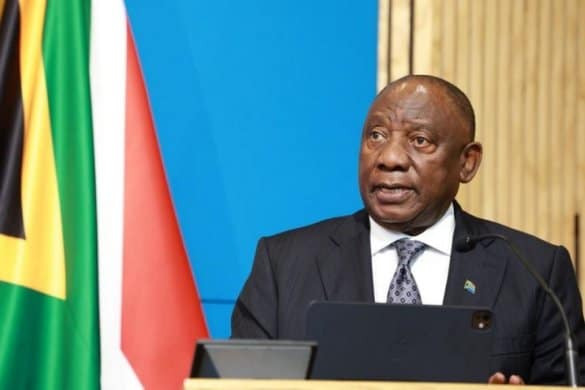
Under the late afternoon light filtering through the glass atrium of the Cape Town International Convention Centre, President Cyril Ramaphosa stepped up to the podium with the measured confidence of a leader who has spent years laying tracks for a high-speed train. Before him sat a room that bridged worlds: hedge fund managers from London and New York, mining executives from Johannesburg and Perth, tech venture capitalists from Silicon Valley, and pension fund trustees from Soweto and Sandton.
The occasion was the government’s annual investment conference, but this year, the tone was different. Gone were the general pleas for confidence or the vague promises of “better days ahead.” Instead, Ramaphosa delivered what many in the room later called an invitation to co-ownership.
“South Africa is no longer a project to be observed from a distance,” the President said, adjusting his spectacles. “It is a partnership to be built, hands-on, from the ground up. And I am not speaking only to those who already bank here. I am speaking to every investor who has ever wondered: Can my capital truly shape a nation?“
He acknowledged the skepticism that has trailed South Africa’s economy over the past decade—load-shedding, logistics bottlenecks, crime, and policy uncertainty. But then he pivoted sharply. “The reforms you have been asking for—energy, freight, visas, crime-fighting units—are no longer promises on paper. They are operational reality.”
Ramaphosa pointed to the country’s new electricity market, which now allows private producers to sell power directly, bypassing Eskom’s monopoly. He cited the Transnet recovery plan, backed by private sector participation at Durban and Ngqura ports. He mentioned the e-visa system for 34 new countries and the rapid deployment of the Border Management Authority.
“These are not election-year gimmicks,” he said, his voice firming. “These are structural shifts. And here is the most important thing I will say today: This reform agenda is no longer dependent on who sits in this chair. “
A ripple of murmurs passed through the audience. It was a striking admission—and an even more striking promise. Ramaphosa, who has not yet confirmed whether he will seek a second term as president of the ruling African National Congress (ANC) next year, was effectively decoupling the nation’s economic recovery from any single leader or political faction.
“We have embedded the reforms into legislation, into independent authorities, into multi-year infrastructure pipelines,” he explained. “Whether it is me, or another president after 2026 or 2029, the direction is set. Private capital will have a permanent seat at the policy table.”
To seal the offer, the President unveiled a new “Investor Advisory Council 2.0″—not a ceremonial body, but a statutory committee with binding review powers over regulations affecting infrastructure, energy, and logistics. Its members will include at least five CEOs from global asset managers and three representatives from labor and civil society.
“We don’t want your money and then your silence,” Ramaphosa concluded. “We want your expertise, your impatience, your accountability. Help us design the special economic zones. Help us rewire the rail network. Help us build the city of the future in the Lanseria smart precinct. Be partners, not spectators.”
Outside the convention center, the wind whipped off Table Mountain, carrying the salt of two oceans. Inside, phones buzzed with analysts parsing his words. But for a few hours, at least, the mood among the 1,500 delegates was cautiously electric.
One London-based fund manager, who asked not to be named, summed it up: “He basically told us: The politics will be messy, but the economics now has guardrails. Come build. That’s not a sales pitch. That’s a dare. And some of us will take it.”
Whether the partnership delivers jobs and growth remains unwritten. But as the sun set over the Mother City, Cyril Ramaphosa had done something rare: he had turned a speech into a shared risk, and a shared risk into a story that investors are still talking about.
About The Author