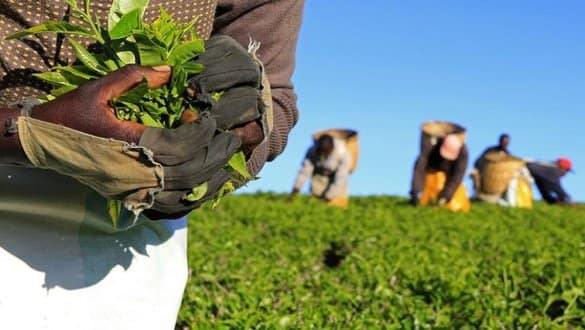
The first light of dawn spills over the jacaranda trees of northern Harare, but inside a sprawling fresh-produce packaging facility, the day began hours ago. By 4 a.m., the loading bays were already rattling with the arrival of refrigerated trucks from farms across Mashonaland. By 5 a.m., the sorting lines hummed to life. And by 6 a.m., about 30 women in green dust coats and matching caps stand shoulder to shoulder, their gloved hands moving with a rhythm that is part choreography, part instinct.
Their task: grading sugar snap peas destined for supermarket shelves in London, Paris, Berlin, and Amsterdam.
“These peas don’t wait,” says Prisca Moyo, 34, a line supervisor with nine years on the job. She holds up a pea pod to the light, inspecting it for the faintest blemish. “If it’s too yellow, it stays. If the curve is wrong, it stays. Only the perfect ones go to Europe. They pay for perfection, so we give them perfection.”
What happens inside this facility—one of a growing network of export-oriented packhouses across Zimbabwe—tells a larger story. While the country’s economy has struggled with inflation, currency volatility, and infrastructure gaps, one sector has quietly boomed: fresh horticulture exports. And at the heart of that boom are women like Prisca, who have turned seasonal farm work into a professional pipeline that stretches from Harare’s industrial suburbs directly to European dinner plates.
The Green Revolution That Started in a Crate
Zimbabwe’s fresh-produce export industry wasn’t always this polished. A decade ago, smallholder farmers grew sugar snap peas, snow peas, and fine beans mostly for regional markets. Packaging was rudimentary. Cold chains were unreliable. European buyers looked elsewhere—to Kenya, Ethiopia, and Morocco.
But a quiet transformation began around 2018, when a handful of Zimbabwean agribusinesses partnered with Dutch and British supermarket cooperatives. The deal was simple: invest in food safety certifications (GlobalG.A.P., Sedex, BRC), install cold storage, train workers in hygiene and traceability, and in return, gain access to premium winter markets where Zimbabwe’s temperate climate gave it a natural production advantage during Europe’s off-season.
Today, Zimbabwe exports over 15,000 metric tons of fresh vegetables annually to the European Union, with sugar snap peas and fine beans leading the charge. The industry earns roughly $50 million in foreign currency each year—a modest sum compared to tobacco or gold, but a vital source of rural employment and female economic empowerment.
“This is not charity. This is trade,” says Tinashe Chikwanha, operations manager at the Harare packhouse. “European buyers don’t care about our politics. They care about food safety, consistency, and delivery windows. And our women workers have become the best graders on the continent.”
The Women in Green Dust Coats
On the sorting line, the hierarchy is female. At the top are the “expert graders”—women who have completed specialized training modules in EU quality standards. Below them are packers, quality control checkers, and finally the trainee sorters. Nearly every position is held by women.
Why women? Industry veterans cite several reasons: attention to detail, patience for repetitive tasks, and a cultural pattern in which Zimbabwean women have long managed post-harvest processing on family farms. But there is a harder economic truth, too. With formal sector jobs scarce and urban unemployment high, these packhouse positions offer something rare: a stable wage, transport allowances, and a pathway to certification that is recognized across the Southern African region.
“I started as a cleaner here six years ago,” says Memory Nyoni, 29, now a shift supervisor earning $350 per month plus performance bonuses. “They sent me for training in Kenya on cold chain management. Now I teach new hires. My daughter is in her second year at the University of Zimbabwe studying food science. That is the real export—not just peas, but opportunity.”
Memory is one of roughly 8,000 women employed directly in Zimbabwe’s export horticulture supply chain, according to industry estimates. Indirectly—through transport, packaging materials, and smallholder outgrower schemes—the number swells to over 30,000.
The Race Against the Clock
By 9 a.m., the morning rush is peaking. Workers open new crates of sugar snap peas harvested at dawn from farms in Beatrice, Norton, and Mazowe. Each crate is stamped with a farm code and harvest time. Traceability is everything: if a European supermarket finds a quality issue, they can trace the problem back to a specific field and shift within hours.
“The clock is the hardest boss,” says 26-year-old Ropafadzo Mutsvairo, a grader with three years of experience. “From the moment the pea is picked, we have about 48 hours to get it packed, chilled, and on a plane to Amsterdam. After that, the sugar turns to starch. The crispness goes. So we don’t stop.”
The packhouse operates two shifts, six days a week during the peak season (April to November). On the busiest days, over six tons of fresh produce pass through these hands. Each pea pod is turned three times—front, back, and side—before being approved. Rejected pods are not wasted; they are diverted to local markets or processing for frozen vegetables.
Challenges on the Horizon
Despite the success, the women know the industry is fragile. Air freight costs have risen sharply since the pandemic. Fuel shortages in Zimbabwe sometimes delay deliveries to the airport. And the European market is fickle: a food safety scare in another exporting country leads to blanket testing that hurts everyone.
“There are days when the buyer rejects a whole container because the temperature logged one degree too high during transit,” Prisca says. “That container is still our work. We feel it in our bonuses. But we also learn. Every mistake makes us stricter.”
Then there is the issue of expansion. Industry leaders say Zimbabwe could double its export volumes if the government stabilizes foreign currency allocation for agricultural inputs and streamlines border inspections for refrigerated trucks. But for now, the women on the line focus on what they can control: speed, hygiene, and an unbroken cold chain.
Beyond Peas: A Silent Revolution
As the morning shift breaks for tea, the women gather in a small courtyard, unwrapping sadza and relish from plastic containers. The conversation is not about Europe or export targets. It is about school fees, church fundraisers, and the rising price of cooking oil.
But something has changed in these women over the past five years. They talk differently now—with the confidence of people who know their labor is valued across continents. Several have opened savings clubs (known as mukando in Shona). A few have bought small plots of land. One has started exporting dried mangoes to the diaspora in the United Kingdom.
“I am not just packing peas,” says Ropafadzo, wiping her hands on her green dust coat. “I am packing my own future. Every pod that lands in a London kitchen has my name on it. They don’t know me. But I know they trust me. That trust is worth more than the currency.”
Outside, a truck revs its engine, bound for the airport. The afternoon shift files in, replacing the morning crew. The grading lines resume their steady hum. And somewhere over the Indian Ocean, a cargo plane climbs toward Europe, carrying not just sugar snap peas—but the quiet, stubborn proof that Zimbabwe’s women can feed the world, one perfectly curved pod at a time.
About The Author