The name Shebeshxt has become a lightning rod in South African popular culture. To his legions of fans, he is a raw, unapologetic voice of the streets—a musician who turned pain into poetry and poverty into platinum records. To his critics, he is a violent, lawless figure whose growing rap sheet reveals a pattern of thuggery that should not be celebrated. On Wednesday, inside the packed Polokwane Magistrate’s Court, the two versions of Shebeshxt collided once again.
The 31-year-old musician, whose legal name is Lehlogonolo Mataboge but is known universally by his stage name, appeared before Magistrate Nthabiseng Mofokeng for what was supposed to be a routine procedural hearing. Instead, the state dropped a bombshell: a consolidated indictment adding multiple new charges to the already substantial case against him. Shebeshxt now faces a staggering 20 counts, ranging from assault and firearm offenses to a previously undisclosed robbery dating back to 2022.
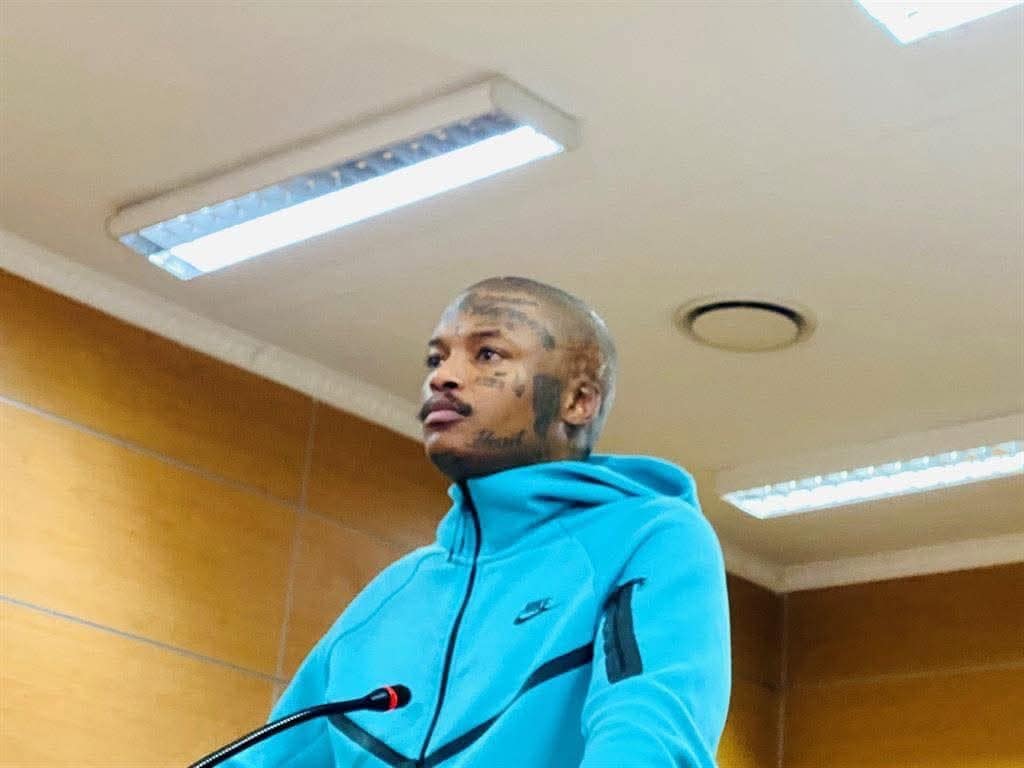
The musician, arrested in November 2025 in connection with a shooting incident, sat in the dock with his arms crossed, dressed in a black tracksuit and sneakers. His signature braids were pulled back from his face, revealing a jaw clenched in frustration. Behind him, the public gallery was packed with supporters—young men and women wearing t-shirts emblazoned with his face, some holding placards reading “Free Shebeshxt” and “Stop the Witch Hunt.”
Outside the courthouse, a smaller group of critics gathered, though they kept their distance. One woman held a sign that read: “20 Charges Is Not a Mistake. He Is a Danger.”
The case, already a cause célèbre in Limpopo and beyond, has become a referendum on fame, violence, and accountability in the South African music industry. And with 20 charges now on the docket, the stakes have never been higher.
The New Charges: A 2022 Robbery Surfaces
The most significant addition to the indictment is a charge of robbery with aggravating circumstances, allegedly committed in 2022—three years before Shebeshxt’s November 2025 arrest. According to the state’s summary of facts, the musician and several other individuals, who have not been named, allegedly confronted a victim in a township outside Polokwane.
The victim, whose identity is protected, was reportedly walking home when a vehicle pulled up alongside him. Shebeshxt and his companions allegedly got out, assaulted the victim, and took his cellphone, a car battery he was carrying, and his cap. Before fleeing, they allegedly slashed the tires of a nearby vehicle believed to belong to the victim’s relative.
“The accused and his co-perpetrators acted with common purpose,” read the state’s summary, presented by prosecutor Advocate Lerato Mokoena. “They used violence to deprive the victim of his property. They caused damage to additional property. This is not a minor offense. This is robbery, which carries a minimum sentence of 15 years on a first conviction.”
Shebeshxt’s legal team did not object to the addition of the charges—a tactical decision, sources said, to avoid the appearance of obstruction. However, they raised concerns about calculation errors in the state’s documents and repeated delays in accessing the full docket.
“We are not opposing the consolidation of charges,” said defense attorney Thabo Ndlovu outside the court. “Our client has nothing to hide. But we are concerned about the state’s readiness. There are errors in the calculations. There are missing pages in the docket. We have been asking for a complete set of documents for weeks. We still do not have them. That is not fair. That is not justice.”
Magistrate Mofokeng acknowledged the defense’s concerns and ordered the state to provide a complete, error-free docket within seven days. “The accused has a right to a fair trial,” she said. “That includes the right to know the case against him. The state must comply.”
The Shooting Incident: What Started It All
The November 2025 arrest that began this legal saga stemmed from a shooting incident at a tavern in Ga-Rankuwa, north of Pretoria. According to police reports, Shebeshxt allegedly fired multiple shots during an altercation with another patron. No one was hit, but bullets struck the tavern’s ceiling and a nearby parked car. The musician fled the scene but was arrested at his home the following morning.
Initially charged with attempted murder, reckless discharge of a firearm, and possession of an unlicensed firearm, Shebeshxt has maintained his innocence. His legal team has argued that he was acting in self-defense after being threatened by a group of men who had been harassing him and his entourage.
“My client was the target of an attack,” Ndlovu said at the time of the arrest. “He fired warning shots to protect himself. He did not aim at anyone. No one was injured. These are not the actions of a violent criminal. These are the actions of a man who feared for his life.”
The state has rejected that narrative, pointing to witness statements that allegedly describe Shebeshxt as the aggressor. The tavern owner, who has since closed his business due to the incident, testified in a preliminary hearing that the musician was “angry and drunk” and that no one threatened him before he started shooting.
“He just pulled out the gun,” the owner said. “People screamed. They ran. He laughed. That is the kind of person he is.”
The Bail Battle: Three Denials and Counting
Wednesday’s hearing was also another chapter in Shebeshxt’s ongoing—and so far unsuccessful—fight for bail. Since his arrest in November, he has applied for bail three times. Three times, the court has denied him.
The grounds for denial have been consistent: the state argues that Shebeshxt is a flight risk, that he has access to substantial resources (including a reported R2 million in royalties from his music streaming), that he has shown a willingness to intimidate witnesses, and that his release would endanger public safety.
“The accused is not an ordinary citizen,” Prosecutor Mokoena argued during the second bail hearing in January. “He is a wealthy, famous, and connected individual. He has the means to leave the country. He has the influence to interfere with witnesses. He has demonstrated a pattern of violent behavior. He must remain in custody pending trial.”
Shebeshxt’s defense has countered that the state’s case is weak, that the musician has strong community ties, that he has surrendered his passport, and that he is suffering from serious health issues that cannot be adequately treated in prison.
Those health issues are not insignificant. In late 2024, just months before his arrest, Shebeshxt was involved in a horrific car crash on the R71 outside Polokwane. The accident, which made national headlines, killed his four-year-old daughter, Katlego, and left the musician with severe injuries, including multiple fractures, internal bleeding, and traumatic brain injury.
“I almost died,” Shebeshxt told the court during his first bail application, speaking through tears. “My daughter did die. I am still recovering. I cannot walk properly. I need medical attention. Prison cannot give me what I need.”
Magistrate Mofokeng acknowledged the tragedy of the crash but noted that the musician’s health had reportedly stabilized. “The court is sympathetic to the accused’s loss,” she said. “No parent should bury a child. But that tragedy does not erase the charges before this court. The accused has received medical care while in custody. The department of correctional services has confirmed that his needs can be met.”
The defense has indicated that it will appeal the third bail denial to the High Court, arguing that the magistrate erred in her assessment of both the flight risk and the health grounds. That appeal is expected to be heard within the next month.
The Pattern of Violence: Critics Speak
While Shebeshxt’s supporters see a man being persecuted by an overzealous state, his critics see a damning pattern of behavior. The 20 consolidated charges, they argue, tell the story of a man who has repeatedly used violence and intimidation to get what he wants.
“First it was the 2022 robbery,” said criminal justice analyst Lisa Ndlovu (no relation to the defense attorney). “Then there were multiple assault charges, which seem to have been settled or withdrawn. Then the shooting. And now we learn there are additional firearm offenses. This is not a victim. This is a repeat offender who happens to make popular music.”
Women’s rights groups have also raised concerns about the nature of some of the assault charges, which reportedly involve female victims. While the state has not released details to protect the complainants’ identities, sources indicate that at least two of the assault counts relate to alleged domestic incidents.
“We cannot look away just because he is famous,” said Thandiwe Khumalo of the Progressive Women’s Movement. “If anything, fame should mean greater scrutiny. Musicians are role models. When a musician with 20 charges walks free, what message does that send to young people? That violence pays? That fame is a get-out-of-jail-free card?”
The Fans: Unwavering Support
But for every critic, there are dozens of fans who see Shebeshxt as a hero—not despite his legal troubles, but almost because of them. His music, which blends elements of hip-hop, amapiano, and street rap, often glorifies a hard, dangerous life. His lyrics speak of betrayal, revenge, survival, and the codes of the street. To his fans, his legal battles are proof that he is authentic—that he lives what he raps.
“Y’all don’t understand,” said Kabelo Mahlatse, a 22-year-old fan who traveled from Seshego to attend Wednesday’s hearing. “Shebeshxt comes from the same place we come from. He ain’t no politician. He ain’t no pastor. He is a real one. The system is trying to break him because he refuses to be fake. We stand with him. Always.”
Outside the courthouse, a small convoy of cars with Shebeshxt stickers on their windows circled the block, honking their horns. A group of young men sold unofficial merchandise—t-shirts, caps, and face masks bearing the musician’s image. The atmosphere was part protest, part street festival.
“Shebeshxt is the people’s champion,” said another fan, 19-year-old Lerato Phiri. “They threw the book at him, 20 charges, hoping he would break. But he’s still standing. That’s why we love him.”
The Daughter’s Shadow
Throughout the legal proceedings, one figure has loomed invisibly over every hearing: Katlego, Shebeshxt’s four-year-old daughter, who died in the 2024 crash. The musician has spoken publicly about the accident only once, in a tearful Instagram live video weeks after it happened.
“I wake up every day and for one second, I forget,” he said, his voice cracking. “Then I remember. And I want to die too. But I can’t. I have to live for her. I have to make her proud. Even if the world hates me, I have to keep going.”
The crash occurred when Shebeshxt’s vehicle collided with a truck on the R71. The musician was driving. Police reports indicated that speed and alcohol may have been factors, though no charges were filed in connection with the accident. The musician has always maintained that the truck crossed into his lane.
Whatever the cause, the tragedy has undeniably shaped public perception of Shebeshxt. For many, he is not just an accused criminal but a grieving father—a man who has already lost the most important thing in his life.
“That crash destroyed him,” said music industry insider and friend of the musician, who spoke on condition of anonymity. “He is not the same person he was before. The music has changed. His whole energy has changed. He is angry, yes. But he is also sad. Deeply, profoundly sad. People forget that.”
The May 28 Deadline
The case has been postponed to May 28 for further consultations between the defense and the state. By that date, the state must provide a complete docket. The defense must indicate whether it intends to challenge any of the charges on procedural grounds. And the magistrate will set a date for the bail appeal hearing.
In the meantime, Shebeshxt remains in custody at the Polokwane Correctional Centre, where he has been held since November. His legal team has requested that he be transferred to a facility closer to a specialist hospital for his ongoing medical treatment, but that request has not yet been granted.
“We will continue to fight,” defense attorney Ndlovu said. “The presumption of innocence is not a slogan. It is a constitutional right. Our client has not been convicted of anything. He deserves bail. He deserves proper medical care. He deserves a fair trial. We will not stop until he gets all three.”
A Nation Divided
As the sun set over Polokwane and the crowds dispersed, the fundamental question remained unresolved: Who is Shebeshxt? A violent criminal finally facing justice? A misunderstood artist being targeted by a system that fears his influence? A grieving father struggling to hold his life together? All of the above?
Perhaps the answer is different for every South African. In the taxi ranks, in the shebeens, on social media, the arguments rage. Some see the 20 charges as proof of guilt. Others see them as proof of persecution. Few are neutral.
What is undeniable is that Shebeshxt’s case has become a flashpoint in a larger national conversation about fame, violence, accountability, and redemption. The musician may be in a prison cell, but the debates he has sparked are freer than ever.
And on May 28, when the court reconvenes, the cameras will be there. The fans will be there. The critics will be there. And Shebeshxt—whether from the dock or, if his appeal succeeds, from a seat in the gallery—will be there too.
The story is not over. It may not even be at its halfway point. But one thing is certain: 20 charges or not, Shebeshxt is not fading quietly into the night. His music still plays. His fans still cheer. And his fight—against the state, against his demons, against the ghosts of his past—continues.
About The Author