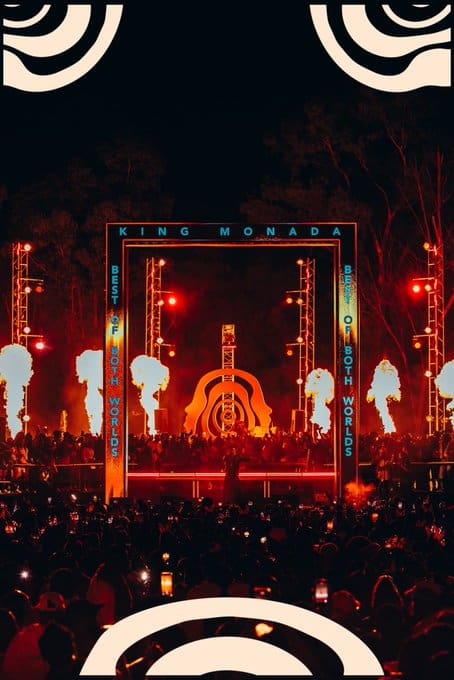
Barely 72 hours after the curtains closed on what many are calling the most innovative dance music event of the year, renowned DJ and producer Shimza has thrown fuel on an already burning fire. Fresh off the electric success of BOBWLD’s April 26 “Amapiano vs. Lekompo” showdown in Pretoria, the charismatic artist took to social media on Wednesday to float a proposal for a seismic sequel: a December 16, 2026 edition that would pit Lekompo against Gqom on one stage, while pitting Afrohouse against Deep House on another. The reaction was instantaneous, polarizing, and massive—over 3,300 likes and 200,000 views within hours, proving that South Africa’s insatiable appetite for genre warfare shows no signs of cooling.
“BOBWLD is not a one-night stand,” Shimza wrote in the now-viral post, accompanied by a rough mock-up of a two-stage layout. “April was the opening ceremony. December 16? That’s the final battle. Stage 1: Lekompo vs. Gqom — the low-end war. Stage 2: Afrohouse vs. Deep House — the soul clash. Reconciliation Day has never sounded this dangerous. Who’s ready?”
For the uninitiated, BOBWLD—short for “Battle of the Worlds”—is Shimza’s ambitious live-event concept that deliberately eschews harmony in favour of head-to-head genre confrontations. The April 26 inaugural event at a sold-out venue in Pretoria’s eastern suburbs featured Amapiano selectors trading blows with Lekompo pioneers, each act given a 45-minute set to prove their genre’s supremacy. The result was a sweaty, chaotic, often brilliant celebration of South Africa’s fractured but fertile dance music landscape—and a clear signal that Shimza is positioning himself as not just a hitmaker, but a cultural curator willing to referee the nation’s most heated musical rivalries.
But the proposed December sequel is, in many ways, a bolder and riskier gambit.
The Lineup Labyrinth: What Shimza Is Proposing
The December 16 concept—chosen deliberately to fall on the Day of Reconciliation, a public holiday meant to bridge South Africa’s divisions—envisions two distinct stages operating simultaneously, each hosting a head-to-head genre battle.
Stage 1: Lekompo vs. Gqom
This is where things get visceral. Lekompo, the hyper-localized subgenre that emerged from Pretoria’s townships (particularly Atteridgeville and Mamelodi), is characterized by its fast-paced, percussive, almost frantic energy—a direct descendant of Bacardi house but angrier, faster, and more defiant. Gqom, by contrast, is Durban’s minimalist, bass-heavy export: slow, menacing, built on triplet rhythms and cavernous reverb. The clash is not just musical but geographic (Gauteng vs. KwaZulu-Natal) and cultural (the raw immediacy of the capital vs. the industrial swagger of the port city).
“The two sounds could not be more different,” explained music journalist and genre specialist Thabo Mkhabela. “Lekompo attacks you. Gqom stalks you. Putting them on the same stage in a battle format is like matching a sprinter against a marathon runner. Who wins? It depends on the crowd, the sound system, the time of night. That tension is exactly why it would be incredible television—or in this case, incredible live entertainment.”
Stage 2: Afrohouse vs. Deep House
Meanwhile, on the second stage, the battle shifts from primal to cerebral. Afrohouse—the genre that has become South Africa’s most successful dance music export of the past decade, blending traditional African percussion and vocal samples with four-on-the-floor kick drums—would face off against Deep House, the smoother, more melodic, European-influenced cousin that dominated SA’s underground scene in the early 2010s. While Afrohouse artists like Black Coffee, Da Capo, and Shimza himself have achieved global stadium status, purists argue that Deep House offers greater emotional range and sonic sophistication.
The proposed pairing has drawn sharp comparisons to the legendary “Deep House vs. Afrohouse” debates that have raged on Twitter and in taxi ranks for years. “This is the big brother fight,” said DJ Zinhle, who was not involved in the proposal but commented on Shimza’s post. “Amapiano vs. Lekompo was fun. This one? This one is personal. People have built careers on defending one side or the other. December is going to be a battlefield.”
The Amapiano Absence: A Deliberate Snub or Strategic Pivot?
Notably absent from Shimza’s proposal is the elephant in the room: Amapiano, the genre that has dominated South African airwaves, club circuits, and international playlists since 2019. Amapiano was the headliner of the April 26 event, sharing the billing with Lekompo. Its exclusion from the December proposal has not gone unnoticed—or unremarked upon.
Within hours of Shimza’s post, the comments section became a virtual battleground. “No Amapiano? That’s like a braai without meat,” wrote one user. Another countered: “Finally. Let other genres breathe. Amapiano is everywhere. Give us Gqom and Lekompo and let us dance.” A third accused Shimza of chasing trends rather than serving fans: “You used Amapiano to sell tickets in April. Now you drop it? Not cool.”
Shimza responded to the criticism in a follow-up comment, striking a diplomatic tone: “BOBWLD is about rotation. April was Amapiano vs. Lekompo. December is Lekompo vs. Gqom and Afrohouse vs. Deep House. Next year? Maybe Piano vs. Gqom. Or three stages. The goal is not to exclude anyone—the goal is to give every sound its moment in the fire. Be patient. The piano will return.”
But for some fans, patience is not an option. “Amapiano is the biggest sound in the country right now,” said talent manager and event promoter Lebo “LB” Mofokeng. “To have a major event on Reconciliation Day—a day about unity—without the genre that unites young people across race, class, and region feels like a missed opportunity. Shimza is brave, I’ll give him that. But bravery doesn’t always sell tickets.”
The Multi-Stage Headache: Logistical Nightmare or Next-Level Experience?
Beyond the genre debates, a more practical complaint has emerged: the hassle of multiple stages. Several fans pointed out that the April 26 event featured a single main stage, allowing attendees to witness every moment of the Amapiano vs. Lekompo clash without missing a beat. The two-stage proposal for December would force ticket-holders to choose—or spend the night jogging between arenas.
“Two stages means two overlapping battles,” wrote a user with the handle @GqomIsKing. “What if Lekompo vs. Gqom peaks at the same time as Afrohouse vs. Deep House? I have to pick a favourite? That’s not a battle of worlds. That’s a battle of my own FOMO.”
Shimza appeared to anticipate this criticism, noting in his original post that “runners and planners” would be needed to manage traffic between stages. But some fans went further, suggesting alternative formats. A popular thread proposed a single-stage, two-night event: December 15 for Stage 1, December 16 for Stage 2, with a “winner’s showdown” on Christmas Day. Another fan suggested a rotating stage design, where the two stages face each other and the DJs play alternately, allowing the crowd to simply turn around rather than relocate.
“Two days is the answer,” argued Kwaito legend and event consultant Spikiri. “This is South Africa. We love a weekend-long event. Give us Friday night for the heavy bass clash. Give us Saturday for the melodic war. Then on Sunday, the winners face off. That’s a festival. That’s a movement. That’s something people will fly from Cape Town and Durban for.”
The Christmas Day Showdown: A Fan Fantasy Gains Traction
Among the most creative fan responses was the proposal for a Christmas Day finale. “Imagine: December 16 is the semifinals, December 25 is the final battle,” wrote an account named @HouseHeadSA. “Winner of Lekompo/Gqom faces winner of Afrohouse/Deep House on Christmas Day. Two DJs. One hour each. No genres. Pure skill. That would be biblical.”
Shimza, ever the showman, replied with a single emoji: a thinking face. He has not confirmed any Christmas Day plans, but the fact that he engaged with the idea at all has sent speculation into overdrive. Insiders suggest that logistics—artist availability, venue costs, security concerns over the holiday period—would make a Christmas Eve or Christmas Day event extremely challenging. But in the world of Shimza, where the line between fan suggestion and reality is often blurred, nothing is off the table.
The Broader Conversation: Genre Rivalries as Cultural Dialogue
Beyond the logistics and lineups, the BOBWLD phenomenon taps into something deeper: South Africa’s enduring fascination with genre rivalries as a form of cultural identity. From the Kwaito vs. House debates of the early 2000s to the Amapiano vs. Gqom wars that still rage on social media, South Africans love to argue about which sound truly represents “the streets.”
“Genre rivalries are never just about music,” explained Dr. Sipho Sithole, a cultural studies lecturer at the University of the Witwatersrand. “They are about class, geography, generation, and authenticity. When someone says ‘Gqom is better than Amapiano,’ what they are really saying is ‘Durban’s raw energy is more real than Pretoria’s polish.’ When someone defends Afrohouse over Deep House, they are often defending local production against European influence. Shimza understands this. He is not just throwing events—he is staging our debates, giving them a platform, and letting us dance through our disagreements.”
Whether Shimza’s December 16 proposal becomes reality depends on several factors: venue availability, sponsor interest, artist scheduling, and of course, continued fan enthusiasm. But if the response to his social media teaser is any indication, the appetite is there. Three thousand likes. Two hundred thousand views. Thousands of comments, reposts, and screenshots shared across WhatsApp groups and TikTok edits.
What Comes Next?
As of Thursday morning, Shimza’s camp has not issued an official press release or confirmed any bookings. A representative told this publication that “discussions are ongoing” and that “no final decision has been made on format, dates, or lineups.” However, sources close to the DJ suggest that preliminary conversations have already begun with potential sponsors, including a major energy drink brand and a streaming service eager to secure exclusive broadcast rights.
For now, fans can only wait—and debate. The comment sections continue to churn with suggestions, complaints, hype, and the occasional insult. Lekompo purists are already trash-talking Gqom die-hards. Deep House snobs are compiling playlists to prove their genre’s superiority. And somewhere, in a studio or a green room or a tour bus, Shimza is watching it all unfold, smiling, and taking notes.
Because if there is one thing BOBWLD has proven, it is this: in South African dance music, the greatest battles are not fought in clubs or on streaming charts. They are fought in the hearts of the fans—and on December 16, if Shimza has his way, those battles will finally have a ring to call home.
As one commenter put it, in a post that summed up the collective anticipation: “Shimza, just tell us when and where. We will bring the noise. You bring the smoke. And may the best genre win.”
About The Author