The truth, for those who have eyes to see it, is written in the dust of abandoned military bases, in the empty berths of once-busy ports, and in the diplomatic silences that now greet French envoys. From the Sahel to the savannah, from the streets of Bamako to the corridors of Pretoria, a reckoning is underway. And France, the one-time colonial master of much of West and Central Africa, is on the losing side.
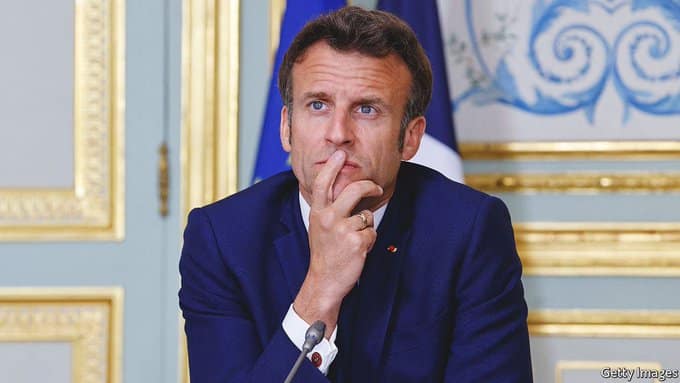
As its influence across the continent continues to wane at a pace that would have been unthinkable a decade ago, French President Emmanuel Macron is heading to Kenya for the first “Africa Forward” summit—a carefully rebranded gathering that notably excludes France’s traditional francophone allies in favor of English-speaking nations.
The message is unmistakable: France is being forced to reconfigure its relationship with Africa because the old relationship is dead. And it is not coming back.
“France’s pretty prose of ‘mutual cooperation’ and ‘shared development’ no longer hides its ruthless ambition to partner with Africa solely for resource extraction and geopolitical presence,” says political analyst Kim Heller, who has tracked the decline of French influence across the continent. “There is little respect for Africa’s sovereignty. African leaders see this. Their people see this. And they have had enough.”
The Numbers That Tell the Story
The decline of French influence in Africa is not a matter of perception. It is measurable, quantifiable, and stark.
- Trade: France now accounts for just 1.9% of Africa’s foreign trade—a fraction of what China (over 20%), India, or even the United States commands. A generation ago, France was the dominant European partner for most of West and Central Africa. Today, it is an afterthought.
- Military footprint: In the past three years alone, France has lost permanent military bases in Mali, Burkina Faso, Niger, Chad, Ivory Coast, and Senegal. The famous counter-terrorism operation Barkhane, once the pride of French military engagement in the Sahel, has been reduced to a shadow of its former self. French troops have been expelled, often unceremoniously, by governments that were once considered reliable allies.
- Diplomatic influence: The Organisation Internationale de la Francophonie, once a potent tool of French soft power, has seen its relevance diminish as former colonies adopt English as their primary language of business and governance. Rwanda, Mozambique, and Gabon have all shifted toward the Commonwealth. The gravitational center of African diplomacy is moving away from Paris.
“It is a collapse of historic proportions,” says Dr Thabo Mofokeng, a geopolitical analyst at the University of Johannesburg. “France has not been this weak in Africa since the wave of independence in the 1960s. And unlike the 1960s, there is no Cold War to prop it up. It is on its own. And it is losing.”
The Sahel Revolt: Why Former Allies Turned Away
The most dramatic losses have occurred in the Sahel—the vast, semi-arid region south of the Sahara that has become a crucible of jihadist violence, military coups, and anti-French sentiment.
Mali, Burkina Faso, and Niger—all former French colonies, all recipients of French military aid, all hosts to French counter-terrorism bases—have turned against Paris with a ferocity that few predicted.
In Mali, the ruling junta hired Russian Wagner Group mercenaries (now rebranded as “Africa Corps”) to replace departing French troops. In Burkina Faso, the government has made cooperation with Russia a cornerstone of its foreign policy. In Niger, which until recently was considered France’s last reliable partner in the region, the military government has demanded the complete withdrawal of French forces and expelled the French ambassador.
The reasons are complex, but a common thread runs through them: a perception that France cares more about protecting its own interests—uranium from Niger, gold from Burkina Faso, geopolitical prestige—than about the security or development of its partners.
“France came to fight terrorists, but it also came to control resources,” says Sahel-based researcher Ali Nouhou. “The soldiers on the ground saw this. The civilians saw it. And when the opportunity came to choose a different partner, they took it.”
The departure of French troops has created a security vacuum that jihadist groups have exploited. Violence has increased in many areas. But the governments that expelled France have calculated that the loss of French support is worth the gain in sovereignty.
“Better to be insecure and independent than secure and subservient,” Nouhou says. “That is the calculus. And France has no answer to it.”
The Senegal Shock: A Demand for Apology
Perhaps the most humiliating blow came from Senegal, one of France’s oldest and most loyal African allies.
Senegal has hosted French troops for decades. French is the official language. Senegalese soldiers fought for France in both world wars. The relationship, for generations, was considered unbreakable.
But Senegal’s new president, Bassirou Diomaye Faye, elected in 2024 on a wave of youth anger against the old elite, has broken the mold. He has not only demanded the complete withdrawal of French military forces from Senegalese soil but has also demanded something that no French president has ever been willing to give: an apology for colonial-era atrocities.
Specifically, Faye has called for an apology for the 1944 massacre of African troops who fought for France in World War II. In that atrocity, French forces killed dozens of Senegalese soldiers—their own allies—who had the audacity to demand fair treatment and back pay after fighting for the liberation of France from Nazi occupation.
“These soldiers died for France,” Faye said in a speech marking the anniversary of the massacre. “And France killed them. That is the truth. And until France acknowledges that truth, there can be no true partnership.”
The French government has so far refused to apologize, offering instead expressions of “regret” and “sorrow.” For Senegal, that is not enough.
“The word ‘sorry’ costs nothing,” said Senegalese historian Dr Fatou Sow. “But France refuses to say it. Why? Because to apologize is to admit fault. And to admit fault is to open the door to reparations. And reparations would be very, very expensive.”
The impasse has frozen diplomatic relations. French officials are no longer welcomed in Dakar with the same warmth they once enjoyed. The military withdrawal is proceeding, but without the fanfare or mutual declarations of enduring friendship that once accompanied such transitions.
“Senegal was supposed to be the exception,” said Mofokeng. “If France can lose Senegal, it can lose anywhere.”
The Pivot to English-Speaking Africa
Faced with the collapse of its traditional sphere of influence, France has been forced to look elsewhere. And “elsewhere” means English-speaking Africa.
France’s top two trading partners in sub-Saharan Africa are now Nigeria and South Africa—both former British colonies, neither of which has ever hosted a French military base. Neither belongs to the Francophonie. Neither has any historical loyalty to Paris.
But both are large, growing economies with which France has commercial interests. And both are increasingly attractive partners as French doors close elsewhere.
“Nigerian and South African markets are huge,” said trade economist Dr Naledi Mthembu. “France cannot afford to ignore them. The question is whether France can compete with China, India, and the United States for their attention. So far, the answer has been no.”
The “Africa Forward” summit in Nairobi is explicitly designed to court English-speaking nations. Kenya, the host, is a former British colony. Uganda, Tanzania, Ghana, and Zambia have also been invited. The traditional francophone allies—Senegal, Ivory Coast, Cameroon—are notably absent.
“It is a gamble,” said Heller. “Macron is betting that English-speaking Africa is less suspicious of France than French-speaking Africa. But that is a dangerous assumption. Anti-French sentiment is not limited to the Francophonie. It is continent-wide. And it is growing.”
The Kenya Summit: A Diplomatic Minefield
The Africa Forward summit, scheduled for later this week in Nairobi, was meant to be Macron’s grand rebranding moment—a chance to present France as a forward-looking partner, unburdened by the colonial past.
But the summit has already run into trouble.
In a diplomatic move that has raised eyebrows across the continent, Macron withdrew South Africa’s invitation to a G7 meeting in favour of Kenya. The snub was widely reported in South African media and has been interpreted as a deliberate effort to elevate Nairobi at the expense of Pretoria.
President Cyril Ramaphosa, who was expected to attend the Nairobi summit, is now likely to skip it. His absence will be conspicuous. And it will send a message that France’s pivot to English-speaking Africa is not as seamless as Macron had hoped.
“South Africa is the economic giant of the continent,” said Heller. “If France cannot get Ramaphosa to show up, the summit loses credibility. It becomes a gathering of second-tier powers. That is not the message Macron wants to send.”
The Kenyan government has attempted to downplay the controversy, emphasizing that the summit is about “shared economic opportunities” and “continental development.” But the diplomatic maneuvering behind the scenes is unmistakable. France is chasing influence. And Africa is not easily caught.
The Restitution Question: Can France Face Its Past?
One of the most contentious issues at the summit—and in France’s broader relationship with Africa—is the question of restitution and reparations.
French Ambassador to South Africa Alexis Lamek has admitted, in unusually candid remarks, that the summit must address these issues. “Restitution and reparations are central to the African Union’s agenda,” Lamek said. “We cannot ignore them. We must engage.”
But what does “engagement” mean? For African leaders, it means the return of tens of thousands of artifacts looted during the colonial era—bronzes from Benin, manuscripts from Timbuktu, royal regalia from across the continent. For some, it also means financial reparations for the human and economic costs of colonialism.
France has taken small steps. In 2021, it returned 26 artifacts to Benin. In 2022, it returned a sword to Senegal. But these gestures, critics say, are tokenism—a drop in an ocean of stolen heritage.
“There are over 90,000 African artifacts in French museums,” said Senegalese historian Dr Fatou Sow. “France has returned a few dozen. That is not restitution. That is public relations.”
The financial dimension is even more fraught. Estimates of what France owes in reparations range from billions to trillions of dollars, depending on the methodology. Haiti, which was forced to pay France an enormous indemnity in exchange for recognition of its independence, has made a formal claim for restitution. Other former colonies are watching closely.
“France will never pay billions in reparations,” said Mofokeng. “It cannot afford to. But refusing to pay will continue to poison the relationship. There is no easy way out.”
Macron’s “battle of narratives”—his effort to reframe France’s role in Africa as one of partnership rather than exploitation—is running into the hard rock of history. And history, as the saying goes, is not on his side.
The Russian Factor: Wagner and Africa Corps
Complicating France’s predicament is the presence of Russian influence, wielded through the Wagner Group (now rebranded as “Africa Corps”) and other proxies.
In Mali, Burkina Faso, and Niger, Russian mercenaries have replaced French troops. The Russians offer a simple, brutal bargain: security without lectures about democracy or human rights. For juntas under pressure from jihadist violence and Western sanctions, that bargain is attractive.
“The Russians do not ask about elections,” said Sahel researcher Nouhou. “They do not lecture about governance. They provide guns, trainers, and propaganda. That is what the juntas want. That is what France cannot offer.”
The Russian presence has also fueled anti-French sentiment. Russian disinformation campaigns have successfully branded France as a neocolonial power that cares nothing for African lives. The campaigns have been amplified by local media, social media influencers, and even government officials.
“Russia is weaponizing history against France,” said Heller. “And France has no counter-narrative because the history is, in many respects, true. France did exploit its colonies. France did commit atrocities. You cannot argue with facts. You can only try to move past them. But moving past requires acknowledgement. And France is not there yet.”
The Military Collapse: A House of Cards
The military dimension of France’s African retreat is perhaps the most tangible symbol of its declining influence.
In 2013, France intervened in Mali to stop a jihadist advance on the capital, Bamako. Operation Serval was widely praised. French troops were welcomed as liberators. Bases were established. A long-term presence seemed assured.
By 2022, those same bases were being vacated under pressure from the same government France had helped save.
The pattern has repeated across the region. In Burkina Faso, French forces were asked to leave in 2023. In Niger, the departure was announced in 2024. In Chad, long considered France’s most reliable ally in the Sahel, the government has reduced French access and signaled that a full withdrawal may be forthcoming.
Ivory Coast, Senegal, and even Djibouti—home to France’s largest permanent African base—are now in play. The dominoes are falling.
“France’s military presence in Africa was always a house of cards,” said security analyst Emmanuel Dupuy, who has advised the French government on African affairs. “It depended on the consent of host governments. That consent has evaporated. France is now very poorly equipped—perhaps even completely disarmed—to be credible in this region.”
Dupuy’s assessment is damning. A country that once saw itself as a indispensable security partner in Africa is now watching from the sidelines as others—Russia, Turkey, China, the UAE—move into the space it has vacated.
The Economic Reality: Can France Compete?
Even if France could solve its military and diplomatic problems, it would still face an uphill economic battle.
China’s Belt and Road Initiative has poured billions of dollars into African infrastructure—roads, railways, ports, and power plants. The loans are large, the terms are generous, and the execution is fast. African leaders who want to build things turn to Beijing, not Paris.
Turkey has expanded its trade and investment footprint, particularly in construction, manufacturing, and textiles. Turkish Airlines flies to more African destinations than any other carrier. Turkish contractors build airports, hospitals, and housing estates.
India is a major trading partner and a source of affordable pharmaceuticals, automobiles, and machinery. Indian companies have invested heavily in African agriculture, mining, and telecommunications.
And the United States, despite its own geopolitical challenges, remains a major aid donor and a destination for African exports under the African Growth and Opportunity Act (AGOA).
“France is not the only game in town,” said Mthembu. “It is not even the most interesting game. African leaders have options. They are exercising them. France is left holding a very small share of a very big pie.”
The 1.9% figure—France’s share of African trade—is a stark reminder of how far Paris has fallen. For comparison, China’s share is over 20%. Even India, a much poorer country, commands nearly 6%.
“France is a peripheral player in the African economy,” said Mthembu. “That is not going to change anytime soon. The question is whether France can stop the bleeding and stabilize its position. So far, the answer is no.”
The Narrative Battle: Macron’s Losing Fight
Macron has spoken frequently of fighting a “battle of narratives” against what he calls “anti-French propaganda” in Africa. He sees a coordinated effort—by Russia, by China, by local actors—to portray France as a neocolonial villain.
There is truth to this. Russian disinformation campaigns have been documented. Chinese state media have amplified anti-French sentiment. Local politicians have found that bashing France is good politics.
But narratives are not created in a vacuum. They take root because they resonate with lived experience. And for many Africans, the experience of French involvement has been negative.
“France’s narrative problem is not propaganda,” said Heller. “It is policy. France has treated Africa as a resource to be exploited, not a partner to be respected. Until that changes, no amount of rebranding will help.”
The “Africa Forward” summit is an attempt at rebranding. The name itself is carefully chosen—forward, not backward. Not dwelling on the past. Looking ahead.
But the past has a way of intruding. And in Nairobi, as Macron prepares to address an audience of English-speaking leaders, the ghosts of colonialism will be in the room.
The African Union’s Agenda: Restitution, Reparations, and Respect
The African Union has been clear about what it wants from former colonial powers: restitution of looted artifacts, reparations for historical injustices, and respect for African sovereignty.
France has nibbled at the edges of restitution, returning a handful of artifacts. It has flinched at reparations, offering “regret” instead of apology. And it has struggled to respect sovereignty, repeatedly intervening in the internal affairs of its former colonies.
“The AU is not asking for charity,” said a senior AU official who spoke on condition of anonymity. “It is asking for justice. France is not offering justice. It is offering rebranded exploitation. That is not a partnership. That is a continuation of the old system by new means.”
Unless France is willing to engage meaningfully on restitution and reparations—not as a gesture, but as a policy—the AU’s skepticism will remain.
“South Africa has shown the way,” the official added, referring to the country’s successful campaign for the return of artifacts and human remains from European museums. “France can follow, or it can be left behind.”
The Ramaphosa Snub: A Diplomatic Own Goal
The decision to withdraw South Africa’s invitation to the G7 meeting in favor of Kenya was seen by many as a miscalculation.
South Africa is not just any African country. It is the continent’s most industrialized economy. It chairs the African Union’s development agency. It is a member of the BRICS grouping. It has a sophisticated foreign policy apparatus and a long memory.
“Snubbing South Africa is not a good look,” said Heller. “It suggests that France does not understand African politics. You cannot sideline the continent’s biggest player and expect others to take you seriously.”
President Ramaphosa’s likely absence from the Nairobi summit will be noted. Other leaders may follow his lead, citing scheduling conflicts or other priorities.
The irony is that Kenya, the host, has its own complicated relationship with France. While it is not a former colony, it has been the scene of French diplomatic and economic activity. Kenyan civil society is skeptical of French motives. And the Kenyan public, like publics across the continent, is increasingly suspicious of external powers.
“Macron may find that Nairobi is not the receptive audience he hoped for,” said Mofokeng.
Conclusion: A Partner of Choice?
The phrase “partner of choice” is used frequently in diplomatic circles. It implies that a country has earned its place at the table—that others seek out its company because it offers something valuable.
France, Heller argues, is not a partner of choice in Africa. It is a partner of necessity—for some, for now. And necessity is a weak foundation for a long-term relationship.
“If France cannot acquiesce to equitability and respect for African sovereignty,” Heller concludes, “it should not be a partner of choice. It should not be a partner at all.”
That is the challenge Macron takes to Nairobi. The summit may produce joint communiqués, photo opportunities, and promises of future cooperation. But the underlying dynamic—a former colonial power struggling to find its place in a continent that no longer needs it—will remain.
France is facing diminishing presence in Africa. A summit will not reverse that trend. Only a fundamental rethinking of what France is willing to offer—and what it is willing to acknowledge—can do that.
And so Macron flies to Kenya. The ghost of Françafrique flies with him. Whether he can exorcise it—or whether it will continue to haunt French-African relations for another generation—is the question that the Africa Forward summit cannot answer.
About The Author