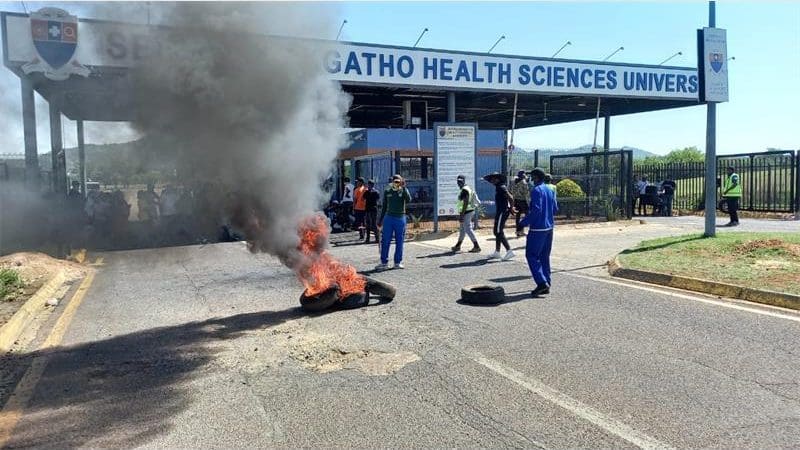
At Sefako Makgatho Health Sciences University, frustration has reached a boiling point. What began as intermittent water disruptions has now erupted into full-scale student protests, forcing the suspension of all classes and campus activities.
For days, students have endured worsening living conditions—dry taps, unhygienic residences, and failing sanitation systems. Now, they are taking a stand. Backed by the Student Representative Council (SRC), protesters have made their message clear: no water, no return to normal academic life.
University management has attributed the crisis to deep-rooted failures in the Bulk Water Services Project, a troubled initiative dating back to 2018. Plagued by delays, budget overruns, and technical setbacks, the project has left the institution with fragile infrastructure unable to meet demand.
Efforts to resolve the issue have only deepened the crisis. A pipeline relocation meant to improve supply instead triggered dangerous pressure imbalances, causing multiple pipe bursts in rapid succession. Although a pressure-reducing valve was installed, the system remains unstable.
Even more alarming, newly built reservoirs—intended to secure consistent supply—are failing to refill automatically. This means water runs out after just two days, plunging the campus back into shortage. With only one malfunctioning reservoir currently in use, the system is under severe strain.
The burden has fallen hardest on students in high-lying residences such as 5A and 5B, where water access is even more limited. For many, daily life has become unbearable.
As tensions rise, so too does the response. Police have been deployed to campus, using rubber bullets and water cannons in attempts to disperse protesting students. The scenes are tense, charged, and increasingly volatile.
Yet students remain resolute. They insist they will not back down until a reliable water supply is restored.
With negotiations stalled and no immediate solution in sight, the crisis at the university has become more than a service delivery issue—it is now a battle over dignity, basic living conditions, and the right to a functional learning environment
About The Author