The numbers landed like a hammer on a hollow drum. R35 billion. Nearly 100 new schools. Thousands of learners still sitting in prefabricated classrooms that leak when it rains and bake when the sun is high. And a provincial government that, according to its own Finance MEC, is simply not spending enough to fix the crisis.
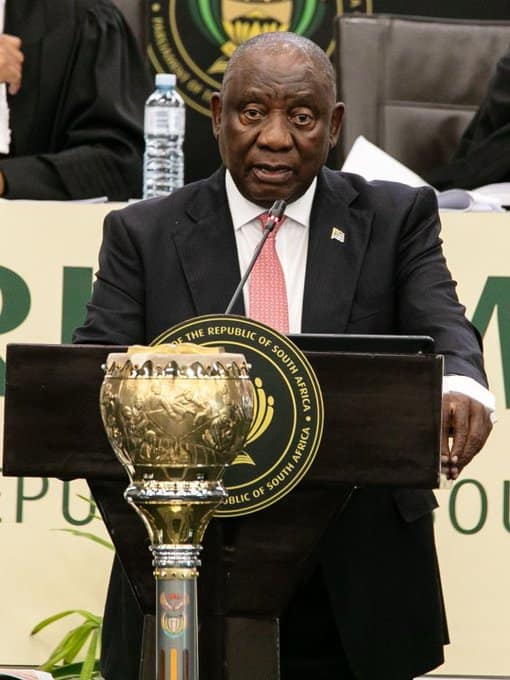
Gauteng Finance MEC Nkululeko Dunga did not come to the legislature’s mid-term budget briefing with comforting platitudes. He came with a warning—one that he said should keep every parent, teacher, and taxpayer in the province awake at night.
“We are sitting on a time bomb,” Dunga told the Standing Committee on Finance, his voice carrying the weight of both authority and frustration. “The demand for school infrastructure in Gauteng is growing faster than our ability to fund it. We need approximately R35 billion to build the nearly 100 additional schools required just to catch up. That is not a wish list. That is a necessity.”
The MEC’s remarks were part of a broader presentation on the province’s infrastructure spending, which has consistently fallen short of targets across multiple sectors—roads, health facilities, housing, and education. But it was the education figures that drew the sharpest intake of breath from committee members. R35 billion is more than the entire annual budget of several South African provinces. And Gauteng, the country’s smallest province by land area but its largest by population, is running out of space to put its children.
The Numbers Behind the Crisis
To understand the scale of the shortfall, consider the arithmetic. Gauteng’s learner population has been growing at an average rate of roughly 3% per year—faster than any other province. This is driven by internal migration (South Africans moving to Gauteng for work) as well as natural population growth. According to the Department of Basic Education’s own projections, the province will need an additional 98 schools by 2030 just to maintain current learner-to-classroom ratios, which are already far above recommended norms.
But “current ratios” is a misleading phrase. In many parts of Gauteng—particularly in fast-growing townships and informal settlements on the peripheries of Johannesburg, Tshwane, and Ekurhuleni—classrooms are bursting at the seams. The national norm for primary school learners per classroom is 40. In some Gauteng schools, teachers face 55, 60, or even 65 children in a single room.
“I have 63 Grade 6 learners in my class,” said Nomsa Dlamini, a teacher at a primary school in Tembisa, speaking to this reporter on condition of anonymity. “Sixty-three. They sit three to a desk meant for two. Some sit on the floor. I cannot give them individual attention. I cannot even move between the rows without stepping on backpacks. And then I am told test scores are too low. What do they expect?”
The infrastructure deficit is not just about numbers—it is about dignity. Across the province, hundreds of schools still rely on pit latrines, a scourge that has claimed the lives of young children who fell into unsecured toilet structures. Other schools lack libraries, science laboratories, computer rooms, or sports facilities. Some have no access to clean drinking water. Others are housed in dilapidated buildings never designed for educational use: converted warehouses, old church halls, even repurposed shipping containers.
“We are not talking about luxury,” Dunga emphasized. “We are talking about the bare minimum for a functional education system. A roof that does not leak. Walls that are safe. Sanitation that does not kill children. Classrooms where a teacher can actually teach. That is the baseline. And we are failing to meet it.”
Why the Shortfall? A Tale of Under-Spending and Rising Costs
The R35 billion figure is staggering, but it did not appear overnight. It is the accumulated result of years of under-spending on education infrastructure, compounded by rising construction costs and a slow, bureaucratic procurement system.
According to Treasury documents, the Gauteng Department of Education has consistently underspent its infrastructure budget for the past five fiscal years. In the 2023/24 financial year alone, the department returned over R400 million to the provincial treasury—money that had been allocated for new schools, classroom additions, and maintenance but was never spent because projects were delayed, tenders were disputed, or contractors failed to deliver.
“You cannot build schools if you cannot spend the money allocated to build schools,” said committee member Thabo Mokoena, shaking his head. “We sit here every year, we approve budgets, we pat ourselves on the back. And then we discover that half the money was never used. That is not a funding problem. That is a delivery problem.”
Compounding the issue is the sharp rise in construction costs. Building materials—cement, steel, bricks, roofing—have become significantly more expensive due to supply chain disruptions, load-shedding (which increases production costs for manufacturers), and general inflation. A school that would have cost R180 million to build five years ago now costs R280 million or more.
“The construction industry has been hammered,” said engineer and infrastructure analyst Thapelo Moropane. “And the government’s own payment cycles are slow—contractors often wait months to be paid. So they build in risk premiums. That drives up costs. The province is caught in a vicious cycle: they need more schools, but each school costs more, and they cannot spend fast enough to keep up.”
The Human Geography: Where the Need Is Greatest
The pressure is not evenly distributed across Gauteng. While affluent suburbs in Sandton, Fourways, and Centurion have well-resourced schools with waiting lists, the crisis is concentrated in the province’s rapidly urbanizing peripheries.
Areas like Diepsloot, Ivory Park, Zandspruit, and Tembisa have seen explosive population growth over the past decade, driven by migration from rural provinces and neighboring countries. Informal settlements sprout where vacant land exists—often far from existing schools. Children walk for an hour or more each way, crossing highways, dodging traffic, to reach overcrowded classrooms.
“My daughter wakes up at 4:30 every morning,” said a father from Zandspruit who asked not to be named. “She walks to the taxi rank, takes a taxi to Fourways, then walks another twenty minutes to school. She is nine years old. When it rains, she arrives soaked. When it is dark, I worry. But what can I do? The school near our shack is full. They turned her away twice.”
In response to the crisis, the provincial government has resorted to mobile classrooms—temporary structures intended as stopgaps but often used for years. There are currently over 1,200 mobile classrooms in use across Gauteng, many of them well past their intended lifespan.
“A mobile classroom is not a long-term solution,” said education activist and Equal Education leader Lerato Mofokeng. “They are hot in summer, cold in winter, and they do not have proper sanitation. They tell children: you are temporary. You do not deserve a real school. That is a terrible message to send.”
The R35 Billion Question: Where Will the Money Come From?
Dunga’s warning raises an obvious but painful question: where will Gauteng find R35 billion for new schools? The province’s entire annual budget is roughly R170 billion, and education already consumes the largest share—over R60 billion per year. Finding an additional R35 billion for infrastructure alone would require either drastic cuts elsewhere, a massive increase in provincial revenue, or significant additional funding from national government.
None of those options are easy.
“We cannot cut health. We cannot cut social development. We cannot cut public transport,” Dunga acknowledged. “Every rand in the provincial budget is already allocated to critical services. So the only honest answer is: we need help. We need national government to step up. We need creative financing models. And we need to stop underspending the money we do have.”
The MEC pointed to public-private partnerships (PPPs) as one potential avenue, though he cautioned that such arrangements must not become vehicles for privatization or profit-taking at the expense of quality education. “We are open to partnerships, but the state must remain the guarantor of free, quality public education. That is non-negotiable.”
Another possibility is reprioritization within the education budget itself. Currently, a significant portion of the education budget goes to personnel costs—salaries for teachers, principals, and support staff. While these are essential, some have argued that the province must find efficiencies to free up capital for infrastructure.
“We cannot keep hiring more teachers while leaving them with no classrooms to teach in,” said one senior official, speaking off the record. “There is a balance. We have not found it yet.”
The Political Fallout
Unsurprisingly, Dunga’s warning has become political ammunition. Opposition parties in the Gauteng legislature have seized on the R35 billion figure as evidence of ANC-led governance failures in the province, which has been under ANC leadership since 1994.
“For years, we have warned that the provincial government was not building enough schools,” said DA Gauteng shadow education MEC Khume Ramulifho. “Now the ANC’s own Finance MEC admits the scale of the disaster. R35 billion. Nearly 100 schools. This is not new. This is the result of decades of neglect and incompetence.”
The EFF echoed similar sentiments, calling for the deployment of the Special Investigating Unit (SIU) to probe infrastructure tenders dating back to 2010. “We need to know where the money went,” said EFF provincial chairperson Nkululeko Nxele. “Billions have been allocated. Where are the schools?”
The ANC, for its part, has defended its record, pointing to new schools built in areas like Soweto, Diepkloof, and Soshanguve over the past decade. But party spokespeople have also acknowledged the scale of the remaining challenge. “We do not deny that there is a backlog,” said ANC Gauteng spokesperson Lesego Makhubela. “But the backlog was inherited from apartheid spatial planning, and it has been exacerbated by rapid urbanization. We are working on it. It will not be solved overnight.”
What Happens Next?
Dunga’s warning is not a forecast—it is a call to action. The MEC has instructed his department to develop a 10-year infrastructure delivery plan that will prioritize the most urgent school projects: those in areas of highest population growth, those with the worst overcrowding, and those with the most dangerous facilities.
The plan, expected to be tabled in the legislature by early next year, will include a detailed funding proposal, a timeline for each project, and a monitoring framework to prevent the kind of underspending that has plagued past efforts.
“We cannot afford another decade of talking,” Dunga said. “We need shovels in the ground. We need roofs over heads. We need classrooms where children can learn and teachers can teach. The cost is high. But the cost of doing nothing—the cost of a generation of children educated in overcrowded, unsafe, undignified conditions—is far, far higher.”
A Child Waiting for a Desk
As the MEC’s words faded into the legislative record, the abstract number—R35 billion—began to take on human shapes. A girl in Diepsloot who cannot find a Grade 1 seat within walking distance of her home. A boy in Tembisa who sits on a cracked floor because there are not enough desks. A teacher in Zandspruit who has given up on individual attention because 63 names on a register is a crowd, not a class.
R35 billion is a number. But a new school is a promise. And for thousands of Gauteng children, that promise remains unfulfilled.
“We do not need sympathy,” said the father from Zandspruit, adjusting his grip on his daughter’s hand as they walked toward the taxi rank. “We need a school. A real one. With walls and windows and a door that closes. Is that really too much to ask?”
In the legislature, the debate continues. The committees will meet. The reports will be written. The budgets will be adjusted. But out in the townships, where the sun rises on another day of overcrowded classrooms and long walks, the children are still waiting. And the clock is ticking.
About The Author