The name Edwin Sodi has become, for many South Africans, synonymous with the rot at the heart of state capture. For years, the controversial businessman has faced allegations of corruption, fraud, and undue influence over government contracts—accusations he has consistently denied. But on Wednesday, a new chapter in his long legal saga was written, and this time, the ink was unequivocal.
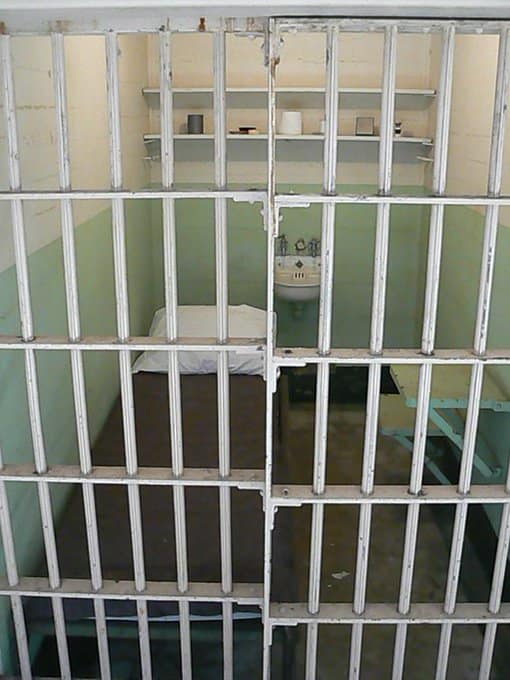
The Gauteng High Court in Johannesburg ordered Sodi and his business partner, Jeophrey Ramahlaleroa, to repay nearly R40 million to Hollard Insurance following the spectacular collapse of a R283 million project to upgrade and build new accommodation at a prison in the Free State.
The judgment, handed down by Acting Judge Rean Strydom, found that the two men had failed to meet their obligations under a performance guarantee linked to the contract, leaving the insurer liable for losses it had no duty to cover. The amount to be repaid—R39.6 million, plus interest and legal costs—represents a significant financial blow to the embattled businessman, whose legal and financial troubles have mounted in recent years.
“Mr. Sodi and Mr. Ramahlaleroa are jointly and severally liable for the full amount,” the judgment read. “The performance guarantee was called upon legitimately. The defendants have no defense.”
Outside the court, Sodi’s legal team indicated they would appeal. But legal analysts were skeptical. “This was a clean, well-reasoned judgment,” said law professor and constitutional expert Dr. Mpho Selemela. “The facts were straightforward. There is not much to appeal.”
The Failed Project: A R283 Million Disaster
The story of the Free State prison project is, by now, a familiar one in the annals of South Africa’s corruption era. In 2014, the Department of Correctional Services awarded a massive tender to a joint venture involving Sodi’s company, Blackhead Consulting, and Ramahlaleroa’s firm, to upgrade the existing prison in the Free State and build new accommodation units.
The project was supposed to take three years. It was meant to create jobs, improve prison conditions, and demonstrate the government’s commitment to infrastructure development. Instead, it became a cautionary tale of delays, cost overruns, shoddy workmanship, and, ultimately, total collapse.
By 2018, little had been achieved. Construction had barely begun. Millions of rands had been paid out. The Department of Correctional Services grew impatient. Eventually, the project was abandoned altogether, leaving behind a half-excavated site, rusting equipment, and a bitter legal battle over who should bear the financial losses.
Enter Hollard Insurance. The insurer had issued a performance guarantee for the project—a financial instrument that promises to pay a specified amount if the contractor fails to perform. When the project failed, the department called on the guarantee. Hollard paid. Then Hollard went after Sodi and Ramahlaleroa for reimbursement.
That legal pursuit ended in Wednesday’s judgment.
“The performance guarantee is not a gift,” Advocate Thabo Mokoena, representing Hollard, argued during the trial. “It is a promise backed by a contractual obligation. Our clients paid because the law required them to. Now the law requires the defendants to pay us back. It is that simple.”
Edwin Sodi: A History of Controversy
For those who have followed Sodi’s career, the judgment is the latest in a long line of legal and reputational blows. The businessman first rose to prominence as a tender mogul, winning lucrative contracts in mining, infrastructure, and security—often, critics allege, through his close relationships with powerful politicians.
Sodi was a central figure in the State Capture Commission of Inquiry, where testimony revealed his alleged involvement in corruption at the Department of Water and Sanitation. He was implicated in a R300 million asbestos removal contract in the Free State—a deal so tainted that the commission recommended criminal prosecution. The National Prosecuting Authority (NPA) has since said it is considering charges, though no indictment has yet been filed.
Sodi has also been linked to the controversial Free State housing project known as “The Estates,” where millions were allegedly siphoned from a low-income housing development. And his company, Blackhead Consulting, has been barred from doing business with several government departments pending investigations.
Through it all, Sodi has maintained his innocence, framing the allegations as politically motivated attacks by enemies seeking to destroy his reputation. In a statement released after the State Capture Commission’s findings, he said: “I have never bribed anyone. I have never stolen public money. I am a businessman who works within the law. The commission’s report is one-sided and inaccurate.”
Wednesday’s court judgment, however, is not based on political testimony or newspaper headlines. It is based on contracts, signatures, and legal obligations. And on those terms, Sodi lost.
The Partner: Jeophrey Ramahlaleroa
Less publicly known than Sodi, but equally bound by the court’s order, is his business partner Jeophrey Ramahlaleroa. Ramahlaleroa has largely stayed out of the media spotlight, but he has been named in multiple investigations related to Free State tenders. He and Sodi have been business associates for over a decade, collaborating on several infrastructure projects across the province.
According to court documents, Ramahlaleroa signed the performance guarantee agreement personally, making him jointly liable for the repayment. Attempts to reach him for comment were unsuccessful. His legal representative indicated that he was “studying the judgment” and would advise his client on the next steps.
Together, the two men are now on the hook for nearly R40 million, plus interest calculated from the date the guarantee was called—a sum that could rise to over R50 million by the time legal fees are added. Whether they have the assets to pay remains an open question. Sodi’s business empire has reportedly shrunk in recent years, with several companies placed under liquidation or business rescue.
The Department of Correctional Services: A Victim or a Co-Conspirator?
Lost in the legal maneuvering is the role of the Department of Correctional Services itself. How did a R283 million prison project go so wrong? And who in the department signed off on payments as the project collapsed?
The State Capture Commission shed some light on these questions, with testimony revealing that the department’s supply chain management was “compromised” and that officials may have been unduly influenced by Sodi and his associates. However, no senior departmental officials have been charged with any crime related to the project.
“We are left with a situation where the private sector actors are being pursued for repayment, but the public sector officials who enabled them face no consequences,” said anti-corruption activist Paul Hoffman of Accountability Now. “That is not justice. That is scapegoating. The department must also be held accountable for its failures.”
The Department of Correctional Services declined to comment on the judgment, citing the ongoing legal proceedings. However, a spokesperson said the department “welcomes any recovery of public funds” and “remains committed to rooting out corruption in its supply chain.”
The Legal Implications: A Warning to Guarantors and Contractors
Legal experts say the judgment has implications far beyond Sodi and Ramahlaleroa. It sends a clear message to both contractors and insurers about the seriousness of performance guarantees.
“Performance guarantees are the lifeblood of large infrastructure projects,” said construction law attorney Nthabiseng Motaung. “They give the client confidence that if the contractor fails, there is a pot of money to draw from. But for that system to work, insurers must be able to recover from the contractors when they pay out. This judgment upholds that principle.”
The case also clarifies that personal liability can attach to business owners who sign guarantees in their own names, rather than through corporate entities with limited liability. Sodi and Ramahlaleroa signed personal suretyships—a decision that now exposes their personal assets to seizure.
“This is a cautionary tale for every businessman who signs a guarantee without reading the fine print,” Motaung added. “Your company may have limited liability. But you may not.”
What Happens Next?
The judgment is not yet final. Sodi’s legal team has indicated they will appeal, a process that could take months or even years. During that time, the repayment order is suspended unless Hollard applies for and obtains an order that the judgment is immediately executory—a rare but possible step.
If the appeal fails, Hollard may move to seize assets. Bank accounts, properties, vehicles, and even shares in other companies could be attached to satisfy the debt. Sodi’s lavish lifestyle—he is known for luxury cars and high-end properties—could come under direct threat.
“Court judgments are not suggestions,” said legal analyst Mpumelelo Zikalala. “If you owe money and you don’t pay, the sheriff will come. They will take what they can. And if there is nothing left, they will keep coming back until the debt is cleared or you are declared bankrupt.”
For the Free State prison, meanwhile, the future remains uncertain. The half-built structures still stand, a monument to failure. Inmates continue to be housed in aging, overcrowded facilities. And the R283 million that was supposed to transform the prison is gone—much of it vanished into the pockets of subcontractors, the rest wasted on incomplete work.
A Nation Watching
As news of the judgment spread, reaction on social media was swift and often bitter. Many South Africans expressed frustration that Sodi—a man they associate with impunity—may finally face a financial reckoning. Others noted that nearly R40 million is a fraction of what he is alleged to have stolen from the state.
“He should be in prison, not just paying back money,” wrote one Twitter user. “He stole from the poor. He stole from prisoners. He stole from all of us. Forty million is nothing. We want jail time.”
Others were more circumspect. “This is how the system should work,” wrote another. “A contract fails. A guarantee is called. A court orders repayment. That is accountability. It is slow. It is imperfect. But it is accountability. We should celebrate that.”
Outside the courthouse in Johannesburg, a small group of activists from Unite Behind held a quiet protest, holding signs that read “Edwin Sodi Must Fall” and “Pay Back the Money.” They dispersed peacefully when the judgment was announced, satisfied—for now—that justice had taken at least one step forward.
Closing Arguments
In his final submission to the court, Hollard’s advocate, Thabo Mokoena, had offered a simple analogy. “If you borrow my car and crash it,” he said, “you must pay for the repairs. You cannot say, ‘I intended to drive carefully.’ The crash is what matters. The failure is what matters. And here, the failure is total.”
The court agreed. Sodi and Ramahlaleroa crashed the project. Now, they must pay for the repairs.
Whether they have the means—or the will—remains to be seen. But for one day at least, the wheels of justice turned, and a man who has for years seemed untouchable was told, in plain language, that he is not.
The Free State prison project will likely never be completed. The money is gone. The trust is shattered. But perhaps, in the cold arithmetic of a courtroom, a small measure of restitution can still be found.
About The Author