The announcement came not with a bang, but with a carefully worded press release issued at 7:00 AM local time, just as traders were settling into their desks in London and New York was still asleep. By the time the sun rose over the Burj Khalifa, the global energy landscape had shifted—perhaps irreversibly.
The United Arab Emirates, one of OPEC’s most influential and longest-serving members, was walking away.
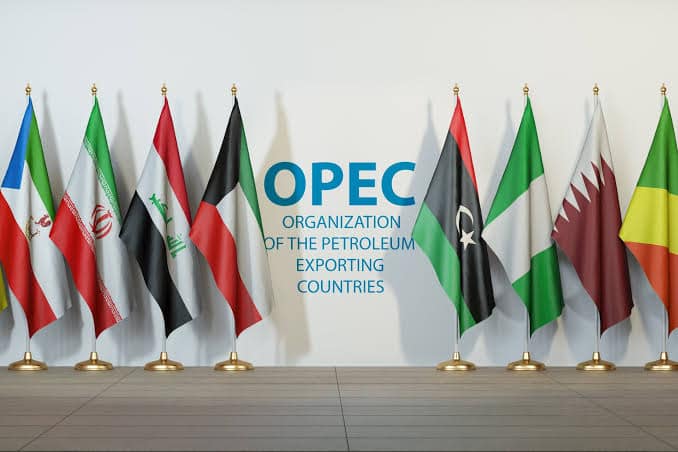
In a stunning move that has sent shockwaves through oil markets, diplomatic circles, and boardrooms from Houston to Beijing, the UAE confirmed on Wednesday that it would withdraw from both the Organization of the Petroleum Exporting Countries (OPEC) and the broader OPEC+ alliance, effective 1 May 2026. The decision, described by officials as “strategic and sovereign,” ends more than five decades of membership and signals a fundamental realignment of global oil politics.
The immediate impact was swift and brutal. Brent crude, the international benchmark, jumped 6.5% in early trading before settling at a 4.2% gain. West Texas Intermediate (WTI) surged 5.8%. Energy stocks rallied. Airlines slumped. And analysts scrambled to revise their forecasts, confessing that few had seen this coming.
“This is the biggest shake-up in global oil governance since the 1973 embargo,” said Dr. Samir Ahmed, a veteran energy economist at the Gulf Research Center. “The UAE is not a minor player. It is OPEC’s third-largest producer after Saudi Arabia and Iraq. Its departure is a body blow to the cartel’s relevance and cohesion.”
The Announcement: Short, Sharp, and Stunning
The UAE’s Ministry of Energy and Infrastructure released a terse, three-paragraph statement that offered few details but made the country’s position unmistakably clear.
“After careful consideration of the UAE’s long-term energy strategy, economic priorities, and national interests, the government has decided to withdraw its membership from the Organization of the Petroleum Exporting Countries (OPEC) and the OPEC+ alliance, effective 1 May 2026,” the statement read.
“The UAE remains committed to global energy market stability and to working with all partners—inside and outside of OPEC—to ensure secure, affordable, and sustainable energy supplies. However, the UAE believes that its national interests are best served by pursuing an independent production policy aligned with its ambitious capacity expansion goals.”
The statement offered no criticism of OPEC or its members. It did not mention Saudi Arabia by name. It did not reference any specific grievance. But the subtext was deafening.
For years, the UAE has chafed under OPEC+ production quotas that it believes unfairly limit its ability to monetize its massive oil reserves. The country has invested tens of billions of dollars in expanding its production capacity from 4 million barrels per day (bpd) to 5 million bpd by 2027. But under OPEC+ agreements, much of that new capacity sits idle while other members—particularly Saudi Arabia and Russia—shoulder larger cuts.
“We have built the infrastructure. We have drilled the wells. We are ready to produce,” a senior UAE energy official told Reuters on condition of anonymity. “But we are told to keep our oil in the ground while others produce more. That is not a partnership. That is a ceiling on our potential.”
The History: From Founding Member to Frustrated Partner
The UAE joined OPEC in 1967, just six years before the 1973 oil embargo that transformed the cartel into a global power broker. For decades, the relationship was mutually beneficial: OPEC provided geopolitical cover and price stability; the UAE provided production discipline and diplomatic support.
But the rise of OPEC+ in 2016—the expanded alliance that included Russia and other non-OPEC producers—changed the dynamics. The UAE found itself bound not only by OPEC’s internal agreements but by a broader, more complex web of production targets negotiated between Riyadh and Moscow.
Tensions began to surface publicly in 2021, when the UAE briefly clashed with Saudi Arabia and Russia over production baselines. The dispute was resolved, but scars remained. In 2023, the UAE quietly signaled that it was reconsidering its OPEC+ commitments. In 2024, it announced a “strategic review” of its energy diplomacy. And now, in 2026, the hammer has fallen.
“The UAE has been preparing for this moment for years,” said Karen Young, a senior fellow at the Middle East Institute. “They have been diversifying their economy, building their non-oil sectors, and cultivating independent relationships with major consumers like China and India. They no longer need OPEC the way they once did. And they no longer want to be constrained by it.”
The Reaction: Riyadh’s Silence, Moscow’s Discomfort, Washington’s Relief
The reaction from other major oil producers has been muted but telling.
Saudi Arabia, OPEC’s de facto leader and the UAE’s closest regional ally, has not issued an official statement. But sources close to the Saudi Energy Ministry told Bloomberg that Riyadh was “disappointed but respectful” of the UAE’s decision. Privately, however, Saudi officials are said to be furious.
“The UAE has broken ranks at a time when unity is most needed,” a Gulf diplomatic source said. “The Saudis view this as a betrayal. It will take years to rebuild trust.”
Russia, a co-leader of the OPEC+ alliance, expressed “regret” at the UAE’s departure but emphasized that Russia would continue to coordinate with all “responsible producers.” The Kremlin is already struggling with the impact of Western sanctions and a softening global economy; the loss of a key OPEC+ partner complicates its ability to manage oil prices.
The United States, by contrast, welcomed the development—carefully. A State Department spokesperson said only that the US “respects the sovereign decisions of all nations” and “continues to work with both OPEC and non-OPEC producers to ensure stable and affordable energy markets.”
But behind the scenes, Washington is breathing a quiet sigh of relief. The UAE’s departure weakens OPEC’s ability to coordinate production cuts, which in turn could put downward pressure on oil prices—a boon for American consumers grappling with inflation.
“The UAE is essentially saying, ‘We are going to produce as much as we can, as fast as we can,'” said Helima Croft, head of global commodity strategy at RBC Capital Markets. “That is good news for oil-importing countries. It is bad news for OPEC’s ability to manage supply.”
The Market Impact: Volatility, Uncertainty, and Opportunity
The immediate market reaction was sharp but not catastrophic. Oil prices spiked, then stabilized, as traders digested the news and waited for clarity on what the UAE’s exit would mean for actual production levels.
The key question: Will the UAE flood the market with oil?
The country’s stated production capacity is 4.2 million bpd, but it has been producing closer to 3.5 million bpd under OPEC+ quotas. With quotas now gone, the UAE could theoretically ramp up to its full capacity within months—adding 700,000 bpd of new supply to global markets.
That may not sound like much in a world that consumes 100 million bpd. But in a tightly balanced market, 700,000 bpd is the difference between surplus and shortage, between stable prices and a spike.
“If the UAE actually increases production, we could see oil prices fall later this year—perhaps significantly,” said Vandana Hari, founder of Vanda Insights. “But that depends on many factors: global demand, other producers’ responses, geopolitical events. The UAE’s exit creates uncertainty. Markets hate uncertainty.”
Goldman Sachs analysts predicted that Brent crude could trade in a range of 65–85 per barrel over the next 12 months, compared to the previous forecast of 70–90. The lower band reflects the possibility of increased UAE supply; the upper band reflects the risk of supply disruptions elsewhere.
The Geopolitical Fallout: A Realigning Middle East
The UAE’s departure from OPEC is not happening in a vacuum. It is part of a broader realignment of Middle Eastern power and priorities.
The UAE has been investing heavily in diplomacy, technology, and economic diversification. It has normalized relations with Israel under the Abraham Accords, signed a comprehensive economic partnership agreement with India, and deepened its strategic ties with China. It has also been quietly reducing its reliance on oil revenues, with renewable energy, tourism, and financial services playing increasingly important roles.
“OPEC is a 20th-century institution,” said Dr. Ahmed. “The UAE is building a 21st-century economy. The two were increasingly out of step.”
The decision also reflects the UAE’s growing assertiveness on the world stage. No longer content to follow Saudi Arabia’s lead, Abu Dhabi is charting its own course—whether on oil policy, foreign investment, or regional security.
“This is not just about barrels,” said Young. “It is about sovereignty. It is about the UAE saying, ‘We are a major power in our own right, and we will make our own decisions.’ That is a significant shift in Gulf politics.”
OPEC’s Future: Can the Cartel Survive?
The immediate question is whether OPEC+ can survive the loss of one of its most important members. The longer-term question is whether OPEC itself remains relevant.
Founded in 1960, OPEC once controlled nearly half of global oil production. Today, its members account for about 30%—a share that has been steadily eroded by the rise of US shale, Russian production, and now, the departure of the UAE.
“The cartel model is breaking down,” said energy historian Daniel Yergin. “The world is more fragmented, producers are more independent, and consumers have more alternatives. OPEC will not disappear overnight. But its power is clearly waning.”
Some analysts predict that other OPEC members—particularly Kuwait and Nigeria—could follow the UAE’s lead if they also feel constrained by production quotas. Others believe that Saudi Arabia will tighten its grip on the remaining members, demanding greater loyalty in exchange for continued support.
“Saudi Arabia will not let OPEC collapse without a fight,” said Croft. “They have too much invested in the institution. But the UAE’s departure is a warning sign. If Riyadh does not adapt, more exits could follow.”
The Consumer Perspective: Winners and Losers
For oil-importing countries—including most of Africa, Europe, and Asia—the UAE’s exit could be a net positive, provided it leads to lower prices.
South Africa, which imports nearly all of its crude oil, would be a beneficiary. Cheaper oil means cheaper fuel, lower transport costs, and reduced inflationary pressure. The rand, which often weakens when oil prices rise, could also benefit.
“We are watching the situation closely,” said a spokesperson for South Africa’s Department of Mineral Resources and Energy. “Any development that leads to more stable or lower oil prices is welcome. However, volatility itself is a challenge. We hope the UAE and other producers will act responsibly.”
For oil-exporting countries, the picture is more complicated. Nigeria, Angola, and other African producers rely on OPEC+ agreements to manage supply and support prices. A fragmented producer landscape could lead to a price war—bad for their budgets.
“If everyone starts pumping as much as they can, prices will crash,” said a Nigerian energy official. “That helps consumers but hurts producers. The UAE is taking a gamble. We will see if it pays off.”
The Environmental Angle: A Setback for Climate Action?
The UAE’s decision to ramp up production capacity comes at a time when the world is supposed to be transitioning away from fossil fuels. The UAE itself hosted COP28 in 2023, where it championed a “just transition” to clean energy.
Critics have accused the UAE of hypocrisy—preaching climate action while preparing to pump more oil.
“The UAE cannot have it both ways,” said Greenpeace Middle East campaigner Ahmed El Droubi. “They cannot host climate summits and then abandon production limits to flood the market with more fossil fuels. This decision is environmentally irresponsible and morally incoherent.”
The UAE government has defended its position, arguing that increased oil production in a relatively efficient, low-cost country is preferable to production in higher-emission jurisdictions.
“The world will need oil for decades,” the UAE energy official said. “The question is where that oil comes from. Ours is among the cleanest in the world. Producing more here means producing less elsewhere. That is a net environmental benefit.”
Climate activists are unimpressed. But for now, the market’s logic—not the climate’s—is driving the story.
What Happens Next: The Coming Days and Weeks
The coming days and weeks will be critical in determining the long-term implications of the UAE’s decision.
Immediate steps:
- May 1, 2026: The UAE formally ceases to be an OPEC member. Its production will no longer be bound by OPEC+ quotas.
- May 5: OPEC+ is scheduled to meet to discuss production policy. The absence of the UAE will be keenly felt.
- May 15: The UAE is expected to announce its independent production targets for the second half of 2026.
Potential scenarios:
- Orderly transition: The UAE increases production gradually, communicates clearly with markets, and maintains cooperative relations with other producers. Oil prices remain stable.
- Price war: The UAE ramps up aggressively; Saudi Arabia responds by increasing its own production to defend market share; prices collapse. This scenario would benefit consumers but devastate producer economies.
- Geopolitical escalation: Tensions between the UAE and Saudi Arabia spill over into other areas—diplomacy, trade, regional security. The Gulf Cooperation Council (GCC) could be strained.
“The UAE is not looking for a fight,” said Young. “But they have drawn a line. Now the question is how Saudi Arabia and others respond. The next few weeks will tell us whether this is a divorce or a separation.”
Epilogue: The End of an Era
When the UAE joined OPEC in 1967, the world was a different place. The United States was still importing oil from the Middle East. The Cold War was at its height. Climate change was not yet a public concern.
Almost six decades later, the UAE is leaving. It is richer, more powerful, and more confident than ever before. It no longer needs OPEC to protect its interests or burnish its image. It has its own voice, its own vision, and its own vote.
Whether that vision succeeds—whether the UAE can thrive outside the cartel—remains to be seen. But the decision itself is historic. The desert has quit the cartel. And the world will never be quite the same.
As the sun set over Dubai on Wednesday evening, the city’s skyline glittered as always. The Burj Khalifa shone. The shopping malls hummed. The yachts bobbed in the marina. But somewhere in the corridors of power, in the boardrooms of state oil companies, and on the trading floors of global exchanges, the aftershocks were just beginning.
The UAE has walked away. Now everyone else must decide where they stand.
About The Author