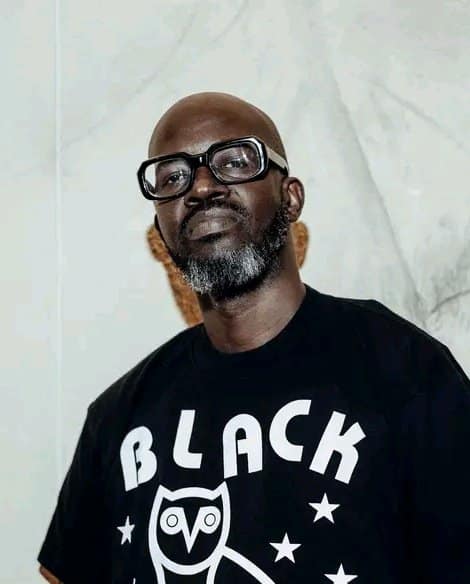
On a balmy evening beneath the stars of southern France, history was written not by gladiators or emperors, but by a DJ from Umlazi. On May 8, 2026, Grammy-winning producer and global dance music icon Black Coffee – born Nkosinathi Maphumulo – delivered his first-ever live orchestral performance in Europe at the breathtaking, sold-out Arènes de Nîmes. The 2,000-year-old Roman amphitheater, normally a monument to antiquity, became a pulsating cathedral of house music, strings, and South African pride.
For two and a half hours, the stone stands that once roared for chariot races echoed instead with the unmistakable deep grooves of Afro-house. And when the night ended, there was no question: this was not just a concert. It was a coronation.
A 360-Degree Spectacle in a Monument to History
The Arènes de Nîmes, built at the end of the 1st century AD, is one of the best-preserved Roman amphitheaters in the world. With a capacity of nearly 13,000, it has hosted bullfights, theatrical productions, and rock concerts – but never anything quite like this. Black Coffee transformed the ancient ellipse into a 360-degree sensory experience. At the center, a circular stage housed his decks, a grand piano, and a 24-piece orchestra arranged in concentric rings. Behind and above, laser projections danced across the weathered stone arches, while the audience – a sea of raised hands and glowing phones – filled every tier from ground level to the highest colonnade.
“To play in a space where you can feel the ghosts of two thousand years watching you – that is something I cannot describe,” Black Coffee said backstage after the show, still visibly moved. “But tonight, we made new ghosts. We made music that will echo here.”
The setlist was a masterclass in emotional architecture. Opening with a reimagined, string-heavy version of his 2016 breakout “We Dance Again,” Black Coffee immediately signaled that this would be no standard DJ set. The orchestra – conducted by French arranger Clément Ducol – added layers of warmth and grandeur to tracks normally heard in dark clubs or festival fields. When the familiar chords of “Your Eyes” featuring Shekhinah filled the arena, the crowd sang along in English, French, and Zulu – a trilingual testament to music’s borderless power.
Guests Shine: Msaki, Soulstar, and the Return of Monique Bingham
The night’s live vocal moments were nothing short of transcendent. South African songbird Msaki, draped in a flowing golden gown, brought the amphitheater to a hush with a devastatingly beautiful orchestral rendition of “Thokoza” – a song originally about loss and remembrance that, in this ancient space, felt like a prayer. “I’ve sung in cathedrals,” Msaki told the crowd between songs, “but I’ve never sung in a place that felt this holy and this old. Thank you, Coffee, for taking us here.”
Soulstar, the Johannesburg-born vocalist whose silken tone has graced many of Black Coffee’s most beloved tracks, delivered a high-energy trio of hits including “Buya” and “Come With Me,” prompting the stone stands to transform into a bouncing, joyful mass. But the loudest cheer of the night – perhaps unsurprisingly – came when Monique Bingham walked onto the stage. The American house music legend, whose voice defined Black Coffee’s global smash “Deep in the Bottom” (originally “Deep in the Bottom (Monique’s Promise)”), performed an extended, orchestral version of the 2014 classic that had the entire amphitheater swaying with arms outstretched.
“The first time I worked with Black Coffee, we were in a tiny studio in Johannesburg,” Bingham told the audience. “Now look at us. In a Roman arena. With a f***ing orchestra. That’s the power of dreaming.”
South Africa Erupts in Pride – ‘Muye’ in a SA Flag Jacket
Back home, the reaction was immediate and volcanic. Clips from the show flooded social media within minutes of the final track. One video, in particular, went viral: Black Coffee, wearing a sequined South African flag jacket, dropping his 2013 classic “Muye” as the orchestra swelled behind him and the crowd erupted into Zulu lyrics. Within six hours, the clip had been viewed over 4 million times on X (formerly Twitter) and Instagram combined.
South African celebrities, politicians, and everyday fans joined the chorus of celebration. “This man has carried our flag to places we only dreamed of,” wrote musician and producer Kabza De Small. “Not just to the Grammys. Not just to Coachella. To a Roman amphitheater. With an orchestra. Unbelievable.” Another user posted: “Black Coffee healing the nation from France. A Zulu boy in a Roman colosseum. That’s the South Africa we want.”
Even Minister of Sports, Arts and Culture Gayton McKenzie weighed in, posting simply: “Nkosinathi. Umlazi. World. We see you.”
‘Timeless and Healing’ – Critics Hail the Performance
European critics were equally effusive. France’s leading daily Le Monde headlined its review: “Black Coffee Turns Roman Ruins into a House Music Heaven,” praising the “audacious marriage of ancient stone and modern rhythm.” Germany’s Groove Mag called the performance “a career-defining moment” and “proof that dance music can be as sophisticated as any symphony.”
For many who attended, however, the reviews mattered less than the feeling. “I came for the music,” said Claire Durand, a 34-year-old nurse from Lyon who traveled five hours to Nîmes. “I left with something I cannot name. It was not just a concert. It was healing. I felt like the stones themselves were dancing.”
A Career of Milestones – What Comes Next
The Arènes de Nîmes performance marks the latest – and perhaps most audacious – achievement in a career already studded with historic moments. Black Coffee won his first Grammy in 2022 for Best Dance/Electronic Album for Subconsciously. He has headlined Coachella, Tomorrowland, and Madison Square Garden. He has collaborated with Drake, Pharrell, David Guetta, and Usher. He is the most internationally successful South African electronic artist of all time.
But the orchestral show represents something different: a shift from club culture to concert legitimacy, from DJ to composer, from entertainer to institution. “This is not me changing what I do,” Black Coffee explained in a pre-show interview. “This is me showing what I always heard in my head. When I make a beat in my studio in Joburg, I hear strings. I hear horns. I hear a whole universe. Tonight, you heard it too.”
The show sold out within 48 hours of its announcement – a feat that surprised even its promoter. Extra seats were released twice, only to vanish. Fans traveled from as far as Brazil, Japan, and Australia to be present. “I would have walked here if I had to,” said Thabo Mokoena, a Johannesburg native now living in Berlin. “This is our man. Our sound. On a world stage that has never looked like us before. I had to bear witness.”
Next Stop: London’s O2 Arena
There is no rest for the restless. Black Coffee’s tour continues with his next major milestone already on the horizon: a headlining show at London’s iconic O2 Arena – one of the world’s largest and most prestigious indoor venues. That performance, scheduled for June 20, 2026, is already approaching sell-out status. Rumors of additional orchestral shows in New York, São Paulo, and Sydney are circulating, though management has yet to confirm.
For now, the man from Umlazi can savor a night when ancient history met future sound – and the future won. As the last notes of his encore – a sweeping, orchestral “Drive” featuring David Guetta and Delilah Montagu – faded into the balmy Nîmes night, Black Coffee raised his hands to the Roman sky. Fireworks exploded above the amphitheater’s ruined upper arches. The crowd did not want to leave.
And somewhere, in a small village in KwaZulu-Natal, an old woman watching the livestream on her daughter’s phone wiped a tear from her eye. She had raised a boy who played records. The world now calls him a legend. That night, in a monument built by emperors, the boy from Umlazi became timeless.
About The Author