The dusty streets of Turfloop, the fictional Limpopo heartland where SABC1’s long-running educational drama Skeem Saam unfolds, are about to get a new kind of storm. Not the summer thunderstorms that roll across the highveld, but a man in a tailored suit with a smile that doesn’t quite reach his eyes.
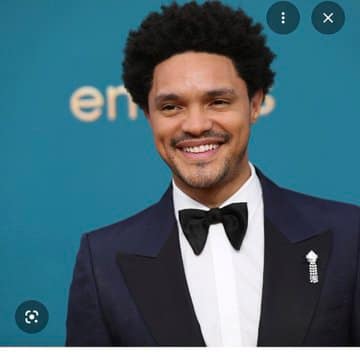
On Monday, the show’s producers dropped a bombshell that has sent ripples through South Africa’s television landscape: a new villain is coming. His name is Amandla Dubazane. He is played by SAFTA-nominated actor Nhlanhla Kunene, known for his powerful performances in Adulting and The River. And he will make his first appearance on 20 April at 19:30, just in time to shake up the show’s dynamics ahead of the winter season.
“The character of Amandla is a different kind of antagonist,” said Kunene in an interview from the show’s Johannesburg studios, where he was filming his first scenes. “He is not a thug. He is not violent in the traditional sense. He is calculated. He is intelligent. He wears a suit. He speaks softly. But he carries a big stick. The people of Turfloop have never seen anyone like him.”
But even before Amandla has uttered a single line of dialogue, the character—and the actor playing him—have ignited a fierce debate among Skeem Saam’s loyal fanbase. At the heart of the controversy is a question that has dogged South African television for decades: Who gets to tell our stories? And in what language?
The New Villain
Amandla Dubazane arrives in Turfloop under mysterious circumstances. According to the show’s official synopsis, he is a “sophisticated businessman with a dark past” who “seeks to exploit the vulnerabilities of the community for his own gain.” His primary targets appear to be the Maputla family, the show’s central clan, and the students and faculty of Turfloop University.
“Amandla is a predator,” said Skeem Saam executive producer Winnie Serite. “He identifies weaknesses and exploits them. He is charming. He is persuasive. He is patient. And he is utterly ruthless. The Maputlas have faced many challenges over the years, but they have never faced anyone like Amandla.”
The character is a departure from Skeem Saam’s typical antagonists, who have ranged from corrupt officials to jealous ex-lovers to small-time criminals. Amandla is meant to be a more sophisticated villain, one whose threat is psychological and economic as much as physical.
“We wanted to raise the stakes,” Serite explained. “The show has been on the air for over a decade. Our audience has grown up. They want more complex storytelling. Amandla represents that complexity. He is not a caricature. He is a fully realized character with his own motivations, his own traumas, his own twisted sense of morality.”
Kunene, who earned a South African Film and Television Award (SAFTA) nomination for his role in the youth drama Adulting, said he was drawn to the character precisely because of that complexity.
“Amandla is not evil for the sake of being evil,” Kunene said. “He believes he is doing the right thing. He believes the ends justify the means. That makes him far more dangerous than a mustache-twirling villain. You can almost understand where he is coming from. Almost.”
The Cultural Backlash
But even before viewers have had a chance to judge Kunene’s performance, some have already made up their minds about his casting. The criticism centers on one fact: Nhlanhla Kunene is Zulu. Skeem Saam is set in Limpopo, in the heart of Sepedi culture.
“We have a problem,” wrote Twitter user @SepediPride in a post that has since been shared thousands of times. “Skeem Saam is supposed to represent us, the Sepedi people. Our language. Our culture. Our stories. But now they cast a Zulu actor to play a villain? What does that say about us? That we cannot play our own villains? That we need outsiders to come and save the show?”
The complaint taps into a long-running frustration among Sepedi-speaking viewers that their language and culture are underrepresented and often misrepresented in South African media. While shows like Generations, The River, and Uzalo have showcased Zulu, Xhosa, and Sotho cultures, there are few mainstream shows that center Sepedi.
“Skeem Saam is all we have,” said cultural activist Mampuru Mahlangu, speaking from her home in Seshego, outside Polokwane. “It is the only show on national television that is set in our community, that speaks our language, that reflects our experiences. When the show casts Zulu actors in key roles, it feels like an erasure. It feels like our stories are not good enough to be told by our own people.”
Some viewers have drawn comparisons to Muvhango, the long-running SABC2 drama set in Venda that has faced similar criticism over the years for casting non-Venda actors in Venda roles. Muvhango’s ratings have declined in recent years, and some attribute that decline, at least in part, to a sense among Venda viewers that the show no longer authentically represents them.
“Muvhango lost its soul when it stopped being Venda,” said television critic Thabo Mkhabela. “Skeem Saam is in danger of making the same mistake. The producers need to listen to the community. They need to respect the culture. Otherwise, they will lose the very audience that made them successful.”
The Defense
But not everyone agrees. Other fans have pushed back against the criticism, arguing that Skeem Saam’s cast has always been diverse and that Turfloop itself—as a university town—would naturally attract people from across the country.
“Have you ever been to Turfloop?” asked Twitter user @LimpopoBorn in a post defending the casting. “It is not some isolated village. It is a university town. There are people from every province, every language group, every culture. The idea that only Sepedi people live there is nonsense. The show is reflecting reality.”
Others have pointed out that Skeem Saam has featured non-Sepedi actors in major roles before, with little complaint. The character of Rachel Maputla, for example, is played by actress Innocent Sadiki, who is of Tswana and Sotho heritage. The character of Kwaito, played by Clement Maosa, is Sepedi but Maosa himself is Tsonga.
“Where was the outrage then?” asked media analyst Kgomotso Moshokoa. “It seems selective. The truth is that the South African acting industry is diverse. Actors work across languages and cultures all the time. That is a strength, not a weakness.”
The show’s producers have also defended the casting decision, arguing that Kunene was chosen because he was the best actor for the role, not because of his ethnic background.
“Nhlanhla Kunene is one of the most talented actors of his generation,” Serite said. “He has a SAFTA nomination. He has a proven track record. He brought something special to the character of Amandla. We would have been foolish to turn him away because of his surname.”
Serite also noted that the show has a long-standing commitment to authenticity, including language coaching for actors who are not native Sepedi speakers.
“We work very hard to get the language right,” she said. “We have language consultants on set. We rehearse extensively. Nhlanhla has been working with a Sepedi coach for weeks. By the time he appears on screen, his pronunciation will be excellent. The audience will not be able to tell he is not a native speaker.”
The Ratings Factor
Behind the cultural debate lies a more pragmatic consideration: ratings. Skeem Saam has been a consistent performer for SABC1 since its debut in 2011, regularly drawing millions of viewers. But the television landscape has become increasingly competitive, with streaming services like Netflix, Amazon Prime, and Disney+ eating into traditional broadcast audiences.
Introducing a new villain—and a high-profile actor like Kunene—is a clear attempt to generate buzz and attract new viewers. The show’s producers are betting that the controversy, even the negative kind, will translate into higher ratings.
“There is no such thing as bad publicity,” said marketing strategist Lebogang Mokoena. “People are talking about Skeem Saam. They are arguing about it on social media. They are posting about it. That is gold for a television show. The producers probably could not have planned it better.”
The show’s April 20 debut of Amandla is timed to coincide with the start of the winter season, when viewership typically increases as people spend more time indoors. The show is also hoping to capture viewers who may have drifted away in recent years, lured back by the promise of a compelling new antagonist.
“We are confident that once people see Nhlanhla’s performance, the criticism will fade,” Serite said. “He is that good. He is going to remind people why they fell in love with Skeem Saam in the first place. He is going to make people fall in love with it all over again.”
The Actor’s Perspective
For his part, Kunene says he is trying to ignore the noise and focus on the work. The actor, who grew up in Soweto speaking Zulu and English, has been learning Sepedi for his role, working with a dialect coach to master the nuances of pronunciation and intonation.
“I respect the culture,” he said. “I respect the language. I am not here to disrespect anyone. I am here to do my job. And my job is to bring Amandla to life in a way that is compelling, believable, and entertaining. That is all.”
Kunene said he has received messages of support from Sepedi-speaking fans, as well as from actors who have faced similar criticism in the past.
“Many actors have been through this,” he said. “They have been told they cannot play a certain role because of their surname. It is frustrating. But you cannot let it get to you. You have to trust that the audience will judge you by your performance, not by your ethnicity.”
Kunene also noted that he has played characters of other ethnicities before without complaint. In Adulting, he played a young professional whose ethnic background was never specified. In The River, he played a Tsonga character. Neither role generated significant cultural backlash.
“Skeem Saam is a special show,” he said. “It has a passionate fanbase. They care deeply about it. That is a good thing. But sometimes that passion spills over into something else. I understand it. I don’t take it personally. I just want to do a good job.”
The Bigger Picture
The debate over Kunene’s casting touches on larger questions about representation, authenticity, and the role of television in shaping cultural identity.
South Africa is a country of 11 official languages, each associated with a rich cultural heritage. But the entertainment industry has historically favored certain languages—particularly Zulu and Xhosa—over others. Sepedi, Tswana, Venda, Tsonga, Swati, and Ndebele have all struggled for screen time.
“There is a hierarchy of languages in South African media,” said Professor Thabo Mbeki (no relation to the former president), a linguist at the University of Limpopo. “Zulu and Xhosa are at the top. English is in a category of its own. The others are marginalized. That is a legacy of apartheid, but it is also a product of market forces. Producers make shows in the languages that have the largest audiences. It is not fair, but it is rational.”
Skeem Saam has been a rare exception, a mainstream show that centers a Sepedi-speaking community. That has made it a source of pride for Sepedi speakers, who see their language and culture reflected on national television.
“When Skeem Saam first started, I cried,” said Mahlangu, the cultural activist. “I could not believe it. A show about us, for us, in our language. It was like a dream. That is why we are so protective of it. That is why we react so strongly when we feel it is being taken away from us.”
But others argue that the show has always been more than just a Sepedi show. It is a South African show, they say, and its appeal lies in its universal themes: family, friendship, love, betrayal, ambition, and redemption.
“Skeem Saam is not just for Sepedi people,” said Moshokoa, the media analyst. “It is for everyone. I am Zulu. I watch it. I love it. I understand it. The language is not a barrier. The culture is not a barrier. The stories are universal. That is what makes it great.”
What Comes Next
Regardless of the controversy, Amandla Dubazane is coming. His first scene will air on 20 April at 19:30. The show’s producers are tight-lipped about what happens next, but they promise “shocking twists” and “unexpected alliances.”
“Amandla is going to turn Turfloop upside down,” Serite said. “No one is safe. The Maputlas. The university. The students. Everyone will be affected. And by the time the dust settles, nothing will be the same.”
For Kunene, the role represents an opportunity to reach a new audience and to challenge himself as an actor.
“I have played many roles,” he said. “But I have never played anyone like Amandla. He is cold. He is calculating. He is manipulative. He is also, in his own way, tragic. There is a reason he is the way he is. Unpacking that has been a fascinating journey.”
As for the cultural backlash, Kunene says he hopes viewers will give him a chance.
“Watch the show,” he said. “Judge me by my work. If you don’t like my performance, that is fine. Criticize me. But don’t criticize me for my surname. That is not who I am. That is not what I represent. I am an actor. I tell stories. That is all.”
The Fans’ Verdict
Ultimately, the success of Amandla—and of Kunene’s casting—will be decided by the viewers. If the character resonates, if the storylines grip, if the ratings hold or increase, the controversy will fade. If not, it will be remembered as a misstep.
For now, the debate rages on social media, in WhatsApp groups, and around dinner tables across the country. Some fans have vowed to boycott the show. Others have pledged their support. Most are simply waiting to see what happens.
“I am going to watch,” said Mahlangu, the cultural activist, despite her reservations. “I have been watching Skeem Saam for 15 years. I am not going to stop now. But I will be watching with a critical eye. I will be listening to the language. I will be watching for authenticity. And I will be holding the producers accountable.”
She paused, then added: “I hope I am wrong. I hope Nhlanhla Kunene is brilliant. I hope Amandla becomes one of the great villains of South African television. That would be the best outcome. But if he is not… if he is just another Zulu actor playing a Sepedi character badly… then the producers will have a lot to answer for.”
The clock is ticking. April 20 is coming. And Turfloop will never be the same.
About The Author