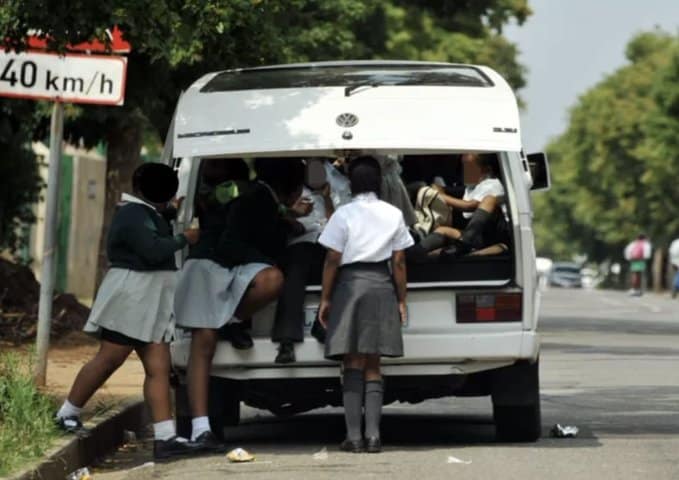
Every school day, as the first rays of sunlight creep over the Johannesburg skyline, a quiet, coordinated effort begins across Gauteng. It’s not led by a government department or a large corporation, but by thousands of private individuals who perform a critical, daily miracle: getting hundreds of thousands of children to school safely and on time. These are the private learner transport operators, the men and women behind the wheel of the ubiquitous minibus taxis and dedicated school vans that navigate the province’s congested roads.
But despite being the backbone of the learner transport system, these operators feel more like outcasts than partners. This week, their frustrations boiled over as they amplified calls for fair treatment, formal recognition, and tangible support from the very government departments tasked with overseeing the sector. Their message is clear: they are an indispensable part of the educational ecosystem and can no longer be overlooked amid a maze of strict regulations and punishing operational hurdles.
For Rebone Mokoena, a 48-year-old operator from Soweto who has been transporting children for over a decade, the daily grind is a labour of love. She wakes at 4:30 a.m. to ensure her 16-seater quantum is clean, roadworthy, and ready to collect her young charges from various points in the sprawling township.
“I know these children’s names, their parents, their allergies. If a child is not at the pickup point, I call the mother,” Mokoena explains. “We are not just drivers; we are an extra pair of eyes for working parents who trust us with their most precious cargo. But do the authorities see that? No, they only see us when they want to check our permits or impound our vehicles.”
This sentiment was echoed by dozens of her peers at a recent meeting in Midrand, where representatives from various associations across the province gathered to strategise. The meeting, initially intended to discuss new traffic bylaws, quickly turned into a collective airing of grievances. The central theme was a profound sense of injustice: they are expected to operate with the professionalism of a public service but are treated with the suspicion of an illicit trade.
The Weight of Regulation Without Representation
The operators are not asking for a free pass on safety. They acknowledge the paramount importance of ensuring that the vehicles carrying children are safe and that drivers are fit and competent. The issue, they argue, is that the regulatory framework is applied punitively rather than supportively.
“The requirements are steep and they are getting steeper,” said Thabo Modise, the chairperson of a local operators’ association in Tshwane. “We need operating licenses, which are expensive and difficult to get. We need roadworthy certificates, professional driving permits, and now, there’s more talk of stricter speed-limiting devices and tracking. All of this costs money.”
The problem, Modise explains, is that while the compliance costs soar, the income often remains static. They operate on tight margins, with many parents paying monthly fees that are barely enough to cover fuel, maintenance, and loan repayments on the vehicles. A single impoundment for a minor administrative error, like a permit not reflecting the correct zone, can be financially devastating.
“The fines are crippling. The impoundment fees are crippling. It feels like we are being targeted as a source of revenue rather than supported as a service,” Modise added. “We want a seat at the table. When new regulations are drafted, we want to be consulted on what is practical and what is not. We are the ones on the ground.”
The Critical Role in a Struggling System
The operators’ demand for formal recognition is rooted in the sheer scale of their contribution. The provincial Department of Education operates its own scholar transport program, but it is limited, primarily serving learners who walk excessively long distances or face dangerous routes. This system, while vital, does not cover the majority of learners who require transport.
The vast gap is filled by private operators. They ferry children not only from deeply rural areas to town but, increasingly, across the sprawling urban landscape of Gauteng. They transport children to schools outside their immediate neighbourhoods—a common reality in a province where parents often choose schools based on reputation rather than proximity, or where families move homes but keep children in the same school to avoid disruption.
“The government’s scholar transport cannot handle the complexity of Gauteng,” argued city planning expert Dr. Nthabiseng Molefe. “Private operators have stepped in to fill a vacuum created by decades of urban sprawl and school choice policies. They are an informal solution to a very formal problem. The government needs to move from seeing them as a problem to be controlled to a partner to be enabled.”
A Call for a “Fair Go” and a Formal Framework
The operators’ demands are coalescing around a few key pillars. First and foremost is the call for a dedicated desk or liaison unit within the provincial government—a single point of contact that understands the nuances of the industry. This unit, they propose, could assist with navigating the bureaucratic maze of permit applications and ensure that communication from traffic departments is clear and consistent.
Secondly, they are calling for an amnesty on historical fines and a more graduated approach to enforcement, focusing on education and compliance assistance for first-time offenders rather than immediate impoundment. They argue that a driver with a missing fire extinguisher poses less of an immediate danger than one with faulty brakes, yet both can result in the vehicle being taken off the road, disrupting the education of dozens of children.
Finally, they are seeking access to financial support mechanisms. This could range from government-backed loans for fleet renewal—allowing them to replace ageing, less-safe vehicles with newer models—to subsidies for essential safety equipment and training.
“We are not asking for handouts,” Mokoena clarified. “We are asking for a fair go. We want to be seen as what we are: small business owners, community members, and people who are just as committed to the future of our children as any teacher or government official. If we fail, the system fails. And on a school morning in Gauteng, that’s a risk no one can afford to take.”
About The Author