For a country battered by load-shedding, logistical logjams, and a cost-of-living crisis that has squeezed middle-class and poor households alike, good economic news has been as rare as a fully green traffic light in downtown Johannesburg during rush hour. But on Wednesday morning, the numbers offered a flicker of something that has been missing for far too long: hope.
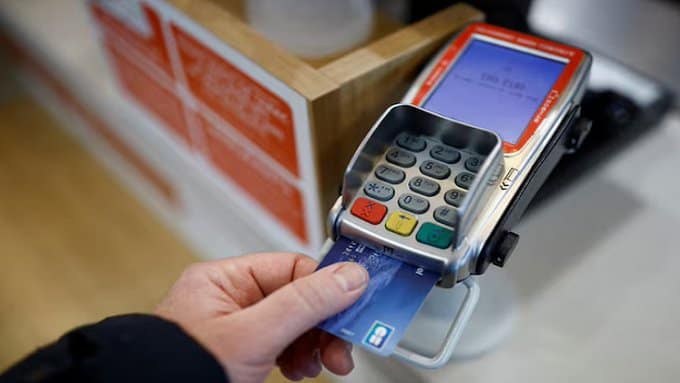
South Africa’s economy showed fresh signs of life in March 2026 as the PayInc Economic Index climbed 0.9% month-on-month to reach a new high of 104.7. The reading marks a robust 4.6% increase compared to the same month last year, driven primarily by stronger activity in electronic transactions across the country — from card swipes at township spaza shops to online retail orders and digital bill payments.
The PayInc Index, which aggregates real-time transaction data from millions of daily electronic payments, is widely regarded by economists as a more immediate and reliable barometer of consumer behavior than traditional quarterly GDP figures. When the index rises, South Africans are spending. And in March, they spent with a confidence not seen since early 2024.
What the numbers say
Behind the headline 104.7 figure lies a granular story of recovery. According to the PayInc report released by transaction analytics firm Payment and Incidence Analytics (PIA), the March surge was broad-based:
- Retail transactions increased by 1.2% month-on-month, with the largest gains in clothing, home improvement, and general dealer categories.
- Hospitality and leisure spending jumped 2.4%, signaling that South Africans are returning to restaurants, hotels, and entertainment venues after a cautious festive season.
- Fuel and transport payments rose 0.8%, reflecting both higher mobility and the lagged impact of recent petrol price adjustments.
- Utility and municipal payments showed a 1.5% increase, suggesting improved compliance and a slow easing of household arrears in some metro areas.
“The March data is encouraging because it is not driven by a single sector or a once-off event,” said Dr. Lwazi Ndlovu, chief economist at PIA, in a statement accompanying the release. “We are seeing broad-based, organic growth in consumer-led activity. That is the signature of a genuine, if still fragile, recovery.”
Why this time feels different
Economists caution against premature celebration. South Africa’s recovery has been a stop-start affair for the better part of a decade. However, several structural factors appear to be aligning in ways they have not in recent memory.
First, load-shedding has eased significantly since the peak of Stage 6 blackouts in late 2025. While Eskom still warns of an unreliable grid, the past three months have seen the lowest frequency of unplanned outages since 2022. Businesses that invested in solar and backup power are now operating at near-full capacity, and consumer confidence has benefited from the relative predictability.
Second, inflation continues to moderate. The consumer price index (CPI) fell to 4.1% in February, its lowest level in 38 months, giving households slightly more breathing room at the grocery store and the petrol pump. Real wage growth, while still negative for most public sector workers, has begun to stabilize in the private sector.
Third, the two-pot retirement system, implemented in late 2025, has put modest amounts of cash into the hands of lower- and middle-income earners. While critics warned that the system would fuel consumption rather than investment, the PayInc data suggests exactly that has happened — and in the short term, consumption drives economic activity.
“The two-pot effect is real but likely temporary,” said Dawie Roodt, chief economist at Efficient Group. “The question is whether the March bump becomes a sustained climb or just a sugar rush. For that, we need structural reforms, not just consumer spending.”
Where the growth is — and isn’t
Not every sector shared in the March optimism. The PayInc Index showed that durable goods — furniture, electronics, and vehicles — remained flat, as high interest rates continue to suppress credit-dependent purchases. The South African Reserve Bank’s repo rate has remained unchanged at 7.75% since January, and while markets are pricing in a possible cut in the second half of 2026, households remain wary of new debt.
Similarly, rural and deep township economies lagged behind urban centers. While electronic transactions in Gauteng and the Western Cape grew by 1.5% and 1.3% respectively, provinces like the Eastern Cape and Limpopo saw gains of only 0.3% and 0.2%, underscoring the persistent digital divide and uneven recovery.
Political reaction and what comes next
National Treasury welcomed the PayInc figures as “confirmation that macroeconomic stability measures are bearing fruit,” but stopped short of declaring victory. Finance Minister Enoch Godongwana, in a brief statement from Pretoria, noted that “one month of good data does not make a recovery. We need consistent, inclusive growth that creates jobs and reduces poverty.”
Opposition parties offered measured responses. The DA called for accelerated reforms in logistics and energy to lock in the gains, while the EFF dismissed the index as “a rich person’s barometer” that ignores the lived reality of unemployment, which remains stubbornly above 32%.
The South African Communist Party (SACP), in a more unusual move, praised the uptick but warned that “transactional growth without industrial policy is just rearranging deck chairs on a sinking ship.”
The human meaning of 104.7
For all the economic jargon, the PayInc Index ultimately measures something simple: whether South Africans feel secure enough to buy a loaf of bread, a school uniform, or a cup of coffee.
In Soweto, spaza shop owner Bongani Dlamini told Reuters that March was his best month in two years. “People are not buying luxury things,” he said, wiping down his counter. “But they are buying. They are not asking for credit as much. That is a small miracle.”
In Cape Town, restaurant manager Fatima Williams reported that weekday lunch crowds had returned to pre-pandemic levels for the first time. “It’s not champagne and caviar,” she laughed. “It’s business lunches and the occasional birthday dinner. But the card machine is beeping again. And that sound? That’s the sound of a country waking up.”
The road ahead
The PayInc Index rise to 104.7 is not a turning point — not yet. South Africa still faces an unemployment crisis, crumbling infrastructure, and a global economic environment that remains volatile. The International Monetary Fund (IMF) recently downgraded its 2026 growth forecast for South Africa to 1.2%, citing energy and logistics constraints.
But for one day, at least, the numbers told a different story. Electronic transactions don’t lie. And in March, millions of South Africans voted with their wallets — cautiously, tentatively, but unmistakably — for a future that looks a little brighter than the past.
As PayInc analyst Thabo Mkhize put it during a webcast briefing: “The patient is still in intensive care. But for the first time in a long time, the heart monitor is showing a steady rhythm. Now we need to stop the bleeding elsewhere.”
The April PayInc Index, due in early May, will reveal whether March was a false dawn or the first real sunrise of a long South African spring. For now, the country will take 104.7 — and the fragile hope that comes with it.
About The Author