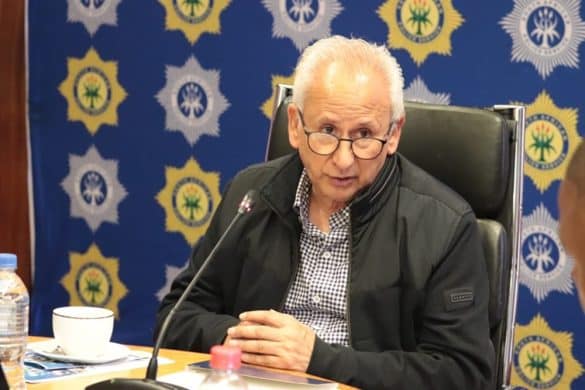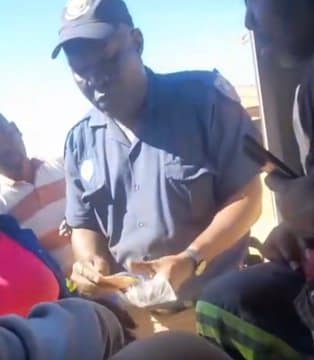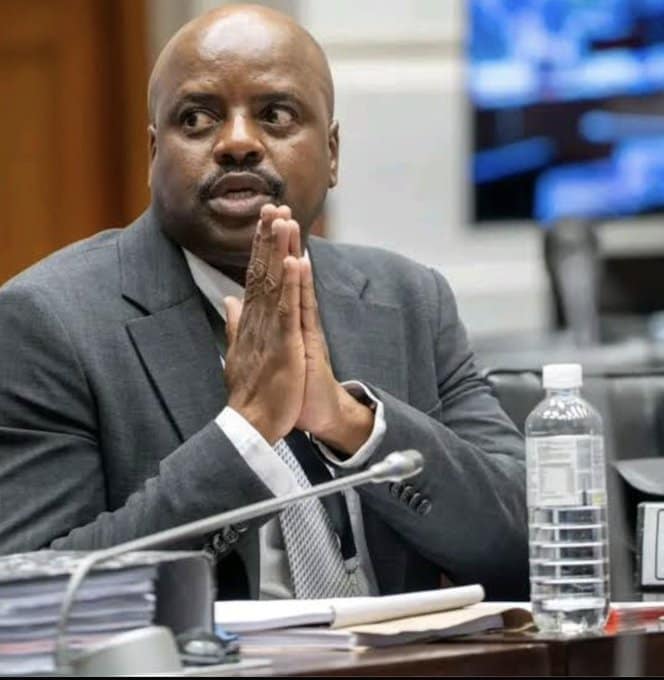
The atmosphere inside the Madlanga Commission of Inquiry shifted dramatically on Thursday as a visibly agitated Brigadier Julius Mkhwanazi took the stand. Suspended from his post as deputy chief of the Ekurhuleni Metropolitan Police Department (EMPD), Mkhwanazi came to address allegations that have haunted the fringes of the commission for weeks: claims linking him to the alleged dumping of Emmanuel Mbense’s body.
But the career law enforcement officer did not arrive with a lawyer’s polished statement or a prepared written apology. Instead, he brought raw denial, a trembling voice, and a single, repeated question: Why me?
“I have never been part of such things in my life,” Mkhwanazi declared, his voice echoing through the packed hearing room. “Never. Not once. I’ve never done that. I don’t know where these stories come from.”
The commission, established to probe wide-ranging allegations of corruption, misconduct, and state capture-era practices within Gauteng’s municipal entities, had earlier heard explosive testimony from anonymous witnesses and whistleblowers. Those accounts suggested that Mkhwanazi was present — or at least complicit — in the disappearance and subsequent discovery of Emmanuel Mbense’s body under circumstances that witnesses described as “irregular” and “potentially criminal.”
Mbense, a mid-level EMPD official, was found dead in 2023 under what police initially called “suspicious but inconclusive” conditions. His family has long alleged a cover-up. The commission’s terms of reference were expanded last month to include a focused investigation into his death and the alleged mishandling of evidence by senior EMPD officers.
Mkhwanazi, who has been on precautionary suspension since January pending the commission’s findings, denied any knowledge of Mbense’s final hours. When pressed by evidence leader Nthabiseng Mokoena about cellphone tower data placing him near the location where Mbense’s body was allegedly kept before being moved, the brigadier grew agitated.
“I am a police officer. I go to many places. That is my job,” he said, gripping the edge of the witness stand. “But to say I helped dump a body? That is not just false. That is evil. That is character assassination.”
The most dramatic moment came when commission chairperson Advocate Tembeka Madlanga asked Mkhwanazi directly: “Brigadier, are you aware of any meeting, informal or formal, where the relocation of Mr. Mbense’s remains was discussed among EMPD leadership?”
Mkhwanazi paused for nearly ten seconds. The room was silent except for the hum of recording equipment and a journalist’s cough.
“No,” he finally said. Then, louder: “No. And I want to know — why am I being singled out? There were senior people there that day. There were people from outside the department. But my name is the one in the newspapers. My face is on television. Why?”
His legal representative later submitted that Mkhwanazi had become a “convenient scapegoat” for deeper institutional failures within the EMPD and the broader Ekurhuleni municipality. In a written statement submitted to the commission, Mkhwanazi’s lawyers named three other senior officials — one still active — who they claim had “equal or greater proximity” to the events surrounding Mbense’s death.
Outside the hearing venue, the Mbense family listened via a live audio feed. Emmanuel’s sister, Lerato Mbense, wiped tears before speaking to reporters. “He keeps asking why he is being singled out,” she said. “We ask why our brother was dumped like a dog. We are not singling anyone out. We are asking for truth. If he is innocent, let the commission clear him. But stop playing victim.”
Political reaction was swift. The Economic Freedom Fighters (EFF) called for Mkhwanazi’s immediate dismissal regardless of the commission’s final findings, citing “loss of public confidence.” The Democratic Alliance (DA), which leads a fragile coalition in Ekurhuleni, urged restraint but confirmed that an internal EMPD forensic audit was already underway.
Meanwhile, the South African Policing Union (SAPU) issued a rare statement defending Mkhwanazi’s right to a fair hearing while noting that “law enforcement officers accused of crimes against the very people they swore to protect must be held to the highest standard — but not convicted by public opinion.”
As the commission adjourned for the day, Mkhwanazi walked out through a side entrance, avoiding the main media scrum. He did not answer shouted questions. His driver pulled away quickly, leaving behind a swirl of dust and unanswered questions.
The Madlanga Commission is expected to recall two other EMPD witnesses next week. Whether Mkhwanazi’s denial holds — or crumbles under further evidence — remains the commission’s most explosive unresolved thread.
For now, one suspended brigadier’s voice rings in the air: “I’ve never done that. Why me?”
And for the Mbense family, the only answer they will accept is the full, unvarnished truth — no matter whose career it buries.
About The Author