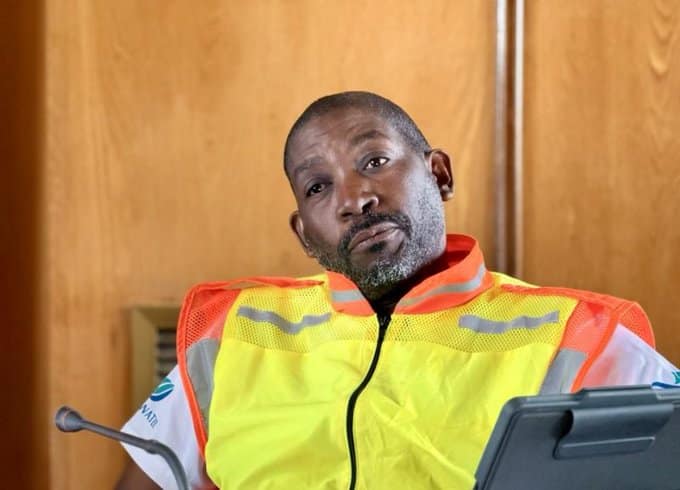
The political fault lines running beneath the troubled Emfuleni Local Municipality have cracked wide open. In the midst of a raging battle between Mayor Sipho Radebe and his own African National Congress (ANC) leadership, the Pan Africanist Congress (PAC) has injected itself into the fray with a stark warning: force the mayor out, and you will light a fire you cannot put out.
From Vanderbijlpark, the epicentre of the municipality’s decades-long collapse, the PAC issued a statement on Thursday, February 19, 2026, declaring that any attempt to oust Radebe would exacerbate tensions in an area already buckling under the weight of financial ruin and service delivery catastrophe. The warning adds a new, unpredictable dimension to a standoff that has seen Radebe dig in his heels and refuse to resign, despite mounting pressure from his own party.
For the residents of Emfuleni, which includes the troubled towns of Vanderbijlpark, Vereeniging, and Sharpeville, the political drama is a distant, if maddening, echo of their daily reality. They live with raw sewage in the streets, constant water outages, potholed roads that resemble moonscapes, and a collapsed electricity infrastructure that makes load shedding seem like a minor inconvenience. The municipality is under provincial administration, a euphemism for a patient on life support. And now, its political leadership is tearing itself apart.
The Mayor Digs In
At the centre of the storm is Mayor Sipho Radebe. In recent weeks, reports have swirled that the ANC’s regional and provincial structures have lost confidence in his ability to lead. The party, facing an electorate furious about the state of the municipality, is desperate for a scapegoat, a sacrificial lamb to offer to the voters before the next local government elections. Radebe, it seems, has been chosen for the slaughter.
But Radebe is not going quietly. In a series of defiant statements, he has made it clear that he will not be pushed. He insists that any decision for him to step down must come from the highest echelons of the party—the national leadership—and that it must be based on “clear facts and principles,” not political expediency or factional maneuvering.
“I am not a child who can be told to pack my bags without a reason,” Radebe is reported to have told close associates. “If Luthuli House wants me gone, they must write to me. They must tell me what I have done wrong. I will not resign based on rumours and gossip.”
His defiance has created a constitutional headache for the ANC. The party’s culture of “recall” is well-established: when the party wants a leader gone, the leader is expected to fall on their sword for the good of the organisation. Radebe’s refusal to play by those rules is a direct challenge to the party’s internal discipline and its ability to control its public representatives.
The PAC’s Intervention: A Warning from History
Into this volatile mix stepped the PAC. For a party that is a minor player in the municipality’s broader politics, its intervention is significant. It signals that the fight over Radebe is no longer just an internal ANC matter; it has become a public issue with the potential to destabilise the entire region.
The PAC’s message was blunt: forcing Radebe out will not fix the pipes or the potholes. It will simply add political instability to the list of the municipality’s woes.
“The Pan Africanist Congress warns against any reckless removal of Mayor Sipho Radebe,” the party’s regional leadership stated. “Such a move will only deepen the tensions in an already struggling area. The people of Emfuleni do not need another political fight. They need services. They need water. They need dignity. The ANC’s internal squabbles are a distraction from the real work of rebuilding this municipality.”
The PAC’s warning is rooted in the demographics and history of the area. Emfuleni is a political tinderbox. It is home to Sharpeville, where 69 peaceful protesters were murdered by the apartheid police in 1960, a massacre that changed the course of South African history. The spirit of resistance runs deep. Forcing out a mayor perceived to be fighting against a faceless party machine could easily ignite local loyalties and spark protests that have nothing to do with service delivery and everything to do with political identity.
The Residents: Trapped in the Crossfire
For the ordinary people of Vanderbijlpark and Vereeniging, the Radebe saga is just another chapter in a long book of disappointment. They have seen mayors come and go. They have seen promises made and broken. They have seen their municipal bills rise while the quality of services plummets.
A local community leader, speaking on condition of anonymity, expressed the frustration felt by many. “We don’t care who the mayor is,” he said. “We care about whether we can flush our toilets. We care about whether our children can walk to school without stepping in sewage. If the ANC wants to remove Radebe, fine. But who comes next? Will they be any better? Or is this just about settling scores while we continue to suffer?”
The municipality’s financial situation is so dire that it has been unable to pay Eskom and the water utility for years, leading to threats of complete grid shutdowns. The provincial government has stepped in, but the scale of the rot is so deep that progress is measured in inches, not miles. In this context, a political battle over the mayor’s job seems not just irrelevant, but obscene.
The ANC’s Dilemma
The ruling party now faces a delicate balancing act. It cannot afford to look weak by allowing a defiant mayor to remain in place against the party’s wishes. That would set a dangerous precedent and encourage other rebellious leaders. But it also cannot afford to cause a massive public blow-up in a key region ahead of elections.
The national leadership, currently preoccupied with coalition negotiations and the broader Government of National Unity experiment, may be reluctant to wade into what they might see as a local squabble. But Radebe’s demand for a direct order from Luthuli House forces their hand. They will have to either endorse the provincial structure’s push for his removal, thereby triggering a messy public fight, or they will have to overrule their own cadres and let Radebe stay, which would be seen as a humiliating climb-down.
What Comes Next?
As the standoff continues, the PAC’s warning hangs in the air. The party has not threatened violence or protests, but its words carry the implicit suggestion that the people are watching and that their patience is thin.
For Mayor Radebe, the coming days will be critical. He is betting that the national leadership will either back him or be too distracted to intervene. He is also betting that the community, or at least a vocal section of it, will rally to his side if he is portrayed as a victim of a party witch-hunt.
For the ANC, the challenge is to manage the situation without further destabilising a municipality that is already a national embarrassment. Whether Radebe stays or goes, the fundamental problems of Emfuleni will remain. The sewage will still flow in the streets. The taps will still run dry. And the people will still be waiting for a government that can deliver on its most basic promises.
About The Author