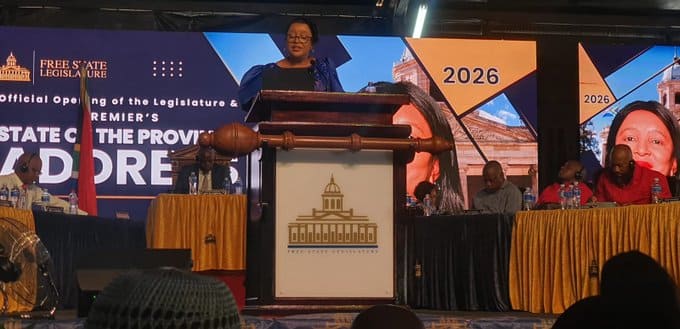
The setting was unconventional, a deliberate break from the stuffy formality of a legislative chamber. At the Old Grey Sports Grounds in Bloemfontein, under the open sky of a Friday afternoon, Premier Maqueen Letsoha-Mathae stood before a crowd that included not just politicians and officials, but the ordinary residents of the Free State. It was February 20, 2026, and she was delivering her third State of the Province Address (SOPA). The message was unmistakable: this was a government coming to the people, because the people are the ones who have been suffering.
For just over an hour, Premier Mathae painted a picture of a province in crisis, but also a province with a plan. From the collapse of local government to the potential of its agricultural heartland, she laid out a vision that balanced brutal honesty with a defiant optimism. Her central theme was action—decisive, relentless, and accountable action.
“We cannot continue to talk while our people suffer,” Mathae declared, her voice rising above the afternoon breeze. “The time for excuses is over. The time for delivery is now.”
The Municipal Meltdown: A “Decisive Intervention”
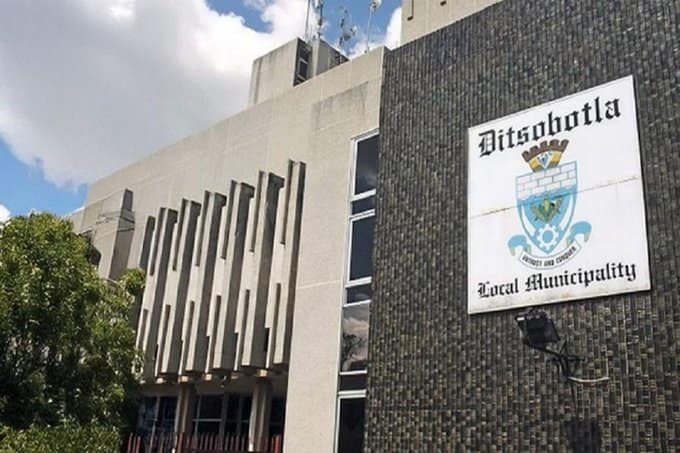
The most anticipated section of the address was, without question, her plan to fix the province’s dysfunctional municipalities. The Free State has become a byword for municipal failure. From the complete collapse of the Moqhaka Local Municipality (Kroonstad) to the near-death experience of Maluti-a-Phofung, which has left residents without water for months on end, the province’s local government is a patient in intensive care.
Premier Mathae did not mince words. She acknowledged that the provincial government had been too slow, too bureaucratic, and too tolerant of failure. She announced a new, “decisive intervention” framework that would strip failing municipalities of their powers if they could not meet basic service delivery standards.
“We will no longer stand by while councils bicker and residents suffer,” she said, her tone hardening. “Where municipalities fail to perform, where they fail to pay their Eskom bills, where they fail to provide water, the provincial government will step in. We will not wait for a crisis to become a catastrophe. We will act.”
The announcement was met with murmurs of approval from the crowd, many of whom have lived through the indignity of bucket toilets and dry taps. However, the constitutional and political implications are significant. Taking over municipal functions is a power play that could lead to clashes with local councils and opposition parties. Mathae signalled she was ready for that fight.
The Economic Vision: Agriculture as the Engine
Beyond the crisis management, the Premier laid out a longer-term economic vision for the province, centred on its greatest natural asset: the land. The Free State is South Africa’s breadbasket, a vast expanse of fertile soil that produces a significant portion of the country’s grain, sunflowers, and livestock.
Mathae announced a new “Agri-Revolution” initiative, aimed at bringing emerging farmers into the commercial mainstream. She pledged to cut red tape around land leases, provide targeted financial support through the provincial development corporation, and invest in critical infrastructure like silos and irrigation schemes.
“We have the land. We have the people. What we have lacked is the will to make it work,” she said. “We will unlock the potential of our agricultural sector to create jobs, not just on farms, but in the value chain—in processing, in packaging, in transport.”
She also touched on the province’s struggling towns, particularly those reliant on mining. With several mines reaching the end of their life, she announced a “Just Transition” fund to help towns like Odendaalsrus and Virginia diversify their economies, moving away from complete dependence on a single, dying industry.
Healthcare and Education: The Basics
The Premier also focused on the basic services that define a functioning state. In healthcare, she acknowledged the ongoing crisis at Pelonomi Hospital in Bloemfontein and other facilities plagued by staff shortages and equipment failures. She announced a recruitment drive for critical medical personnel and a partnership with the private sector to refurbish key wards.
In education, the Free State has long prided itself on being one of the top-performing provinces in matric results. Mathae sought to build on that legacy, announcing a new focus on Early Childhood Development (ECD) and technical and vocational training. She argued that a strong schooling system was the only way to break the cycle of poverty that traps so many of the province’s young people.
A Premier Under Pressure
This was Premier Mathae’s third SOPA, and it came at a critical juncture in her political career. Having taken over from the controversial Sisi Ntombela, she has positioned herself as a clean-up specialist, a technocrat focused on delivery rather than political intrigue. But the challenges are immense.
The Free State’s economy is stagnant. Its youth unemployment rate is among the highest in the country. Its municipalities are bleeding cash. And the provincial government itself is under financial strain, having been implicated in years of corruption and maladministration.
Mathae’s speech was an attempt to reset the narrative. By holding it at the Old Grey Sports Grounds, open to the public, she was signalling transparency. By focusing relentlessly on action and accountability, she was drawing a clear line between herself and the failed leaders of the past.
The Opposition Response
Reaction to the address was predictably split along party lines. The African National Congress caucus praised the Premier for her “bold vision and decisive leadership.” But opposition parties were more sceptical.
The Democratic Alliance’s provincial leader accused Mathae of “recycling promises” made in previous SOPAs. “We have heard all this before,” he said in a statement. “The proof will be in the implementation. The people of the Free State are tired of speeches. They want water. They want electricity. They want jobs. We will judge her by her actions, not her words.”
The Economic Freedom Fighters went further, describing the address as “a performance” that did nothing to address the “structural inequality” at the heart of the province’s problems. They demanded land expropriation without compensation and the nationalisation of mines, policies that Mathae had conspicuously avoided.
A Province Watching
As the Premier concluded her address, the crowd dispersed back into the complex reality of life in the Free State. For some, her words offered a glimmer of hope—a sense that someone in authority finally understood the depth of the crisis. For others, it was just another speech, destined to gather dust in a government archive.
The coming months will be the real test. Will the “decisive intervention” in municipalities actually happen, or will it be blocked by political interests? Will the “Agri-Revolution” create jobs, or will it be bogged down in bureaucracy? Will Pelonomi Hospital get the staff it needs?
Premier Mathae has laid out her vision. Now, the people of the Free State are watching, waiting to see if she can turn words into water, promises into power, and speeches into a better life.
About The Author