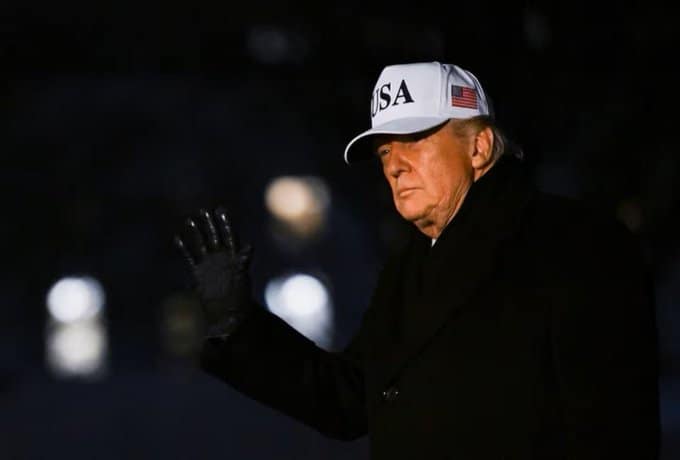
United States President Donald Trump has accused Iran of a “total violation” of the fragile ceasefire between the two countries, claiming Iranian forces fired on commercial and military vessels near the strategic Strait of Hormuz. In a characteristically fiery statement delivered from the White House Rose Garden, Trump also renewed explicit threats to destroy Iran’s bridges, power plants, and critical infrastructure if Tehran does not immediately accept his terms for a permanent halt to hostilities.
The dramatic escalation in rhetoric marks the most serious breakdown in US-Iran tensions since the signing of a temporary ceasefire brokered by Qatar and Oman in late 2025. That agreement, which was hailed as a diplomatic breakthrough at the time, has been increasingly fragile in recent months, with both sides accusing each other of provocations.
“We have clear evidence that Iran has broken the ceasefire in the most egregious manner possible,” Trump said, flanked by Secretary of Defense Pete Hegseth and Joint Chiefs Chairman General Daniel Caine. “They fired on innocent ships in international waters. This is not a minor violation. This is an act of war. And let me be very clear: Iran will pay a very heavy price if they do not stop immediately.”
The Alleged Incident in the Strait of Hormuz
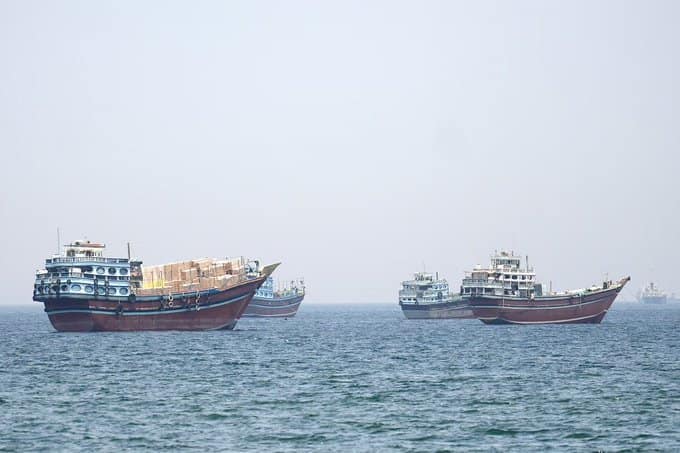
According to a statement released by US Central Command (CENTCOM), the alleged incident occurred early Saturday morning local time, approximately 45 nautical miles southeast of the Strait of Hormuz. Two US Navy vessels—the USS Gravely and USS Stout—were escorting a convoy of three commercial oil tankers when they reportedly came under fire from Iranian fast-attack craft and shore-based missile systems.
CENTCOM claimed that no US or allied vessels were struck, but that “several projectiles landed within 500 meters of the convoy, constituting a hostile act and a clear violation of the ceasefire.” The statement also alleged that Iranian naval vessels conducted “aggressive maneuvering” and used radar to lock onto US ships, which the Pentagon considers a hostile act.
Iran has vehemently denied the allegations. Iranian Foreign Minister Hossein Amir-Abdollahian called Trump’s claims “a fabrication designed to justify American aggression” and accused Washington of seeking to torpedo any diplomatic resolution.
“The United States is lying to the world,” Amir-Abdollahian said in a televised address from Tehran. “Iranian forces have not fired any weapons in the Strait of Hormuz in over four months. This is a pretext for Trump to launch new attacks on our nation. We will not be intimidated.”
Trump’s Explicit Threat: “Your Bridges Will Collapse”
The most alarming element of Trump’s address was his explicit and graphic threat to target Iran’s civilian infrastructure. While past US administrations have threatened military action against Iranian nuclear facilities or military assets, Trump’s direct mention of bridges, power plants, and water treatment facilities represents a significant rhetorical escalation.
“I have said it before, and I will say it again: Iran’s bridges will collapse. Their power plants will go dark. Their people will freeze in the dark if their leadership continues this madness,” Trump said, his voice rising. “We are not playing games. We will hit their economy, their infrastructure, their ability to function as a country. Not just their military. Everything.”
The president also threatened to target cultural sites, despite international laws prohibiting such attacks under the Geneva Conventions. “They use their cultural sites to hide weapons. If they do, we have every right to take them out,” Trump said, repeating a controversial stance he first took during his previous administration.
White House Press Secretary Karoline Leavitt later attempted to clarify Trump’s remarks, stating that “the president’s primary targets remain military and economic infrastructure,” but did not explicitly rule out strikes on cultural or civilian sites.
International Reaction: Alarm and Calls for Restraint
The international community reacted with alarm to Trump’s threats. United Nations Secretary-General António Guterres called on both sides to “urgently de-escalate” and to “reaffirm their commitment to the ceasefire in full.”
“Any further military action, particularly threats against civilian infrastructure, would be catastrophic for the region and would constitute a grave violation of international humanitarian law,” Guterres said in a statement.
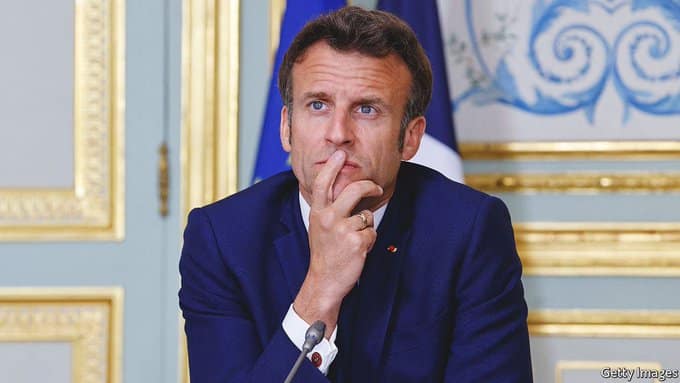
European allies, including the United Kingdom, France, and Germany, issued a joint statement urging “maximum restraint” and offering to facilitate renewed negotiations. “A military confrontation between the United States and Iran would have devastating consequences for the entire Middle East and for global security,” the statement read.
Russia and China, both of which have maintained diplomatic ties with Iran, condemned Trump’s threats as “reckless and irresponsible.” Russian Foreign Ministry spokesperson Maria Zakharova said: “The United States is once again behaving like a global bully. Threats to destroy civilian infrastructure are unacceptable. Moscow calls on Washington to return to diplomacy.”
Turkey, which has acted as a mediator in past US-Iran tensions, offered to host emergency talks in Ankara. “War benefits no one. Dialogue is the only path forward,” Turkish President Recep Tayyip Erdoğan said.
Iran’s Military Posture and Response
In Tehran, the mood was defiant but tense. The Islamic Revolutionary Guard Corps (IRGC) announced that all military forces had been placed on “high alert” and that Iran’s air defense systems were fully activated. State television broadcast footage of military exercises in the Strait of Hormuz, showing fast-attack craft, missile batteries, and drones.
Supreme Leader Ayatollah Ali Khamenei, who holds ultimate authority over Iran’s military and nuclear decisions, released a statement through his official account: “The enemy threatens our bridges and our power plants. Let them know: we will defend every inch of our soil. If they strike one bridge, we will strike ten of theirs. If they darken one city, we will darken their entire region.”
Iran has also threatened to close the Strait of Hormuz—a chokepoint through which approximately 20 percent of the world’s oil passes—in response to any US military action. Such a move would send global oil prices soaring and trigger an immediate economic crisis.
The Fragile Ceasefire: A Brief History
The current ceasefire, brokered in November 2025 after months of shuttle diplomacy by Qatari and Omani mediators, was hailed as a breakthrough at the time. It followed a series of escalating confrontations, including US airstrikes on Iranian-backed militia sites in Syria and Iraq, Iranian drone and missile attacks on US bases in the region, and a dramatic Iranian seizure of a US-linked oil tanker near the Strait of Hormuz.
The ceasefire terms included:
- An immediate halt to all direct and proxy military actions by both sides.
- A freeze on Iran’s uranium enrichment program above 3.67 percent.
- The release of several prisoners held by both nations.
- A commitment to renewed negotiations on a broader nuclear deal.
However, the ceasefire did not address several key issues, including Iran’s ballistic missile program, its support for proxy groups in Lebanon, Syria, Iraq, and Yemen, and the status of US sanctions on Tehran. Both sides have accused each other of “creeping violations” for months.
Domestic Political Calculus
Analysts note that Trump’s aggressive rhetoric comes at a politically sensitive time. With the 2026 midterm elections approaching, Trump faces mounting pressure over domestic issues, including inflation, immigration, and a series of ongoing criminal investigations into his business dealings and post-2020 election conduct.
“Trump has always used foreign policy confrontation to rally his base and change the news cycle,” said Dr. Sarah Heyward, a political scientist at Georgetown University. “Iran is his favorite boogeyman. By accusing them of breaking the ceasefire and threatening dramatic strikes, he is sending a message to his supporters: ‘I am strong. Biden was weak. Only I can protect America.'”
However, some Republican allies have urged caution. Senator Lindsey Graham, a Trump loyalist, said: “I support the president’s right to defend American interests. But any military action should be carefully considered. We don’t want a full-scale war with Iran.”
Democratic leaders, meanwhile, accused Trump of recklessness. Senate Majority Leader Chuck Schumer said: “Threatening to destroy civilian infrastructure is not strength—it is barbarism. The president is playing with fire, and the American people will bear the cost.”
What Happens Next?
The situation remains highly volatile. Pentagon officials have confirmed that the USS Abraham Lincoln carrier strike group has been ordered to remain in the Arabian Sea, while additional F-35 fighter squadrons have been deployed to US bases in Qatar and the United Arab Emirates.
Iran has reportedly moved mobile missile launchers to positions along the Strait of Hormuz and has increased naval patrols. European diplomats are scrambling to arrange emergency talks.
The key question is whether the alleged firing on ships near the Strait of Hormuz actually occurred as described. The US has not released radar data, satellite imagery, or other evidence to support its claim. Iran has demanded an independent investigation, a call supported by Russia and China.
“If the US cannot provide verifiable proof, this looks very much like a manufactured pretext for war,” said Trita Parsi, executive vice president of the Quincy Institute for Responsible Statecraft. “That is a dangerous game. Wars have started from less.”
A World on Edge
As the sun rose over Washington and Tehran on Sunday, the world held its breath. Oil prices spiked 8 percent in Asian trading. The UN Security Council scheduled an emergency closed-door session. And on both sides of the Atlantic, families of US service members stationed in the Middle East waited anxiously by their phones.
In Tehran, a city of nine million people, residents rushed to supermarkets to stockpile food and water. In Washington, politicians traded blame on Sunday morning talk shows. And in the White House Situation Room, generals and diplomats huddled over maps and intelligence reports, calculating the cost of peace—and the price of war.
Donald Trump has drawn a line in the sand. Iran has refused to blink. The bridges and power plants stand—for now—in the fading light of a fragile peace.
About The Author