In a decisive move to stem a growing crisis that has left neighborhoods in darkness and municipal coffers bleeding millions, the City of Tshwane has announced an urgent, large-scale electricity project aimed at systematically wiping out illegal connections across the municipality. The bold initiative, unveiled by Mayor Cilliers Brink’s administration, promises to bring immediate relief to communities plagued by power outages, voltage fluctuations, and dangerous fire hazards—all caused by residents and businesses tapping into the grid without permission.
The announcement comes after months of escalating frustration. From the densely populated townships of Mamelodi and Soshanguve to the inner-city hijacked buildings of Pretoria CBD and the informal settlements straddling the N4 highway, illegal connections have become not just a revenue problem, but a public safety crisis. Officials say the project will begin immediately, deploying specialized teams to identify, isolate, and permanently remove unauthorized links to the city’s overburdened electricity network.
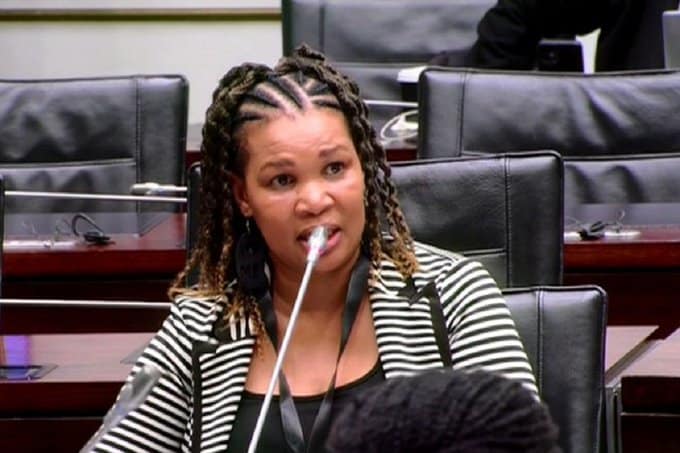
“For too long, a minority of residents have decided that the rules do not apply to them,” said Councillor Sheila Senkubuge, the MMC for Utilities and Regional Operations, speaking at a press conference outside the Tshwane House headquarters. “They climb poles with live wires. They splice into main feeders. They steal electricity meant for hospitals, schools, and law-abiding taxpayers. Today, that ends. Not tomorrow. Today.”
The Scale of the Problem: More Than Just Theft
Illegal electricity connections are often framed as a revenue issue—and indeed, the City of Tshwane estimates it loses upwards of R500 million annually to electricity theft. But the true cost is measured in darker currencies: burned children, collapsed livelihoods, and a grid pushed to the edge of collapse.
In informal settlements like Mandela Village and Plastic View, illegal connections are often cobbled together from exposed copper wire, bare connectors, and makeshift circuit breakers fashioned from old nails and bottle caps. During the summer rainy season, these setups turn into death traps. The city’s emergency services respond to an average of 40 shack fires per month linked directly to illegal electricity tapping. In the past year alone, at least six people—including two toddlers—died in such blazes.
Beyond the fire risk, illegal connections wreak havoc on the broader network. “When someone taps into a feeder line without authorization, they create an imbalance,” explained Thabo Makgato, a senior electrical engineer with the city. “The transformer tries to compensate. It overheats. It trips. Suddenly, an entire block of paying customers loses power because their neighbor decided to run a welding shop off a stolen line.”
The result is a vicious cycle. Paying customers grow frustrated with unreliable power. Some, seeing their non-paying neighbors enjoy constant electricity, decide to join the theft. The problem metastasizes. Transformers blow more frequently. The city spends its repair budget on emergency fixes rather than system upgrades.
The Project: Three Phases, Zero Tolerance
The new operation, temporarily named “Project Khanyisa” (Setswana for “illuminate”), will roll out in three aggressive phases.
Phase One (Immediate): Identification and Mapping
Starting this week, teams of city electricians, armed with handheld thermal scanners and drone surveillance, will fan out across identified hotspots. Drone operators will fly pre-dawn and post-dusk missions, when illegal connections are most visible—clusters of unauthorized wires glowing warm against cooler rooftops. The data will be fed into a live digital map, allowing crews to prioritize the most dangerous and systemically destabilizing connections.
“We know many of these areas by heart,” said Makgato. “But we need precision. We need to know exactly which pole, which transformer, which household. A surgeon does not cut blind. Neither will we.”
Phase Two (Within 30 Days): Physical Removal and Legal Action
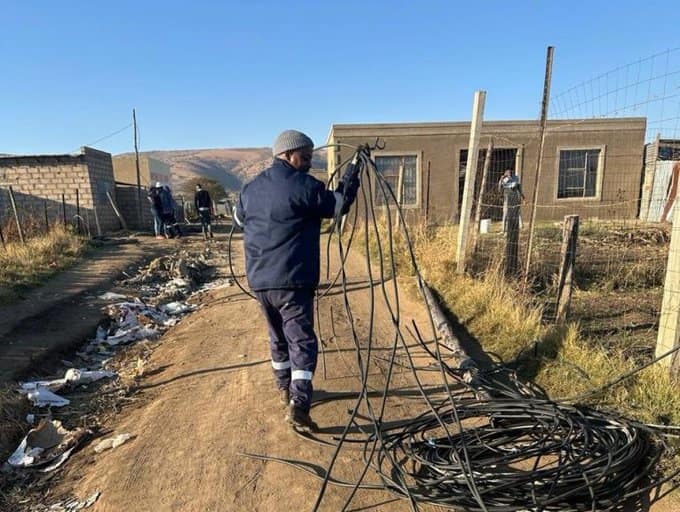
Once identified, physical removal teams will move in, accompanied by law enforcement. Illegal wires will be cut. Unauthorized meter bypasses will be dismantled. In cases where property owners have facilitated large-scale theft—such as landlords in the CBD who wire entire apartment blocks illegally—the city will issue immediate fines starting at R15,000 per illegal connection and open criminal cases for theft and tampering with essential infrastructure.
“We are not just cutting wires,” warned Senkubuge. “We are building court-ready dockets. If you are stealing electricity on a commercial scale—running a spaza shop, a shebeen, a panel-beating shop—we will come for your assets.”
Phase Three (Ongoing): Legal Reconnection Pathways
The city has acknowledged that some residents tap illegally not out of greed, but out of desperation. In informal settlements where official connection fees can run into thousands of rand, many simply cannot afford to go legal. To address this, Project Khanyisa includes a parallel initiative: a subsidized “reconnection voucher” for low-income households willing to come forward voluntarily.
For a limited period, qualifying residents who self-report their illegal connection and agree to a safety inspection will receive a waiver of connection fees and a prepaid meter installed at no cost. They will then pay only for what they use, at the standard indigent tariff.
“We are not monsters,” said Mayor Brink in a separate statement. “We understand poverty. But poverty does not excuse endangering your own children or your neighbor’s children. Come forward. Let us help you do this right. But if you force us to find you first, the help will come with a summons.”
Community Reaction: Hope, Skepticism, and Fear
In Mamelodi’s Extension 9, a labyrinth of aging RDP houses and backyard shacks, reaction to the announcement was mixed. Martha Dlamini, a 67-year-old pensioner who receives the R100 monthly indigent electricity allocation, welcomed the news with clenched fists.
“I pay my R100 every month,” she said, standing outside her small home. “Then I sit in the dark because the transformer trips again and again. Why? Because the man across the street runs three freezers and a hair salon on wires thrown over the fence. I am tired. Let them cut. Cut everything.”
But others expressed anxiety. Themba Nkosi, a father of four who admitted to an illegal connection after being unable to afford the R4,000 deposit demanded by the city two years ago, said he felt trapped.
“What am I supposed to do? Let my children study by candlelight? The city never came to my door with a payment plan. They only come now to punish. If they cut me off, my children fail their exams. Is that justice?”
The city has promised outreach workers to knock on doors in affected areas, explaining the voluntary reconnection program before any forced disconnections occur. But trust is thin. Many recall past municipal campaigns that promised leniency and delivered only fines.
Broader Implications: A Test Case for South Africa
Illegal electricity connections are not unique to Tshwane. From Diepsloot in Johannesburg to Imizamo Yethu in Cape Town, every major municipality in South Africa grapples with the same crisis. Eskom, the national power utility, estimates that electricity theft costs the country R20 billion annually—equivalent to two stages of load-shedding permanently removed, or the annual budget of a small provincial government.
If Project Khanyisa succeeds, it could provide a replicable model for the rest of the country. If it fails—if the city is overwhelmed by political resistance or simply lacks the manpower to sustain the effort—it will serve as yet another cautionary tale of good intentions crushed by systemic reality.
“We are watching closely,” said energy analyst Lungile Mashele. “Tshwane has the advantage of a relatively stable administration and a clear political mandate. But illegal connections are a symptom, not a disease. The disease is poverty, unemployment, and unaffordable electricity. No amount of wire-cutting will cure that. Only a just energy transition—with tariffs the poor can actually pay—will solve the problem long-term.”
What Happens Next
The first drone flights are scheduled for Thursday morning. By Monday, the city promises, the first illegal connections will be physically removed and the first fines issued. Within a month, officials hope to announce measurable reductions in transformer trips in pilot areas.
At a small community hall in Soshanguve Block KK, a city outreach officer tacked a bright yellow poster to a corkboard. It read, in English, Afrikaans, and isiZulu: “Legal Power is Safe Power. Come Forward Before We Cut You Off. Amnesty Ends June 30.”
A teenager passing by stopped to read it. He pulled out his phone, took a picture, and kept walking. Behind the hall, behind a row of corrugated shacks, a thin black wire snaked from a municipal pole to a cluster of five homes. In one of those homes, a mother heated water for her baby’s bath on a two-plate stove that had never seen a meter.
Tomorrow, that wire may be cut. Or the mother may walk to the community hall and ask for help. For now, in the fading Pretoria afternoon, both possibilities still exist. The city has drawn a line in the sand. Whether that line becomes a new beginning or just another broken promise is a story still being written.
About The Author