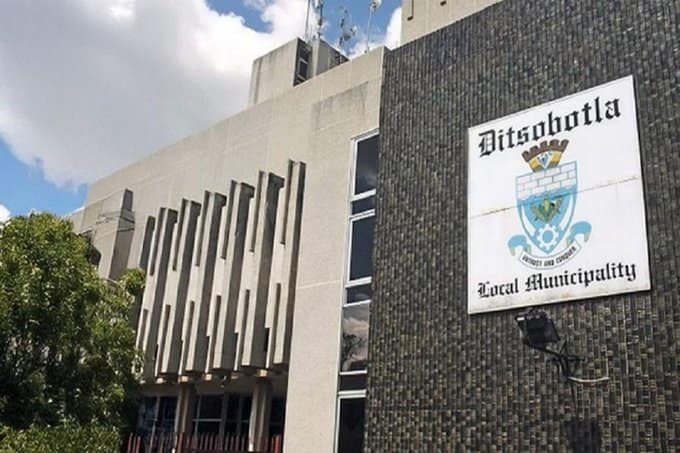
Eight months ago, the national government swept into this rugged North West town with a promise of rescue. The Cabinet had invoked Section 139(7) of the Constitution, a rarely used but powerful provision that allows the national executive to dissolve a municipal council and impose direct intervention when a local authority has failed so catastrophically that it threatens the basic rights and dignity of its people. Ditsobotla Local Municipality, of which Lichtenburg is the seat, was declared a case of “constitutional collapse.” The province could not fix it. The municipality could not fix itself. So Pretoria stepped in.
But today, as winter begins to bite and the taps in many homes remain stubbornly dry, the residents of Ditsobotla say the intervention has changed nothing. The same potholes that swallowed car tyres a year ago still yawn across main roads. The same streetlights that went dark during the previous administration still offer no illumination. The same raw sewage that once flowed through the streets of Coloured Town and Ipeleng still bubbles up after every heavy rain. And the same frustration that drove residents to protest, to block roads with burning tyres, to march on the municipal offices—that frustration has now curdled into something colder: a weary, angry conviction that no one in power actually cares.
“They came here with big speeches,” said Johannes Sefanyetso, a 58-year-old grandfather and community leader in the sprawling township of Ipeleng, as he stood next to a cracked water pipe that has leaked for six weeks. “They said, ‘We are from government. We are here to fix. Give us time.’ We gave them time. Eight months. And what has changed? Nothing. The water comes maybe two days a week. The clinic still runs out of medicine. The library has been closed for a year. This is not intervention. This is abandonment with a fancy name.”
The Anatomy of a Collapse: How Ditsobotla Broke
To understand the anger in Ditsobotla, one must first understand just how deeply the municipality had failed before the intervention. For years, Ditsobotla has been held up as a case study of municipal dysfunction. Auditor-General reports consistently ranked it as one of the worst-performing municipalities in the country, with irregular, wasteful, and fruitless expenditure running into hundreds of millions of rands. The municipal bank account was repeatedly attached by creditors. Staff went months without pay. Basic services—water, electricity, sanitation, refuse removal—became sporadic at best, non-existent at worst.
The political situation was equally chaotic. The council changed mayors multiple times in a single year, with factional battles within the ANC and opposition parties paralyzing decision-making. In 2021, the municipality failed to pass a budget, leading to a complete shutdown of capital projects. By early 2023, it was clear that the provincial government’s earlier intervention under Section 139(1)(b)—which allows a province to assume municipal responsibilities—had failed. The national Cabinet had no choice but to pull the trigger on the nuclear option: full dissolution.
In September 2023, the Cabinet invoked Section 139(7), dissolving the Ditsobotla council and appointing an administrator to run the municipality for an indefinite period. The administrator, a seasoned official with a reputation for turning around failing entities, was given sweeping powers: to approve budgets, hire and fire staff, sign contracts, and bypass normal municipal processes in the name of urgent service delivery. The national government promised a “fresh start” and a “new dawn” for the long-suffering residents.
But eight months later, that dawn has not come.
The Residents Speak: ‘We Are Living in the Same Darkness’
Over two days, a small team of journalists spoke with more than two dozen residents across Ditsobotla—from the dusty streets of Ipeleng and Itsoseng to the more established neighbourhoods of Lichtenburg’s town centre. The stories were remarkably consistent, not in their details but in their shared sense of betrayal.
In Coloured Town, a historically disadvantaged area on the eastern edge of Lichtenburg, residents pointed to a manhole cover that has been missing for four months. Beneath it, raw sewage bubbles and stinks. Children play nearby. Elderly women pick their way across rotting planks laid over the open hole.
“We reported it in January,” said Riaan Fortuin, a community leader who has become an unofficial ombudsman for his neighbours. “I called the hotline they set up after the intervention. I went to the municipal offices. I emailed the administrator personally. Nothing. Four months. A child could fall in there and drown. But nobody cares.”
In the Bree Street business district, shop owners described a town in visible decline. The municipal building itself, once a symbol of local governance, now looks abandoned: chipped paint, broken windows, overgrown weeds. The traffic lights at the main intersection have not worked in six months, leading to daily near-misses.
“I am trying to run a butcher shop,” said Ahmed Cassim, who has operated his business in Lichtenburg for 15 years. “But how do I keep meat fresh when the power goes off for eight hours at a time, with no warning? We have lost thousands of rand in stock. The administrator came to see me once. He took notes. He promised action. That was three months ago. I haven’t seen him since.”
Even in the more affluent parts of town, where residents can afford boreholes and generators, the frustration is palpable. “I am lucky—I can buy my way out of this mess,” said Elmarie van der Merwe, a retired teacher living in a secure complex on the outskirts. “But I shouldn’t have to. I pay my rates and taxes. My municipality should provide services. That is the social contract. Ditsobotla has broken that contract. And the national government has failed to fix it.”
The Water Crisis: A Slow-Motion Catastrophe
Of all the service delivery failures, none cuts deeper than water. Ditsobotla sits in a semi-arid region, and reliable access to clean water has always been a challenge. But under the intervention, the situation has become a slow-motion public health catastrophe.
The main reservoir, which serves most of Lichtenburg and surrounding townships, is old and poorly maintained. Frequent pump failures lead to extended outages. The water treatment plant, built in the 1970s, frequently releases water that fails quality tests. Boil-water notices are so common that most residents have stopped paying attention.
“We are drinking poison,” said Eunice Mohale, a mother of three from Itsoseng. “My youngest child has had diarrhea four times this year. The clinic says it’s the water. But what can I do? I cannot afford bottled water. I boil when I have electricity. But sometimes the power is out, and we have no choice.”
When asked about the water crisis, the administrator’s office pointed to a new borehole drilling program and the appointment of a specialized water task team. But residents say they have seen no evidence of either. “Promises, promises,” said Mohale, shaking her head. “They talk. We suffer. That is the story of Ditsobotla.”
The Administrator’s Response: ‘Rome Wasn’t Built in a Day’
Reached for comment, the office of the appointed administrator, Thabo Mkhwanazi, issued a carefully worded statement. Mkhwanazi did not dispute that significant problems remain, but he pushed back against the charge that the intervention has failed.
“Eight months is a short time to reverse years—indeed, decades—of neglect and maladministration,” the statement read. “The administrator has made significant progress in stabilizing the municipality’s finances, ensuring that staff are paid on time, and resuming basic maintenance work. However, the scale of the crisis is immense. We are rebuilding a collapsing system brick by brick. We ask for patience and partnership from the community.”
The statement listed a number of achievements: the restoration of regular salary payments to municipal workers, the unblocking of several major sewer lines, the procurement of new water pumps, and the completion of a forensic audit that has identified officials implicated in past corruption. It also noted that the administrator has opened disciplinary proceedings against several senior staff members.
But residents remain unconvinced. “They talk about forensic audits and disciplinary hearings,” said Sefanyetso, the community leader from Ipeleng. “Meanwhile, my tap is dry. They care more about punishing people than about helping us. That is the problem with government—they are always looking backward, never forward.”
The Political Fallout: Provincial and National Blame Games
The failure of the Ditsobotla intervention has become a political football, kicked back and forth between the North West provincial government and the national Cabinet. Provincial officials, speaking anonymously, have privately expressed frustration that the national administrator has been slow to act, mired in bureaucracy despite his supposedly sweeping powers. National officials, in turn, point to decades of provincial mismanagement that left the municipality beyond rescue.
“We inherited a corpse,” said a senior official in the national Department of Cooperative Governance (DCOG), speaking on condition of anonymity. “You cannot resuscitate a corpse. You have to build something entirely new. That takes time. The residents have every right to be angry, but they should direct that anger at the people who destroyed their municipality, not at those trying to fix it.”
The Democratic Alliance (DA), which governs the North West province in a shaky coalition, has seized on the Ditsobotla failure as evidence of broader ANC incompetence. “The ANC has been in charge of this municipality for decades,” said DA provincial leader Freddy Sonakile. “They broke it. Then the national ANC stepped in and promised to fix it. Now, eight months later, nothing has changed. The only conclusion is that the ANC cannot govern, at any level.”
The Economic Freedom Fighters (EFF) have called for the administrator to be fired and for a special provincial inquiry into the intervention. “Section 139(7) is supposed to be a last resort,” said EFF North West chairperson Manketsi Tlhape. “It has become a joke. The administrator is just as useless as the councillors he replaced. We need a new approach—one that puts power in the hands of the people, not in the hands of failed bureaucrats.”
Section 139(7): A Blunt Instrument?
Legal experts note that Section 139(7) is a blunt instrument, designed for extreme cases but ill-suited to the slow, grinding work of rebuilding local governance. “The provision was intended for situations where a municipality has completely collapsed and cannot continue to function,” explained constitutional law expert Professor Pierre de Vos of the University of Cape Town. “But it does not come with a magic wand. The administrator still has to work within a broken system—broken infrastructure, broken finances, broken staff morale. It is not surprising that progress is slow. The question is whether the national government has the political will to stay the course, or whether they will eventually declare victory and leave, as they have in other interventions.”
De Vos pointed to similar interventions in other municipalities, such as the Vuwani crisis in Limpopo and the Metsimaholo collapse in the Free State, where national administrators achieved mixed results. “The pattern is familiar: initial enthusiasm, followed by slow progress, followed by frustration, followed by abandonment. Ditsobotla risks becoming the next chapter in that sad story.”
What Comes Next: Protest, Despair, or Organizing?
As the eight-month mark passes, residents of Ditsobotla are grappling with a difficult question: What do they do now? The traditional avenues of complaint—calling the municipality, attending community meetings, writing to the administrator—have yielded nothing. The provincial government has been largely silent. The national government, preoccupied with load-shedding and election preparations, seems to have forgotten that Ditsobotla exists.
Some are calling for renewed protests. “We must block the roads again,” said a young man in Ipeleng, who declined to give his name for fear of police retaliation. “That is the only language they understand. When we burned tyres, they sent the administrator. Now we are quiet, and they have forgotten us again. We must make noise.”
Others are more cautious, wary of a crackdown. “Protesting only hurts us,” said a local business owner. “The police come. They arrest people. The tyres burn and the roads close, but the water still doesn’t flow. We need something else. We need a sustained campaign—lawyers, media, political pressure. Not just anger.”
A third group has begun exploring legal action. A coalition of community organizations is considering a court application to force the national government to either produce tangible results or explain why the intervention should continue. “The Constitution does not allow the national government to simply take over a municipality and then do nothing,” said attorney Thabang Mokoena, who is advising the coalition. “Section 139(7) comes with an obligation to actually deliver services. If the government is failing in that obligation, the courts can intervene.”
The Human Cost: Beyond Statistics
Behind the politics and the legal arguments are real people, living real lives, in a real town that is slowly crumbling. On a warm Thursday afternoon, a group of elderly women gathered under a tree in Coloured Town, sharing stories and complaints like a rosary of sorrows.
“Some days I think they want us to leave,” said Martha Visagie, 74, who has lived in the same house for 40 years. “They want us to give up, to move to the cities, to disappear. But where will I go? My children are here. My grandchildren are here. This is my home. I just want a government that remembers that.”
Her friend, Anna van Wyk, nodded. “They came with suits and briefcases and fancy words,” she said softly. “Eight months ago, they stood right there, on that corner, and promised us a new beginning. We believed them. We always believe them. That is our sin—we keep believing. But not anymore. Now we only believe what we see. And what we see is nothing.”
Epilogue: A Town Holding Its Breath
As the sun set over Lichtenburg, the administrator’s office issued one more statement, this one shorter and more urgent. “We hear the frustrations of the community. We share them. We are working day and night to bring relief. Please do not lose hope.”
But hope, like water, is a finite resource. And in Ditsobotla, after years of drought and eight months of promised rain, the well is running dry. The taps remain empty. The potholes remain open. The sewage still rises. And a community of tens of thousands wonders, with a sadness that borders on rage, whether anyone in Pretoria is even listening anymore.
The national intervention was meant to be a rescue. But for the people of Lichtenburg, it has become just another chapter in a long, bitter story of promises made and promises broken. The only question now is how many more chapters they are willing to endure.
About The Author