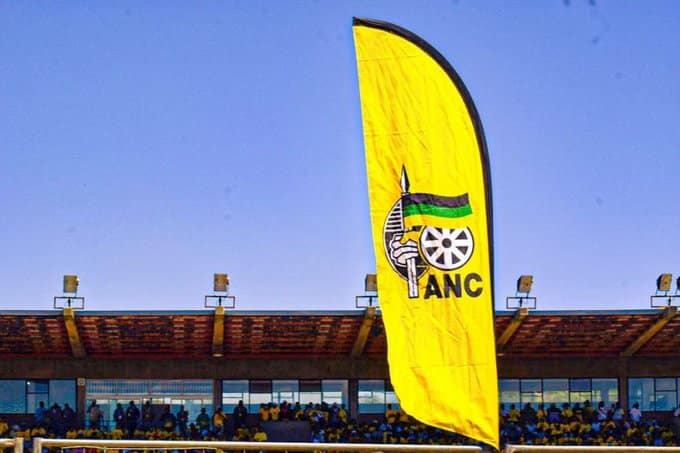
The fluorescent lights of the conference hall had barely dimmed when the text messages began to fly. By Sunday evening, the wreckage of the African National Congress’s 8th Regional Conference in Mangaung was already being picked over by political rivals, factional allies, and nervous national leaders. Now, five days later, the region—once the proud political cradle of figures like J.B. Mafora and a crucial battleground for the Free State’s soul—finds itself in a strange, suspended purgatory.
The party’s regional leadership is no longer speaking with one voice. They are, instead, waiting by the phone.
According to insiders close to the process, the ANC’s Mangaung region has formally requested permission to reconvene its collapsed regional conference. But the green light cannot come from local leaders alone. Approval must be granted jointly by the ANC’s Free State provincial leadership and the party’s National Executive Committee (NEC)—a two-tiered bottleneck that could take weeks or even months to clear. For a party already bleeding public trust, every day of delay is a gift to opposition parties and a source of deepening frustration for grassroots members.
What Happened Last Weekend?
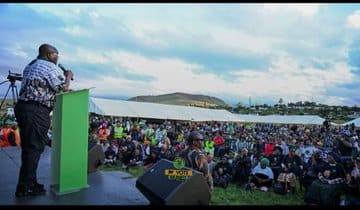
The 8th Regional Conference, held at a sprawling community hall just outside Bloemfontein, had been billed as a unity exercise. Delegates arrived on a crisp autumn Saturday morning, armed with credentials, lunchboxes, and the weary hope of resolving months of internal squabbling over branch delegations, membership audits, and allegations of gatekeeping. But within hours, the carefully scripted agenda unraveled.
Witnesses describe scenes of shouting matches over the podium, disputed voter rolls, and at least two physical scuffles between rival branch delegates. The flashpoint came when a senior regional task team member attempted to table an amended credentials report—a move that a faction claimed violated the party’s constitution. When the conference chair refused to entertain a point of order, nearly half the delegates walked out, singing struggle songs that quickly curdled into jeers. Within an hour, the hall was less than half full. The conference chair, facing a clear lack of quorum, had no choice but to suspend proceedings indefinitely.
No leadership was elected. No policy resolutions were passed. And no one left feeling victorious.
The Waiting Game
Now, the region’s interim leadership—a disputed body in its own right—has filed a formal request with the ANC’s Free State provincial executive committee (PEC). The request is simple: authorize a reconvened conference, with a tightened credentials process, to finish the job within 30 days. But the PEC, itself riven by factions loyal to different NEC members, has not yet placed the item on its agenda. Provincial secretary Mathabo Leeto confirmed receipt of the request but offered no timeline for a response.
“We are aware of the application. It is under consideration,” Leeto said in a brief statement. “The ANC does not operate on emotion. It operates on rules.”
Critics hear something else in that phrase: paralysis dressed as procedure.
The situation is further complicated by the NEC’s looming oversight role. Under ANC Rule 12.4, any regional conference that collapses under disputed circumstances must receive written clearance from the national leadership before a fresh attempt. That means the PEC’s approval, if it ever comes, must then be ratified by the NEC’s Organisational Committee—a body led by Secretary-General Fikile Mbalula, who has made no secret of his impatience with Free State infighting.
Why Mangaung Matters
To understand the urgency, one must understand Mangaung’s weight in the ANC’s internal geometry. The region is no ordinary district. It is the home of the Union Buildings’ sister city; the site of the ANC’s landmark 2012 national conference that reaffirmed Cyril Ramaphosa’s deputy presidency; and a perennial battleground for control of the Free State—a province that has seesawed between pro-Ramaphosa and pro-retain factions for a decade.
Whoever controls Mangaung’s regional executive committee controls a block of delegates to the next provincial conference, and by extension, a voice at the ANC’s next national conference in 2027. Last weekend’s collapse was not an accident. It was, veteran analysts say, a deliberate implosion—engineered by a faction that realized it did not have the numbers to win a clean vote and decided to burn the house down rather than lose it.
“Nobody walks out of a conference with a quorum unless they have calculated that a collapse benefits them more than a defeat,” said Dr. Naledi Mofokeng, a political scientist at the University of the Free State. “The question now is whether the national leadership has the appetite to impose a solution—or whether they will let the region bleed out slowly.”
What Happens Next?
Three scenarios are now circulating in Bloemfontein’s political salons:
- The Fast-Track: The PEC and NEC approve a reconvened conference within two weeks, with a neutral credentials team flown in from Luthuli House to supervise. This is the preferred outcome for the faction that believes it can win a fair vote.
- The Intervention: The NEC invokes Rule 25.4, dissolving both the disputed regional task team and the provincial leadership, and appoints an administrator to run Mangaung until fresh branch audits are complete. This would be a drastic, humiliating move.
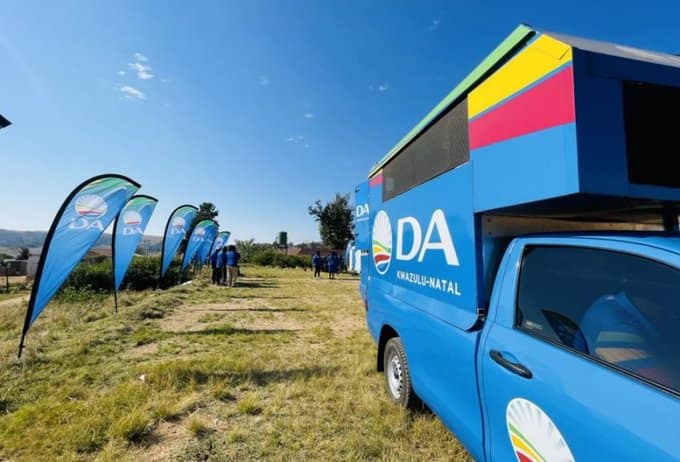
- The Slow Freeze: The request languishes for months, branches atrophy, and the region drifts without legitimate leadership into the 2024 general election—handing a symbolic victory to the Democratic Alliance and Economic Freedom Fighters, both of whom have made inroads in Bloemfontein’s metro.
For now, the ANC in Mangaung waits. Regional leaders avoid each other’s calls. Branch chairs refresh their WhatsApp groups for any hint of news. And in the dusty townships of Botshabelo and Thaba Nchu, ordinary members—the ones who pay their R100 membership fees and show up for branch meetings under streetlights—are left wondering if the party of liberation can still organize its way out of a paper bag.
One delegate, who asked to remain anonymous for fear of retaliation, put it bluntly: “We are not waiting for a green light. We are waiting for a miracle.”
The phone has not yet rung.
About The Author