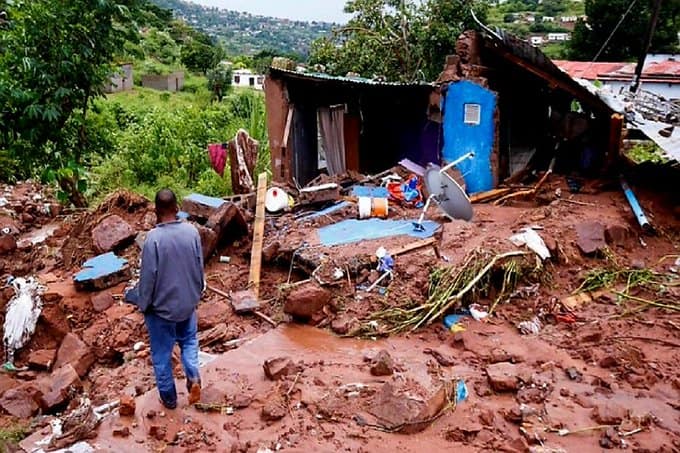
Approximately 20 families, their homes rendered uninhabitable by relentless weekend downpours, have been forced to seek refuge in a local school turned emergency shelter, as northern KwaZulu-Natal grapples with yet another wave of devastating floods. The severe weather, which lashed the Umhlabuyalingana area and surrounding regions, has left a trail of destruction, severing vital road links, damaging dozens of dwellings, and isolating vulnerable communities.
The displaced families, many of whom lost everything to the rising waters, are now housed at the Mthente Primary School, where classrooms have been converted into temporary living quarters. Disaster management teams, alongside volunteers from the South African Red Cross and Gift of the Givers, are on-site providing immediate humanitarian aid, including mattresses, blankets, food parcels, and hygiene kits.
“The water came in the night, and we had to run with just the clothes we were wearing,” recounted Nomsa Dlamini, a mother of three, as she sorted through donated clothing. “Our home is filled with mud, and everything is ruined. We have nowhere else to go. The school is our shelter now.”
The floods have caused extensive infrastructural damage, with several key gravel and dirt roads washed away or submerged, effectively cutting off remote villages from main supply routes. This has hampered the delivery of aid and the assessment of the full scale of the damage. Preliminary reports from the provincial Department of Cooperative Governance and Traditional Affairs (CoGTA) indicate that over 50 homes have suffered partial or complete structural damage across the district.
“Our teams are working to reach the most affected areas, but access remains a major challenge,” said a KZN CoGTA spokesperson. “We are prioritizing the clearing of main access roads and coordinating aerial assessments where possible. The immediate focus is on saving lives, providing shelter, and ensuring no community is left without basic necessities.”
This latest disaster compounds the struggles of a province still recovering from catastrophic floods in recent years. The South African Weather Service has maintained warnings for further disruptive rainfall across KwaZulu-Natal, raising fears of renewed flooding and hampering recovery efforts. The saturated ground can no longer absorb the deluge, leading to rapid runoff and increased risk of mudslides.
Local leaders have appealed for urgent provincial and national intervention, calling for the declaration of a local state of disaster to unlock emergency funding. “Our communities are on their knees,” said a local ward councillor. “This is not just about this weekend’s rain; it’s about a recurring crisis. We need sustainable solutions—proper drainage, rebuilt homes on safer ground, and early warning systems—not just temporary relief every time it pours.”
As the clean-up begins under threatening skies, the families at Mthente Primary School face an uncertain future, emblematic of a broader vulnerability to climate extremes in the region. Their immediate need for safety and sustenance is met for now, but the path to rebuilding their lives and homes remains dauntingly long.
About The Author