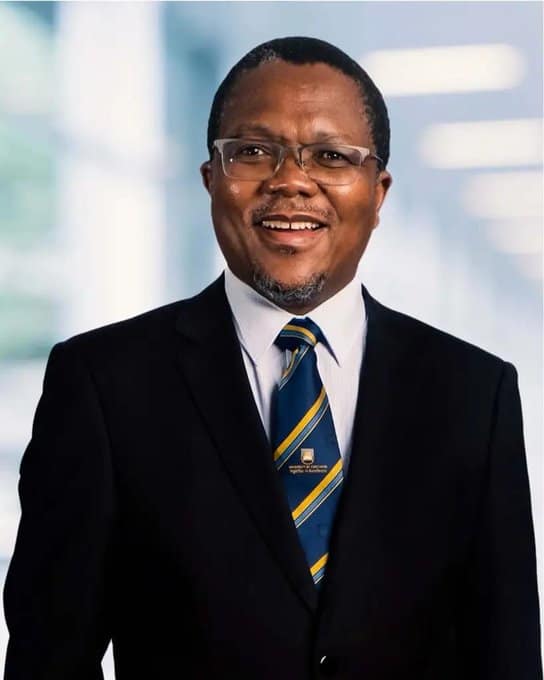
The University of Fort Hare, one of South Africa’s oldest and most revered institutions of higher learning, has been plunged into fresh turmoil after its Council placed Vice-Chancellor Professor Sakhela Buhlungu on precautionary suspension with full pay. The decision, which follows a forensic investigation that uncovered irregularities in the appointment of two executive directors, marks a dramatic escalation in the governance crisis that has plagued the storied university for years.
The suspension, confirmed in a brief statement issued by the university’s Council on Wednesday evening, comes after months of behind-the-scenes tension between the Vice-Chancellor’s office and the institution’s governing body. According to sources familiar with the matter, the forensic investigation—conducted by an external firm—identified serious procedural violations in the recruitment and appointment process for two senior executive positions. While the university has not disclosed the specific roles involved, informed sources indicate they are at the level of executive director, positions that carry significant influence over university operations, finances, and strategy.
“The University of Fort Hare Council has resolved to place the Vice-Chancellor, Professor Sakhela Buhlungu, on precautionary suspension with full pay pending further processes,” the Council’s statement read. “This decision follows the receipt of a forensic report that raised concerns regarding irregularities in the appointment of two executive directors. The Council is committed to upholding the principles of good governance, accountability, and the rule of law, and will ensure that due process is followed in all respects.”
The statement added that an interim Vice-Chancellor would be appointed in due course to ensure the continuation of academic and administrative functions. It did not provide details on the timeline for the disciplinary process or the specific findings of the forensic report.
Professor Buhlungu, a distinguished sociologist and former executive secretary of the Council for the Development of Social Science Research in Africa (CODESRIA), took the helm at Fort Hare in 2021 with a mandate to stabilize an institution that had been buffeted by years of governance scandals, financial mismanagement, and leadership instability. His appointment was initially welcomed by many in the academic community, who hoped that his scholarly credentials and experience in higher education governance would bring much-needed calm to the university.
But his tenure has been anything but peaceful. From the outset, Buhlungu faced resistance from factions within the university’s administration and Council, some of whom were loyal to previous leadership structures. Allegations of interference in appointments, procurement irregularities, and strained relationships with key stakeholders have simmered beneath the surface for much of his term. The forensic investigation that has now led to his suspension was reportedly initiated after whistleblowers came forward with complaints about the hiring processes for the two executive director positions.
The university has not confirmed whether the appointments in question were made by Buhlungu personally or by a panel under his oversight. However, the decision to suspend the Vice-Chancellor—the most senior executive at the institution—suggests that the forensic report identified conduct that the Council deemed sufficiently serious to warrant immediate precautionary measures.
Precautionary suspension is a standard practice in South African labour law and university governance, allowing an employer to remove an employee from the workplace while an investigation or disciplinary process is underway, particularly where there is a risk of interference with evidence or further misconduct. The fact that the suspension is with full pay indicates that Buhlungu remains an employee of the university pending the outcome of any disciplinary proceedings.
The suspension has sent shockwaves through the Fort Hare community and the broader higher education sector. The university, founded in 1916, holds an almost mythic place in South African history. Its alumni include some of the continent’s greatest thinkers and leaders, among them Nelson Mandela, Oliver Tambo, Robert Sobukwe, and numerous other anti-apartheid stalwarts. For decades, it has been seen not just as a university, but as a crucible of African intellectual and political liberation.
Yet in recent years, Fort Hare has also become a symbol of the governance crisis afflicting South Africa’s public universities. A series of reports by the Auditor-General and the Department of Higher Education have documented persistent problems: irregular expenditure, questionable procurement practices, conflicts of interest, and a revolving door of senior leadership. In 2022, the university was placed under administration by the Department of Higher Education for a period, with an administrator appointed to restore financial stability and governance integrity. That administration was lifted in 2023, with the department expressing confidence that the Council and Vice-Chancellor could steer the institution forward.
Buhlungu’s suspension now raises uncomfortable questions about whether that confidence was misplaced. It also places the University Council in a delicate position. The Council, as the university’s highest governing body, has a fiduciary duty to act decisively when serious governance failures are identified. But it also bears responsibility for overseeing the Vice-Chancellor’s performance and for ensuring that the conditions that led to previous crises do not recur. Critics may ask why the Council did not identify and address the alleged irregularities earlier, or whether the suspension is itself a symptom of deeper factional struggles within the governing body.
Reaction from staff and students has been mixed. Some academics, who have long complained of a toxic work environment under Buhlungu’s leadership, welcomed the Council’s decision. “There have been too many stories of appointments being made without proper process, of people being hired because of who they know, not what they know,” said a senior lecturer who spoke on condition of anonymity for fear of reprisal. “If the forensic report shows that the Vice-Chancellor was involved in that kind of conduct, then the suspension is justified.”
Others, however, expressed concern that the suspension could destabilize the university further. “We are still recovering from the administrator’s era,” said a member of the support staff who has worked at Fort Hare for over two decades. “The students are struggling. There are financial challenges. Now we have a leadership vacuum again. Who is going to make decisions? Who is going to sign off on salaries, on research grants, on the day-to-day running of this place?”
The National Education, Health and Allied Workers’ Union (NEHAWU), which represents many staff members at the university, issued a cautiously worded statement calling for transparency. “We note the decision of the Council and await further details on the allegations against the Vice-Chancellor,” the union said. “We urge all parties to allow due process to unfold without interference. The stability of the university and the interests of students and workers must come first.”
The Department of Higher Education, which has been closely monitoring Fort Hare since the end of administration, said it had been informed of the Council’s decision but declined to comment further, stating that the matter was an internal governance issue for the university. However, insiders suggest that the department is deeply concerned about the implications of the suspension and will be watching the disciplinary process closely.
For Professor Buhlungu, the suspension represents a stunning reversal of fortune. Just months ago, he was presiding over the university’s centenary celebrations—a milestone that was meant to be a moment of reflection on Fort Hare’s illustrious past and a recommitment to its future. Now he faces the prospect of disciplinary proceedings that could result in his removal from the very institution he was tasked with rebuilding.
Neither Buhlungu nor his legal representatives have publicly commented on the suspension. It is expected that he will challenge the decision if he believes it was procedurally unfair or if the allegations against him are unfounded. In the meantime, the university’s Council is expected to appoint an acting Vice-Chancellor in the coming days to ensure continuity.
The coming weeks will be critical for the University of Fort Hare. The disciplinary process—if it proceeds—will likely be conducted behind closed doors, but its outcome will reverberate across the institution and beyond. If Buhlungu is cleared, he will return to a leadership position that has been significantly weakened by the public airing of allegations against him. If he is found guilty, the university will face the daunting task of finding yet another leader for an institution that has seen far too much turnover at the top.
For the students of Fort Hare, many of whom come from disadvantaged backgrounds and rely on the university as their best hope for a better future, the suspension is just the latest chapter in a long and exhausting saga. “We just want to study,” said a third-year student who declined to give her name. “We don’t care about the politics. We want our lectures, our libraries, our degrees. Every time something like this happens, it’s us who suffer. The professors fight, and we lose the semester.”
As the sun set over the rolling hills of the Eastern Cape, the campus of Fort Hare—where generations of African leaders once walked—waited in uncertainty. The forensic report sits in the hands of the Council. The Vice-Chancellor is at home, suspended. And one of South Africa’s most important universities finds itself, once again, at a crossroads.
About The Author