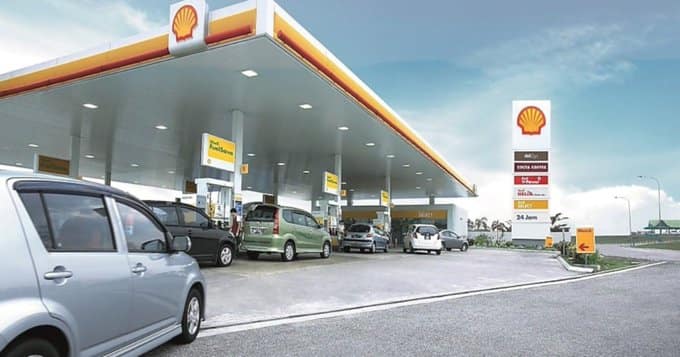
For nearly four years, a quiet but fierce battle has been raging behind the gleaming facades of Shell’s 600 petrol stations across South Africa. Not over fuel prices or convenience store sandwiches, but over something far more fundamental: the very value of the brand’s local footprint.
Now, that battle is approaching its end. Shell and its South African black economic empowerment (BEE) partner, Thebe Investment Corporation, are on the cusp of resolving a long-standing valuation dispute that has delayed the sale of Shell’s downstream retail operations. According to multiple sources familiar with the negotiations, the deal could value the assets at up to R19 billion, making it one of the largest single transactions in South Africa’s petroleum sector in a decade.
The resolution would clear the way for a competitive bidding process, with global energy giants including Saudi Aramco and commodity trading house Trafigura expected to submit offers in the coming weeks. The sale would mark Shell’s near-total exit from South African downstream operations, following its controversial decision to sell the Sapref refinery for just R1 in 2022.
“This is the end of an era,” said energy analyst Ted Blom, speaking from his Johannesburg office. “Shell has been part of the South African landscape for over a century. To see them walk away from their service stations—the most visible part of their brand—is seismic. It tells you everything about where global oil majors are heading.”
The Dispute That Held Everything Up
The saga began in 2022, when Thebe Investment Corporation—a black-owned and managed investment group with deep roots in the BEE landscape—decided to exit its 28% stake in Shell’s retail operations. Thebe had been a partner in Shell’s downstream business since the early 2000s, part of a wave of empowerment deals designed to broaden ownership in strategic sectors of the economy.
But when Thebe sought to cash out, Shell and Thebe found themselves miles apart on the value of that 28% stake. Thebe commissioned its own valuation, which it believed reflected the true worth of the assets—a network of 600 service stations, convenience stores, and associated distribution infrastructure. Shell’s valuation came in significantly lower.
The disagreement froze the sale process for nearly two years. Neither side would budge. Thebe, confident in its position, refused to accept a lower offer. Shell, wary of overpaying for a stake it was trying to sell, held the line.
“The valuation gap was substantial,” said a banking source involved in the negotiations, speaking on condition of anonymity. “We’re talking about hundreds of millions of rands. Thebe felt they were being lowballed. Shell felt Thebe’s valuation was unrealistic. For a long time, neither side would blink.”
The breakthrough came late last year, when both parties agreed to a binding independent valuation process. A neutral firm, jointly appointed by Shell and Thebe, was tasked with determining the fair market value of the entire retail network. That valuation, sources say, has now been completed and accepted by both sides.
“Both parties have agreed in principle to the valuation range,” the banking source said. “The exact number is still being finalized, but we are looking at a total enterprise value of between R17 billion and R19 billion. That would give Thebe roughly R4.8 billion to R5.3 billion for its 28% stake—significantly more than its initial R3.7 billion valuation.”
Thebe’s Long Game
For Thebe, the resolution is a vindication. The investment group, which has stakes in sectors ranging from energy to resources to financial services, had argued from the beginning that Shell’s retail network was undervalued.
“Thebe has always believed in the intrinsic value of these assets,” said a spokesperson for the company. “We are pleased that the independent valuation process has confirmed our position. We look forward to concluding this transaction in a manner that delivers fair value to our stakeholders.”
Thebe’s initial investment in Shell’s retail operations was part of a broader BEE transaction that saw black investors acquire significant stakes in major oil companies. Similar deals were struck with BP, TotalEnergies, and Engen. But as global energy transitions accelerate and oil majors retreat from legacy assets, those investors are now looking for exits.
“The BEE partners came in at a certain time under a certain regulatory framework,” said energy lawyer Mpho Maseko. “Now, with the landscape shifting, they want to realize their gains. That is their right. The question is whether the next wave of ownership will continue to reflect South Africa’s transformation imperatives.”
The Buyers Circle
With the valuation dispute resolved, the focus now shifts to the buyer’s table. Two names have emerged as the leading contenders: Saudi Aramco, the world’s largest oil company, and Trafigura, the Singapore-based commodity trading giant.
Saudi Aramco has been on an aggressive downstream expansion drive, snapping up refining and retail assets across Asia, Africa, and Europe. The company sees control of distribution networks as a way to guarantee markets for its crude oil and refined products. Acquiring Shell’s 600 South African service stations would give Aramco an instant, massive footprint in Africa’s most industrialized economy.
“Aramco wants to be where the customers are,” said Blom. “They have the capital. They have the product. What they don’t have is a retail network in South Africa. This deal would give them that overnight.”
Trafigura, meanwhile, is a different kind of player. As one of the world’s largest commodity traders, Trafigura has deep experience in logistics, storage, and supply chains. The company has been building its presence in Africa’s downstream sector, seeing opportunity in the divestment strategies of legacy oil majors.
“Trafigura is more of a trader than an oil company,” said Maseko. “They would likely run the network differently—more efficiently, perhaps, but also more focused on margins than on brand loyalty. It would be a different kind of ownership.”
Other potential buyers, including local consortiums and Asian state-owned oil companies, have also expressed interest. But industry insiders expect the final bidding to come down to Aramco and Trafigura.
“The valuation is high, but not prohibitively so for players of that size,” said the banking source. “Both have deep pockets. Both see strategic value. The question is who wants it more.”
Shell’s Retreat
The sale of Shell’s retail network is the latest in a series of high-profile divestments by the Anglo-Dutch giant in South Africa. In 2022, Shell sold its 72.5% stake in the Sapref refinery—one of the country’s largest crude oil refineries—to a consortium including state-owned Central Energy Fund for just R1, while also committing to cover environmental cleanup costs.
That deal was widely criticized by opposition parties and civil society groups, who argued that Shell was walking away from its environmental responsibilities. Shell maintained that the sale was necessary to align with its global strategy of reducing refining capacity and focusing on more profitable upstream and renewable energy investments.
“The Sapref sale for R1 was a signal,” said Blom. “Shell was not messing around. They wanted out of downstream in South Africa. The retail network was always going to follow. It just took longer because of the Thebe dispute.”
Shell’s global strategy, under CEO Wael Sawan, has been to simplify the business, cut costs, and focus on the most profitable assets. The company has sold refineries and service stations in Malaysia, Denmark, and the United Kingdom. South Africa is simply the next domino to fall.
“Shell is not leaving South Africa entirely,” Maseko noted. “They still have upstream exploration interests, including their controversial seismic survey off the Wild Coast. They still have commercial and industrial customers. But the visible Shell—the one you see on every corner, the one that generations of South Africans have grown up with—that Shell is leaving.”
What the Sale Means for Motorists
For the millions of South Africans who fill up at Shell service stations every week, the sale raises an obvious question: Will anything change?
The answer, for the short term at least, is probably not much. The stations themselves will continue to operate under the Shell brand for a transitional period, as is typical in such deals. The new owner will inherit existing supply agreements, staff, and franchise relationships.
But over time, changes could come. If Saudi Aramco takes over, motorists might see more integration with Aramco’s global supply chain, potentially affecting fuel pricing and availability. If Trafigura wins, the focus may shift toward efficiency, possibly leading to the closure of underperforming stations or changes to convenience store offerings.
“Don’t expect the price of fuel to drop because of this,” said Blom. “Fuel prices are determined by global crude markets, the rand-dollar exchange rate, and government taxes—not by who owns the service station. But the ownership change could affect things like loyalty programs, payment systems, and the availability of non-fuel services.”
The BEE Question
One of the more sensitive aspects of the sale is what it means for black economic empowerment in the petroleum sector. Thebe’s exit would remove a significant black-owned player from the downstream value chain. Whether the incoming owner will be required to maintain similar levels of BEE ownership is an open question.
The Petroleum and Liquid Fuels Charter, which governs transformation in the sector, sets targets for ownership by historically disadvantaged South Africans. But the charter is not legally binding in the same way as the Broad-Based Black Economic Empowerment Act, and enforcement has historically been weak.
“Thebe’s exit creates a transformation risk,” said Maseko. “If the new owner is a foreign company with no local partners, you could see a regression in black ownership in the sector. The government will be watching this closely. I would not be surprised if the Department of Mineral Resources and Energy imposes conditions on the sale.”
Thebe, for its part, has indicated that it will reinvest the proceeds from the sale into other sectors of the economy, continuing its broader BEE mandate.
“This is not an exit from South Africa,” the Thebe spokesperson said. “This is a portfolio rebalancing. The proceeds will be deployed into other strategic investments that continue to drive transformation and economic growth.”
The Timeline
With the valuation dispute now resolved, the sale process is expected to move quickly. Interested buyers will be invited to submit binding offers within the next four to six weeks. A preferred bidder could be selected by the end of the third quarter of 2026, with the transaction closing before the end of the year, subject to regulatory approvals from the Competition Commission and the Department of Mineral Resources and Energy.
The Competition Commission, which has taken an increasingly active role in large energy transactions, is expected to scrutinize the deal carefully. Any concerns about market concentration or anti-competitive behavior could delay the process.
“This is not a rubber stamp,” said a competition law expert who asked not to be named. “Six hundred service stations is a significant chunk of the retail fuel market. The commission will want to ensure that the new owner does not have the ability to unduly influence fuel prices or engage in exclusionary conduct.”
A Century of Shell in South Africa
The sale, when it finally goes through, will close a chapter in South African corporate history. Shell first arrived in the country in 1902, just three years after the Anglo-Boer War ended. For generations, the yellow Shell scallop shell was as recognizable a symbol as the Springbok or the Castle Lager logo.
Shell service stations became landmarks. They were places where families filled up on road trips, where teenagers had their first jobs, where communities gathered in times of crisis. The brand weathered apartheid, international sanctions, and the democratic transition. But it could not weather the global energy transition.
“Nothing lasts forever,” said Blom. “Shell is moving toward a future of renewables, electric vehicle charging, and lower carbon intensity. Petrol stations in South Africa, however profitable, are not part of that future. So they are selling. It’s business. It’s not personal.”
But for the thousands of South Africans who work at Shell service stations—as cashiers, mechanics, managers, and cleaners—the sale is deeply personal. They will be watching closely to see whether the new owner honors their terms and conditions, or whether the transition brings uncertainty and, potentially, job losses.
The Road Ahead
As the sun set over Johannesburg on Thursday, the Shell service station at the corner of Jan Smuts Avenue and Bompas Road hummed with its usual evening activity. A taxi pulled in for fuel. A mother bought milk from the convenience store. A man checked his tire pressure.
None of them knew that the station might soon be owned by Saudi Aramco or Trafigura. And perhaps they did not need to know. For now, the yellow scallop shell still glowed in the twilight, a symbol of a century of service.
But change is coming. The R19 billion question is not just who will buy Shell’s stations—but what kind of South African fuel industry they will inherit, and what kind they will leave behind.
Thebe will get its money. Shell will get its exit. And the motorists of South Africa will keep filling up their tanks, watching the numbers on the pump spin, and hoping that whatever comes next is not worse than what came before.
About The Author