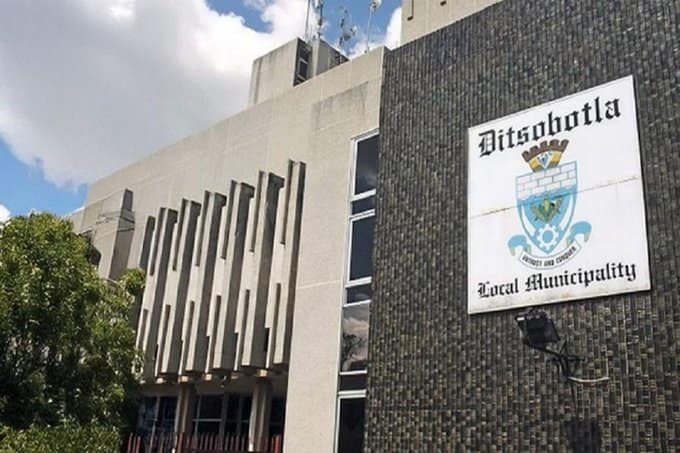
The sun was high over the Emfuleni Local Municipality offices on the morning of 30 March 2026. It was a Monday, the start of a new week, and Martha Mani Rantsofu had arrived early, as she always did. The 39-year-old acting accountant carried a brown lunch bag in one hand and a stack of financial reports in the other. She greeted the security guard at the gate. She smiled at the cleaner mopping the lobby floor. She had no reason to believe that this day would be any different from the hundreds that had come before.
She was wrong.
At precisely 8:47 a.m., as Martha settled into her desk on the second floor of the municipal building, two men wearing masks and hoodies walked through the main entrance. They bypassed the reception desk. They ignored the security guard’s question. They walked directly to the staircase, took the steps two at a time, and emerged on the second-floor corridor with the practiced efficiency of men who had done this before.
They found Martha at her desk. They did not speak. They did not demand money. They did not issue threats. They raised their weapons—both 9mm pistols, according to ballistics reports—and fired.
Fourteen bullets. That is what the post-mortem report would later document. Fourteen entry wounds across Martha’s chest, abdomen, and neck. She died before her coffee, still steaming in the mug beside her keyboard, had even cooled.
The gunmen fled down the same staircase, through the same lobby, past the same frozen security guard, and disappeared into a waiting silver sedan with no license plates. By the time police arrived, the only evidence left was the blood pooling under Martha’s chair, the frantic screams of her colleagues echoing through the corridors, and a question that has haunted Emfuleni ever since: Why?
The Victim
Martha Mani Rantsofu was not a politician. She was not a activist. She was not a whistleblower in the traditional sense. She was, by all accounts, a diligent, quiet, and deeply competent public servant—the kind of person who keeps the machinery of local government running while elected officials take credit for the results.
Born in Soweto and raised in the small Free State town of Parys, Martha had worked her way up from a junior clerk to the position of acting accountant at Emfuleni Local Municipality. She was known for her attention to detail, her refusal to sign off on incomplete paperwork, and her quiet insistence that municipal finances follow the rules.
“She was not flashy,” said her younger sister, Palesa Rantsofu, speaking through tears at a press conference called just days after the killing. “She was not looking for fame or recognition. She just wanted to do her job properly. She wanted the people of Emfuleni to get the services they paid for. And now she is dead because of it.”
Martha was a single mother of two—a daughter, 14, and a son, 10. She had recently completed a postgraduate diploma in forensic accounting, hoping to move into the municipality’s internal audit unit. Friends describe her as someone who loved gospel music, baked bread on Sundays, and never missed her children’s school meetings.
“She was the most honest person I knew,” said her best friend, Dikeledi Mokoena. “If you asked Martha for an opinion, she would give it to you straight. No sugarcoating. No politics. Just the truth. I think that is what killed her.”
The Killing That Shook Emfuleni
The Emfuleni Local Municipality, which governs the towns of Vereeniging, Vanderbijlpark, and surrounding areas, has long been a byword for dysfunction. For years, the municipality has been plagued by financial mismanagement, irregular expenditure, and allegations of corruption. In 2018, the provincial government placed Emfuleni under administration after it failed to pay creditors and staff salaries on time. The administration was lifted, but the problems never fully disappeared.
Martha had been hired as part of a cleanup effort—a new wave of financial professionals brought in to restore order to the municipality’s chaotic books. According to multiple sources within the municipality, she had recently flagged several “irregular” payments totaling millions of rands. She had also refused to sign off on a procurement contract that she believed had not followed proper tender processes.
“She was doing her job,” said a municipal insider who spoke on condition of anonymity for fear of retaliation. “She was asking questions. She was demanding documentation. And she was not backing down. Some people did not like that. Some people made threats.”
Those threats, the insider claimed, had been reported to the municipality’s human resources department and, informally, to local police. No action was taken. No protection was offered. And on the morning of 30 March, the threats became a reality.
“The system failed Martha,” the insider said. “She raised red flags. She sounded alarms. And no one listened. Now she is gone.”
The Aftermath
News of Martha’s killing spread quickly through the Emfuleni region, igniting a firestorm of outrage. Within hours, residents had gathered outside the municipal offices, holding makeshift placards and chanting for justice. “Who killed Martha?” they demanded. “Who is protecting the killers?”
The protest grew over the following days, drawing the attention of provincial and national politicians. The South African Local Government Association (SALGA) issued a statement condemning the killing and calling for a swift investigation. The Gauteng provincial government offered a R500,000 reward for information leading to the arrest and conviction of the perpetrators.
But for Martha’s family and the residents of Emfuleni, the response felt too little, too late.
“We want action, not statements,” said community leader Thabo Mokoena, addressing a crowd of several hundred at a vigil held outside the municipal offices. “We want arrests. We want convictions. We want the people who ordered this killing to rot in jail. Anything less is a betrayal of Martha’s memory.”
The hashtag #JusticeForMartha trended on social media for days, with thousands of South Africans sharing photos of the slain accountant and demanding answers. Civil society organizations, including Corruption Watch and the Council for the Advancement of the South African Constitution (CASAC), called for a full, independent investigation into the circumstances surrounding her death.
“This is not just a murder,” said CASAC executive secretary Lawson Naidoo. “This is an assassination. And it is an indictment of the state of governance in our municipalities. When public servants are killed for doing their jobs, we have crossed a very dark line.”
The Investigation
The South African Police Service (SAPS) has assigned a team from the Provincial Serious and Violent Crime Unit to lead the investigation. According to police spokesperson Brigadier Athlenda Mathe, the team is pursuing “multiple leads” and has interviewed more than 30 witnesses, including municipal employees, security personnel, and residents who reported seeing the silver sedan.
“We are making progress,” Mathe said in a brief statement. “We cannot share details at this time, but we are confident that those responsible will be brought to book.”
However, sources close to the investigation have expressed frustration with the pace of progress. The municipal security cameras, which might have captured the gunmen’s faces or the getaway car’s direction, were reportedly not functioning on the day of the killing. A maintenance log showed that the cameras had been “offline for routine servicing” since the previous Friday—a coincidence that many find hard to believe.
“Convenient, isn’t it?” said Palesa Rantsofu, Martha’s sister. “The cameras go down right before my sister is killed. The security guard doesn’t remember what the men looked like. The getaway car has no plates. Someone planned this. Someone with access. Someone who knew exactly what they were doing.”
Police have not ruled out the possibility that Martha’s killing was connected to her work as an accountant. Her computer, which was seized as part of the investigation, is being forensically examined for evidence of financial irregularities that might have motivated the attack.
“We are looking at everything,” said a detective involved in the case, speaking on condition of anonymity. “Her emails, her files, her phone records. If there is a financial paper trail, we will find it. The question is whether it leads us to the people who pulled the trigger or the people who paid them.”
The Political Fallout
The killing has also exposed deep fractures within Emfuleni’s political leadership. Mayor Sipho Nkosi, who has faced repeated calls to resign over the municipality’s financial troubles, issued a statement expressing “shock and sadness” at Martha’s death. But he stopped short of linking the killing to corruption within the municipality.
“Martha was a dedicated public servant,” Nkosi said. “Her death is a tragedy for her family, her colleagues, and the entire Emfuleni community. We are cooperating fully with the investigation and urge anyone with information to come forward.”
Opposition parties have been less circumspect. The Democratic Alliance (DA) has called for the municipality to be placed under administration again, arguing that the killing is proof of “a complete breakdown of governance and safety.”
“How can any employee feel safe doing their job when a colleague is murdered in broad daylight in her own office?” said DA Gauteng shadow MEC for community safety, Crezane Bosch. “The mayor must go. The municipal manager must go. And those responsible for Martha’s death must face the full might of the law.”
The Economic Freedom Fighters (EFF) went further, alleging that Martha was killed because she had uncovered a massive corruption scheme involving senior municipal officials and local businesspeople.
“This is not a mystery,” said EFF provincial chairperson Nkululeko Dunga. “Martha was killed because she knew too much. She was killed because she refused to sign off on illegal contracts. The blood of Martha Rantsofu is on the hands of the corrupt officials who run Emfuleni. They must be arrested today.”
The African National Congress (ANC) has defended Mayor Nkosi, describing the calls for his resignation as “opportunistic” and “divisive.”
“We mourn Martha as a family,” said ANC regional secretary David Makhura. “But we will not allow this tragedy to be politicized. Let the police do their work. Let justice take its course. That is what Martha would have wanted.”
A Family’s Grief
While politicians trade accusations and investigators sift through evidence, Martha’s family is left to navigate a world without her. Her two children are now in the care of their grandmother, a frail 67-year-old woman who struggles to understand how her daughter could be taken so violently.
“My daughter was a good person,” said Martha’s mother, Elizabeth Rantsofu, speaking from the family home in Parys. “She went to church. She helped her neighbors. She loved her children. Why would anyone want to hurt her? I don’t understand this world anymore.”
Martha’s funeral was held on 6 April at the Anglican Church in Vanderbijlpark. Hundreds of mourners filled the pews, many wearing T-shirts printed with Martha’s face and the words “Justice for Martha.” The service was interrupted twice by mourners who broke down in tears, unable to contain their grief.
“She deserved better,” said Palesa Rantsofu, her voice cracking as she delivered a eulogy. “She deserved to see her children grow up. She deserved to grow old. She deserved to be celebrated, not mourned. But the people who took her from us—they will not get away with it. I promise you, Martha. They will not get away.”
The Broader Crisis
Martha’s killing is not an isolated incident. It is the latest in a disturbing pattern of violence against public servants who dare to challenge corruption and mismanagement in South Africa’s municipalities.
In 2022, a senior official in the Lekwa Local Municipality was gunned down outside his home after flagging irregular tender awards. In 2023, a whistleblower in the Dr JS Moroka Municipality survived an assassination attempt after exposing a fraudulent payroll scheme. In 2024, a finance officer in the Matjhabeng Municipality was found dead in her car, a single gunshot wound to the head, days after submitting a report on missing funds.
“The killing of municipal officials who speak truth to power has become a national crisis,” said corruption watchdog Paul Hoffman of Accountability Now. “We are seeing a pattern of intimidation, threats, and violence designed to silence those who stand in the way of corruption. Unless we break this pattern, more Marthas will die.”
Hoffman and others have called for the establishment of a dedicated witness protection program for municipal whistleblowers, as well as stricter penalties for those who threaten or harm public servants.
“These are not just criminals,” Hoffman said. “These are enemies of the state. They are undermining the very fabric of our democracy. They must be treated as such.”
What Happens Next
As the investigation continues, the pressure on police to make arrests is mounting. The R500,000 reward has generated dozens of tips, though police say many are from “well-meaning but unhelpful” members of the public. A few, however, have been deemed credible and are being actively pursued.
“We are following up on three very specific leads,” the anonymous detective said. “I cannot say more than that. But I will say this: we are closer than we were a week ago. Much closer.”
For Martha’s family, every day without an arrest is a fresh wound. Her children ask when Mommy is coming home. Her mother sleeps in Martha’s bedroom, clutching her daughter’s dressing gown. Her sister has become an activist, speaking at rallies and demanding answers from anyone who will listen.
“I will not rest until the people who killed my sister are behind bars,” Palesa Rantsofu said. “If it takes months, I will wait. If it takes years, I will wait. If it takes the rest of my life, I will wait. But I will not stop. Martha deserves that. Martha deserves justice.”
Outside the Emfuleni municipal offices, the makeshift memorial has grown. Flowers, candles, handwritten notes, and empty bullet casings—left by mourners as a grim reminder of what happened—cover the pavement. A poster board bears dozens of photos of Martha, each one capturing a different smile, a different moment in a life cut brutally short.
At the center of the memorial, someone has written a single sentence in bold black marker: “She asked questions. She was killed. Never forget.”
As the sun sets over Vanderbijlpark, the words glow in the fading light—a epitaph, a warning, and a demand all at once. The question now is whether South Africa is listening. And whether, this time, justice will come before the next Martha falls.
About The Author