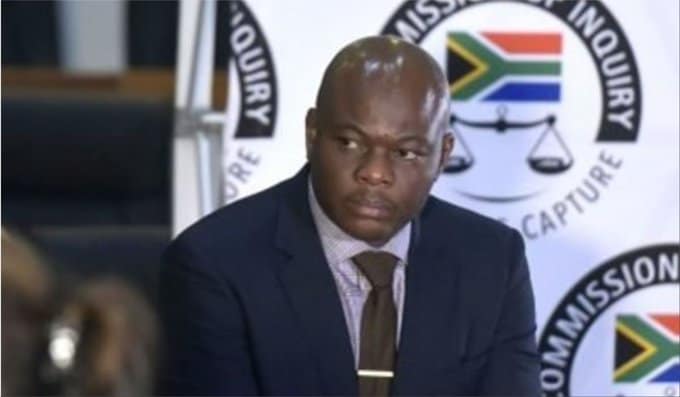
The atmosphere inside the Western Cape High Court on Thursday, 16 April 2026, was thick with the kind of tension that only a years-long underworld trial can generate. Courtroom 4D, packed to capacity with lawyers, journalists, and anxious family members, fell silent as a senior South African Police Service (SAPS) captain made his way to the witness stand. He had testified before. But today was different. Today, he would face the defense.
The high-profile trial of alleged underworld figure Nafiz “Rial” Modack and his 14 co-accused resumed after a brief adjournment, with the captain — whose identity is protected due to security concerns — returning to continue testimony that prosecutors hope will tie Modack directly to a web of gang violence, extortion, and the infamous murder of Anti-Gang Unit detective Charl Kinnear.
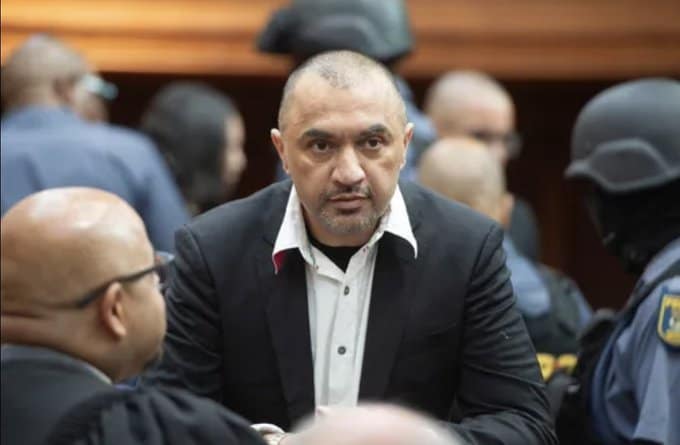
Modack, dressed in a dark blazer and open-collared shirt, sat impassively in the dock, flanked by five heavily armed police officers. His co-accused — a mix of alleged gang lieutenants, hitmen, and facilitators — filled the rest of the enclosure. Some took notes. Others stared blankly at the witness. One whispered to a codefendant and smirked.
The captain did not smile back.
A witness under fire
The officer, a veteran of organized crime investigations with nearly three decades of service, has already spent four days on the stand over the past two months. His testimony has focused on intercepted phone calls, financial trails, and alleged meetings between Modack and known gang figures in the weeks leading up to Kinnear’s assassination outside his Bishop Lavis home in September 2020.
But Thursday belonged to the defense. Lead defense advocate, Pieter van der Merwe SC, rose slowly, adjusted his spectacles, and began what would become a bruising cross-examination.
“You have told this court, Captain, that you believe Mr. Modack orchestrated the murder of Lieutenant Colonel Kinnear,” Van der Merwe began, his voice calm but pointed. “Yet you have produced no direct evidence. No photograph of a meeting. No signed confession. No eyewitness. Is that correct?”
The captain paused. “It is correct that there is no single ‘smoking gun,’ as you put it. But the circumstantial evidence —”
“Circumstantial,” Van der Merwe interrupted. “That is a word police use when they have nothing solid. Is it not true, Captain, that your investigation was flawed from the start? That you ignored evidence pointing to other suspects?”
The witness’s jaw tightened. “We followed every lead. Every single one. Mr. Modack’s name appeared in over 40 intercepted calls discussing Kinnear in the months before his death. That is not coincidence. That is conspiracy.”
Van der Merwe pressed harder, producing internal SAPS documents that he claimed showed “gaps” in the investigation timeline — periods of weeks when no surveillance was conducted on Modack despite alleged threats against Kinnear being known to police.
“Is it possible, Captain, that your team was simply incompetent?” Van der Merwe asked.
The prosecution objected. The judge, presiding officer Daniel Thulare, sustained the objection but allowed the witness to respond.
“We were under-resourced, not incompetent,” the captain said quietly. “There is a difference. But we still built a case. And I stand by every word of my testimony.”
The Kinnear shadow
The murder of Charl Kinnear — a fearless detective who had spent years investigating Modack and his alleged criminal network — remains one of the most shocking assassinations in post-apartheid South African policing history. Kinnear was gunned down outside his home in September 2020. His killers have never been publicly identified, though two men have been arrested and are awaiting trial in a separate proceeding.
The Modack trial, which began in early 2025, is widely seen as the state’s best chance to deliver justice not only for Kinnear but for a broader pattern of gang-related extortion, witness intimidation, and contract killings that have plagued Cape Town’s northern suburbs and Atlantic Seaboard for nearly a decade.
Modack, 46, has pleaded not guilty to all 124 charges against him, which include racketeering, murder, attempted murder, money laundering, and corruption. His co-accused have also entered not-guilty pleas.
Outside the court, Kinnear’s widow, Nicolette, sat on a bench, clutching a photograph of her late husband. She has attended every day of the trial since it began. She does not speak to reporters. But her presence speaks volumes.
“She just wants to look him in the eye,” a friend of the family told journalists. “Every day. She wants him to know that Charl is not forgotten.”
Security and intimidation
The trial has been conducted under extraordinary security. Police snipers have been stationed on rooftops near the court on multiple occasions. Witnesses have testified from behind screens, their faces hidden, their voices distorted. Two state witnesses have been placed in protective custody after receiving death threats.
The captain testifying Thursday is one of those witnesses. He arrived at court in an unmarked vehicle with a police escort. His family has been relocated. His name is known only to the judge, the prosecutors, and the top brass at SAPS.
“I have accepted that my life will never be normal again,” he said during an earlier closed session, according to court transcripts leaked to local media. “But I made an oath. I will not break it because I am afraid.”
What comes next
The cross-examination is expected to continue into next week, with the defense planning to call its own forensic experts to challenge the state’s cellphone data and financial analysis. The trial is scheduled to run until at least July 2026, though legal observers expect it to stretch into early 2027 given the volume of evidence and the number of accused.
For now, all eyes remain on the captain. His testimony could be the linchpin of the state’s case — or its weakest link, depending on how convincingly he withstands the defense’s barrage.
As court adjourned for the day, Modack turned briefly to look at the witness stand. The captain was already walking toward a secure exit, flanked by two bodyguards. Their eyes did not meet.
Outside, a cold Cape Town wind blew through the city’s streets. Nicolette Kinnear folded her husband’s photograph into her coat and walked slowly toward her car. The trial will resume on Monday. The questions will continue. And somewhere, in the labyrinth of intercepted calls and financial records and whispered threats, the truth — however buried — waits to be heard.
The Rial Modack trial is no longer just a case. It is a test of whether South Africa’s justice system can hold the most powerful alleged criminals accountable. And so far, the answer remains unwritten.
About The Author