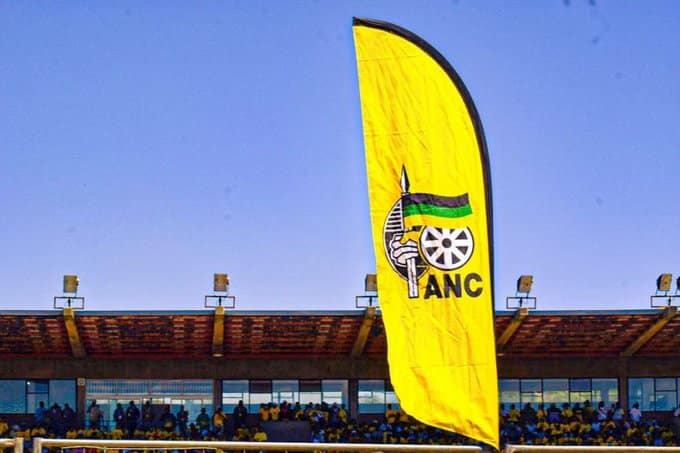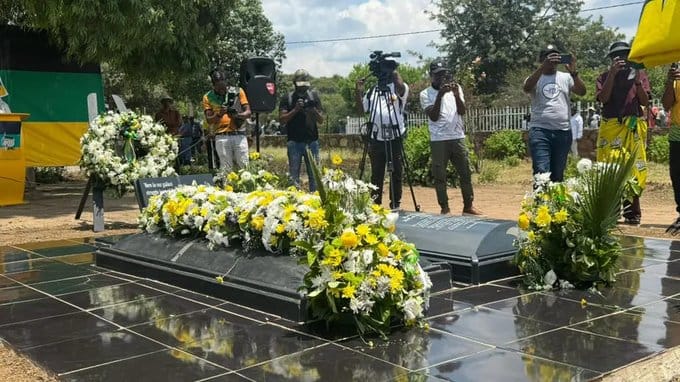
Against the stark, sun-bleached landscape of Pella, a village steeped in both spiritual and political history, President Cyril Ramaphosa led the ANC’s senior leadership in a solemn pilgrimage on Thursday, laying wreaths at the gravesite of the party’s venerated intellectual giant, Moses Kotane. The ceremony served as the emotional and symbolic launchpad for the party’s 114th anniversary celebrations, a moment deliberately framed to reconnect the modern-day ANC with its founding principles of sacrifice, ideological clarity, and unwavering commitment to the liberation of the poor.
“We stand here on the shoulders of this colossus,” Ramaphosa declared, his voice carrying in the quiet cemetery. “Moses Kotane was not just a member; he was a compass. He taught that the struggle for freedom was inseparable from the struggle for economic justice and the intellectual empowerment of the working class. As we celebrate 114 years, we must ask ourselves: are we still true to that compass?”
A Deliberate Pilgrimage to the Roots
The choice of Pella was profoundly symbolic. Kotane, born here in 1905, rose from a humble herd boy to become one of the most influential figures in South Africa’s liberation movement, serving as General Secretary of both the South African Communist Party (SACP) and Treasurer-General of the ANC. His 1930s manifesto, which argued for a disciplined, mass-based party rooted in the working class, is still cited as foundational doctrine. By beginning the anniversary here, Ramaphosa’s leadership sought to ground the festivities not in stadium-filled rallies, but in a place of reflection and legacy.
“We did not come to Pella by accident,” explained ANC Secretary-General, Fikile Mbalula, to a gathering of local elders and veterans. “We came to drink from the wellspring. In a time of great noise and contestation, we are reminding ourselves where we come from and what our leaders of stone, like Kotane, stood for.”
A Legacy as a Mirror for Current Challenges
Ramaphosa’s tribute, however, was far from a mere history lesson. He wielded Kotane’s legacy as a subtle but unmistakable mirror to the party’s current tribulations. He praised Kotane’s “fierce discipline, his incorruptibility, and his deep aversion to careerism and factionalism”—qualities that stood in stark contrast to the public’s perception of a party often riven by internal battles and corruption scandals.
“Kotane understood that the enemy sought not just to defeat us militarily, but to corrupt our morality and blur our vision,” Ramaphosa continued. “He stood for a united movement, a movement that educated its cadres, a movement that served the people, not itself. This is the charge we must take forward.”
Political analysts saw the event as a key moment of narrative-setting ahead of a critical election year. “This is Ramaphosa’s ANC trying to reclaim the moral and intellectual high ground,” said Professor Mzamo Dandala of the University of the North West. “By invoking Kotane—a figure respected across the ideological spectrum within the alliance—he is appealing to the party’s base and its veterans, reminding them of the ANC’s deeper identity, beyond the headlines of misgovernance.”
A Ceremony Marked by Quiet Dignity and Local Hope
The ceremony itself was a blend of official ritual and local intimacy. ANC leaders in their green blazers stood alongside Kotane family descendants and elderly residents of Pella who remembered the statesman’s occasional returns to his rural home. Prayers were offered in Setswana, and liberation songs from the 1950s were sung, their rhythms slow and dignified.
For the local community, the visit brought a mix of pride and a renewed plea for attention. “We are proud that Kotane comes from here, but Pella still needs water, roads, and jobs,” said community leader, Oupa Modise. “We hope the President’s visit is not just to take from our history, but to invest in our future.”
As the wreaths—adorned in the black, green, and gold of the ANC—were placed against Kotane’s gravestone, the moment crystallized the party’s perennial challenge: to honour the purity of its past while navigating the complex compromises of the present. From the quiet of Pella, the ANC’s 114th year begins not with a roar of celebration, but with a reflective whisper to its own conscience, guided by the enduring image of Moses Kotane.
About The Author