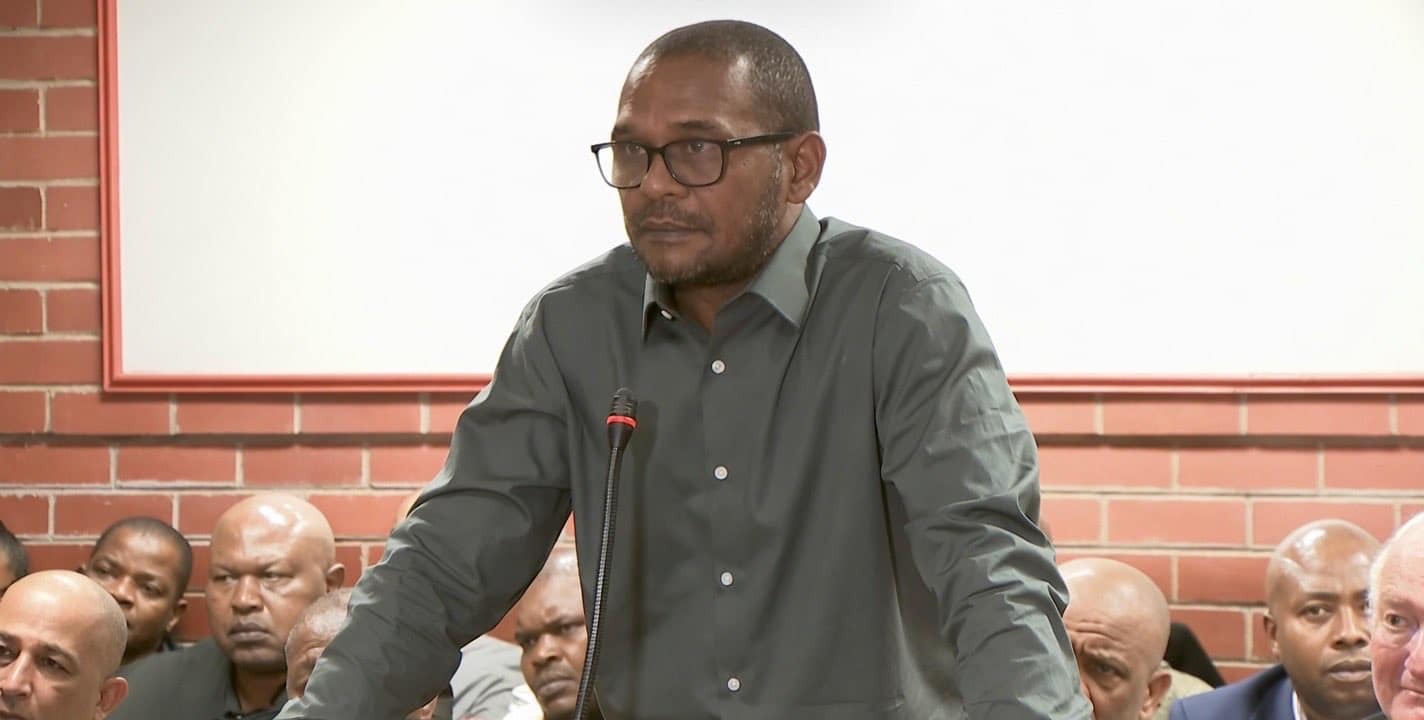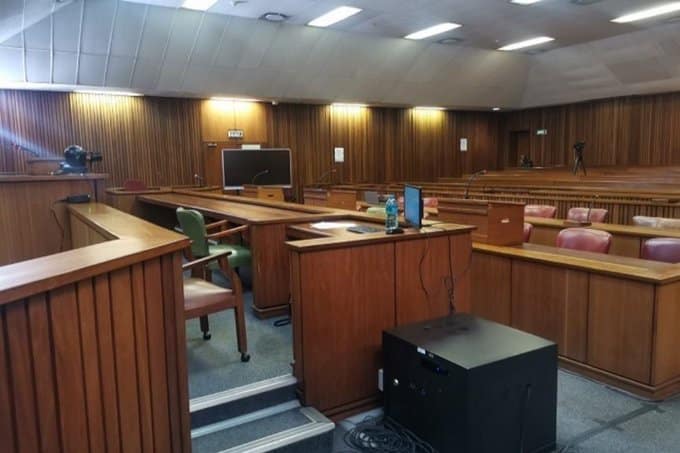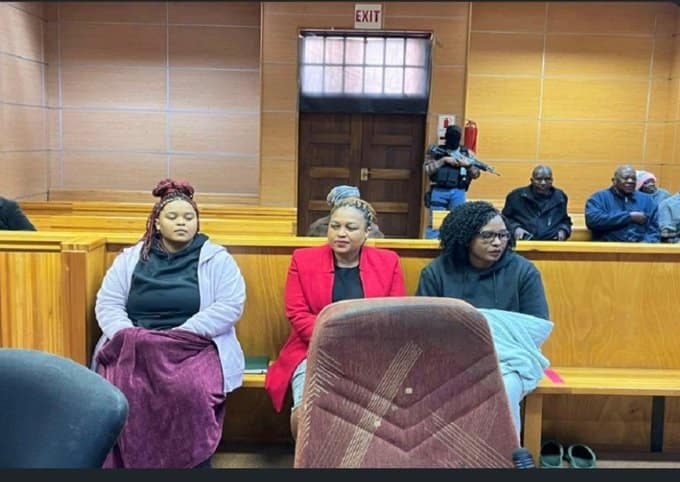
The heavy steel doors of the Polokwane Magistrate’s Court groaned open at 8 a.m. on Wednesday, 15 April 2026, and through them filed a procession that would have been unremarkable elsewhere but was, in this provincial capital, the stuff of nightmares. Eight men and women, dressed in the drab olive and orange of awaiting-trial prisoners, were led one by one into the dock. Their faces were stony. Their eyes betrayed nothing. But the charges against them were among the most chilling to emerge from Limpopo in a decade.
This was the latest chapter in what has become known as the “Polokwane Insurance Murder Case”—a sprawling, macabre conspiracy in which the accused allegedly orchestrated the deaths of at least nine people to cash in on life insurance policies worth more than R10 million. On this Wednesday morning, the eight accused were back in court to apply for bail, a routine legal step that has become anything but routine given the gravity of the allegations.
“It’s a simple application,” their lead defense counsel, Advocate Thabo Moseneke, told the court as proceedings began. “Our clients are entitled to be released pending trial. They are not flight risks. They have families, jobs, and ties to this community. The state’s case, while serious, is circumstantial. We ask the court to grant bail on reasonable terms.”
But the state was having none of it. Prosecutor Lindiwe Nkosi rose from her seat, her voice steady but her eyes flashing with barely contained fury.
“This is not a simple case,” she said, her words echoing off the courtroom’s high ceilings. “This is a case about a syndicate that treated human life as a commodity. They identified victims. They took out insurance policies without the victims’ knowledge. They killed them. And they collected the payouts. Nine people are dead. Nine families are destroyed. The accused are dangerous. They are well-connected. And they have every reason to flee. The state opposes bail.”
The magistrate, Phuti Makgoba, listened intently, her pen moving across a notepad. She did not rule immediately. Instead, she set aside the rest of the morning and all of the afternoon for arguments. The bail decision would come later—perhaps as early as Thursday, perhaps next week. But whatever she decided, the Polokwane insurance murder case had returned to the spotlight, and Limpopo was watching.
The Shocking Allegations
For those unfamiliar with the case, the details are almost too grotesque to believe. According to the state’s indictment, the eight accused—six men and two women, aged between 28 and 51—operated a sophisticated syndicate that preyed on vulnerable individuals between 2018 and 2024.
The modus operandi was chilling in its simplicity: identify a target, befriend them, take out a life insurance policy in their name without their knowledge, wait for the prescribed period to pass, then kill them and claim the payout. The murders were made to look like accidents—car crashes, house fires, robberies gone wrong—to avoid suspicion.
But the syndicate’s greed proved its undoing. When an insurance company flagged an unusually high number of claims linked to a single broker, investigators were called in. What they found was a web of deception that stretched across Limpopo, Mpumalanga, and Gauteng.
“The scope of this conspiracy is staggering,” Nkosi told the court, reading from a prepared statement. “We have identified nine victims so far. We believe there may be more. The total value of the fraudulent claims exceeds R10 million. That is ten million rands that should have gone to grieving families but instead lined the pockets of killers.”
The victims include a 34-year-old mother of three from Seshego who was pushed down a flight of stairs; a 47-year-old taxi driver from Lebowakgomo whose brakes were tampered with; a 22-year-old student from Mankweng who was poisoned; and a 61-year-old pensioner from Tzaneen whose house was set alight while she slept.
“These were not accidents,” Nkosi said, her voice breaking slightly. “These were executions. And they were carried out for money. For a few hundred thousand rands, the accused allegedly ended lives. They destroyed families. They shattered communities. They must face justice.”
The Accused
The eight accused come from diverse backgrounds, a fact that has added to the public’s fascination and horror. Among them are:
- David “Dabs” Mkhabela (51), the alleged mastermind, a former insurance broker who used his knowledge of the industry to identify loopholes and avoid detection.
- Grace Ndlovu (44), Mkhabela’s partner and alleged co-conspirator, who is accused of befriending victims and gathering personal information for policies.
- Johannes “Jojo” Radebe (38), a former police officer turned private investigator, accused of using his skills to plan the murders and cover tracks.
- Precious Mabasa (29), a nurse accused of administering fatal overdoses to two victims and signing false death certificates.
- And four others whose names have been withheld pending further investigation but who are accused of roles ranging from driving getaway cars to disposing of evidence.
All eight have pleaded not guilty. Their lawyers have argued that the state’s case is built on the testimony of a single “jailhouse informant” with a history of lying, and that the forensic evidence is inconclusive.
“My client is a respected businessman,” Moseneke said of Mkhabela. “He has no criminal record. He has contributed to this community. The idea that he would orchestrate multiple murders for insurance payouts is absurd. The state has no direct evidence. They have speculation. They have innuendo. They have a witness who would say anything to shorten his own sentence.”
The Bail Hearing
Wednesday’s bail hearing was always going to be a battle. Under South African law, accused persons are entitled to be released on bail unless the state can show that they are a flight risk, a danger to the public, or likely to interfere with witnesses or evidence.
The state argued that all three conditions applied.
“These accused are well-funded,” Nkosi said. “They have access to resources, including passports and international connections. They have every incentive to flee. If they are released, they may never stand trial.”
The defense countered that the accused had all surrendered voluntarily when the arrests were made, and that they had strong ties to their communities, including homes, families, and jobs.
“They are not going anywhere,” Moseneke said. “They want to clear their names. They want their day in court. Granting them bail does not mean they are free. It means they are free pending trial, under conditions that this court can impose.”
The state also argued that the accused were dangerous, pointing to the nature of the alleged crimes.
“These are not first-time offenders who made a mistake,” Nkosi said. “These are people who allegedly planned and executed multiple murders over a period of six years. If they are capable of that, they are capable of anything. The community is afraid. Witnesses are afraid. Releasing these accused would put lives at risk.”
The defense dismissed this as “speculative” and “inflammatory.”
“The state is trying to prejudice the court with emotion,” Moseneke said. “We are not here to decide guilt or innocence. We are here to decide bail. The presumption of innocence applies. My clients are entitled to be released.”
The Victims’ Families
Outside the courthouse, a small but determined group of family members had gathered. They held placards with photos of their loved ones, their faces frozen in time. Some wept quietly. Others stared straight ahead, their expressions hard.
“We want justice,” said Martha Ramokgopa, whose daughter, Thandi, was one of the alleged victims. “We have waited too long. My daughter was 28 years old. She had just gotten a job. She was engaged. She had her whole life ahead of her. And they took it. For money. For a few thousand rands.”
Martha said she had no doubt that the accused were guilty, and that they should be denied bail.
“If they get out, they will run,” she said. “Or they will hurt someone else. They must stay in jail. They must face trial. And they must be punished.”
Another family member, who asked not to be named for fear of retaliation, was more measured.
“I don’t know if they are guilty or not,” he said. “That is for the court to decide. But I know that my brother is dead. And I know that someone is responsible. I just want the truth. That is all. The truth.”
The Insurance Industry’s Role
The Polokwane insurance murder case has also raised uncomfortable questions about the insurance industry’s role in preventing such crimes. How was it possible for policies to be taken out on individuals without their knowledge? Why were red flags not raised earlier? And what safeguards are now in place to prevent similar schemes?
“The industry has learned some hard lessons from this case,” said Thabo Mkhize, spokesperson for the Association for Savings and Investment South Africa (ASISA). “We have tightened our underwriting processes. We require more documentation. We have improved our data-sharing protocols. But we cannot eliminate risk entirely. Determined criminals will always find ways to exploit systems.”
Mkhize acknowledged that the industry could have done more, earlier. “With the benefit of hindsight, yes, we could have flagged this syndicate sooner,” he said. “But we are not law enforcement. We are not investigators. We rely on information provided to us. If that information is false, it is very difficult to detect.”
The case has also prompted calls for legislative reform. Some legal experts have argued that insurance policies should require the written consent of the insured individual, not just the policyholder, to prevent secret policies from being taken out.
“That seems like a common-sense reform,” said Professor Cathy Powell of the University of Cape Town’s law faculty. “If you cannot take out a life insurance policy on someone without their knowledge, you remove the financial incentive to kill them. It is not a complete solution, but it is a start.”
The Long Road Ahead
Regardless of the bail decision, the Polokwane insurance murder case is far from over. If the accused are denied bail, they will remain in custody pending trial—a trial that could take months or even years to conclude, given the complexity of the evidence and the number of accused.
If they are granted bail, they will be released under strict conditions, likely including house arrest, electronic monitoring, and reporting requirements. They will then await trial from the comfort of their homes—a prospect that fills the victims’ families with dread.
“We cannot control what the court decides,” said Martha Ramokgopa. “We can only hope. And pray. And trust that justice will prevail. It has to. Because if it doesn’t, what is the point? What is the point of all of this?”
As the sun set over Polokwane, the courtroom emptied. The accused were led back to their cells. The lawyers packed their briefcases. The families dispersed, some to their homes, some to the nearest tavern to drown their sorrows.
And the bail decision hung in the air, unresolved, a question mark over a case that has already raised too many questions and answered too few.
The Magistrate’s Dilemma
Magistrate Phuti Makgoba now faces a difficult decision. She must weigh the presumption of innocence—a cornerstone of South African law—against the state’s compelling arguments about the seriousness of the charges, the strength of the evidence, and the risk of flight or witness interference.
She will also consider the accused’s personal circumstances: their ages, their health, their family ties, their employment history, and their criminal records (or lack thereof). She will consider whether they have any passports or access to foreign bank accounts. She will consider whether they have surrendered their travel documents.
And she will consider the public interest. In a case as shocking as this, the public has a right to expect that justice will be done—and that it will be seen to be done.
“I cannot predict what she will decide,” said legal analyst Phelps. “The law gives her considerable discretion. She could grant bail to some and deny it to others. She could impose stringent conditions. She could decide that the state has not made its case. It is a difficult call.”
The Verdict’s Implications
Whatever Magistrate Makgoba decides, the implications will be significant. If she grants bail, the state will appeal—adding further delays to an already protracted process. If she denies bail, the defense will appeal, arguing that their clients’ rights have been violated.
Either way, the Polokwane insurance murder case will continue to dominate headlines in Limpopo and beyond. It is a case that has captured the public’s imagination because it touches on universal fears: the fear of being betrayed by those we trust, the fear of being killed for money, the fear that justice is slow, uncertain, and sometimes blind.
“We are watching,” said community leader Johannes Mphahlele, who has been following the case closely. “We are watching to see if the system works. We are watching to see if the guilty are punished. We are watching to see if the innocent are freed. And we are waiting. Waiting for answers. Waiting for closure. Waiting for justice.”
A Final Word
As the court adjourned on Wednesday afternoon, the eight accused were led back to the holding cells beneath the courthouse. Their faces, still stony, gave nothing away. But somewhere in the depths of the building, a clock ticked.
The bail decision would come. The trial would continue. And the families of the nine dead would keep waiting, keep hoping, keep believing that one day, somehow, the truth would set them free.
Outside, the Polokwane sun was warm on the faces of the mourners. Somewhere in the distance, a bird sang. Life, as it always does, went on.
But for the families of the victims, life had stopped on the days their loved ones died. And it would not fully resume until justice was done. Whether that justice would come in the form of a bail denial, a conviction, or simply the truth, no one could say.
All they could do was wait. And hope. And trust that the law, for all its flaws, would eventually get it right.
About The Author