KwaZulu-Natal Police Commissioner, Lieutenant-General Nhlanhla Mkhwanazi, has alleged possible political interference in the decision to disband the elite Political Killings Task Team (PKTT), suggesting the move may not have originated with the suspended Police Minister, Senzo Mchunu.
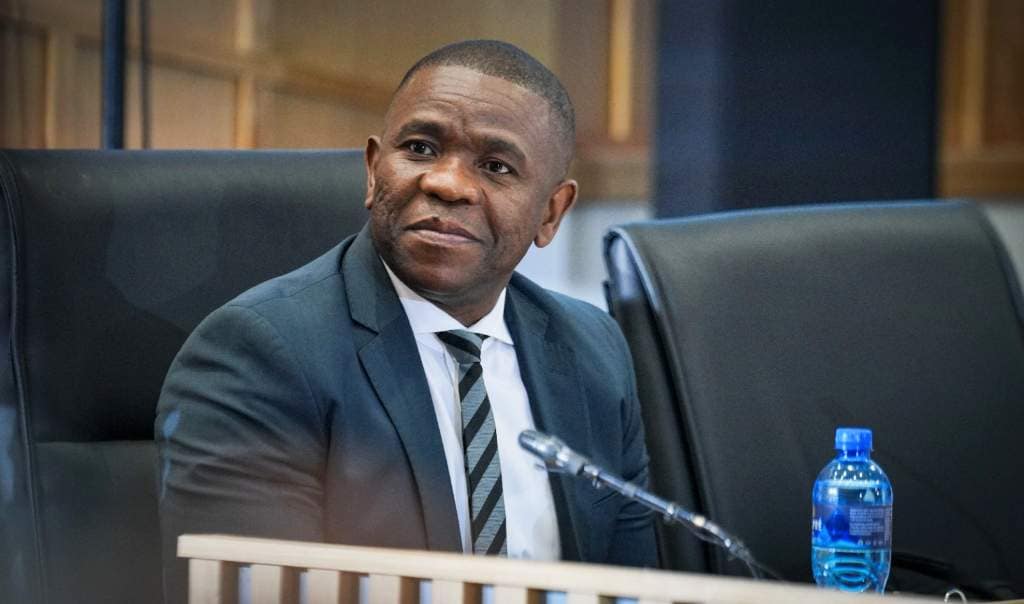
Appearing before a parliamentary ad hoc committee investigating corruption and misconduct within the criminal justice system, Mkhwanazi cast doubt on the authenticity of the letter that dissolved the PKTT in December 2024.
“I don’t believe Minister Mchunu wrote that letter. Someone made him sign it,” Mkhwanazi told Members of Parliament. “If the minister were honest, he would say, ‘Someone made me sign this — I did not write it myself.’”
The letter, addressed to National Police Commissioner General Fannie Masemola, stated that the task team had “no value.” However, Mkhwanazi insisted there had been no prior briefing, consultation, or evidence to support such a conclusion.
According to Mkhwanazi, the letter appeared to have been “drafted elsewhere” and circulated through Mchunu’s chief of staff, Cedrick Nkabinde. “Nkabinde told me the letter was going back and forth,” he testified, suggesting it was being “crafted by others — not the minister himself.”
Both Mkhwanazi and Masemola believe the task team’s sudden disbandment was intended to protect politically connected individuals, including Vusimuzi “Cat” Matlala, who was arrested shortly before the PKTT was dissolved. Matlala has been linked to senior police officials General Shadrack Sibiya and businessman Brown Mogotsi, both reportedly close to Mchunu.
Mkhwanazi further alleged that certain junior officers were communicating directly with politicians, thereby undermining the police service’s chain of command.
“You’ll have a Sibiya sending a WhatsApp message to the deputy minister. I don’t even know who the deputy minister is,” he remarked.
The PKTT was established to investigate politically motivated assassinations in KwaZulu-Natal, a province that continues to grapple with violence linked to political rivalry and corruption. Its dissolution has sparked renewed concern over the integrity of law enforcement and the extent of political influence in policing matters.
As the parliamentary inquiry continues, critical questions remain about who truly ordered the task team’s disbandment—and what deeper political motives were at play.
About The Author