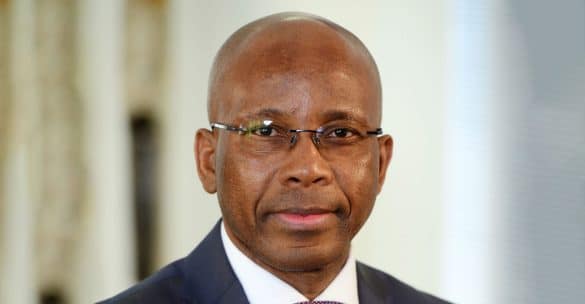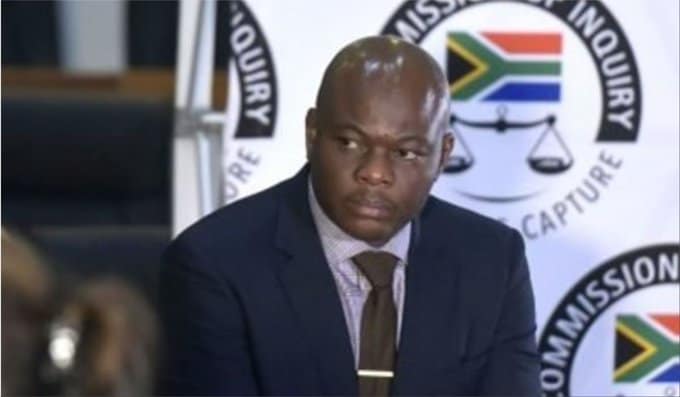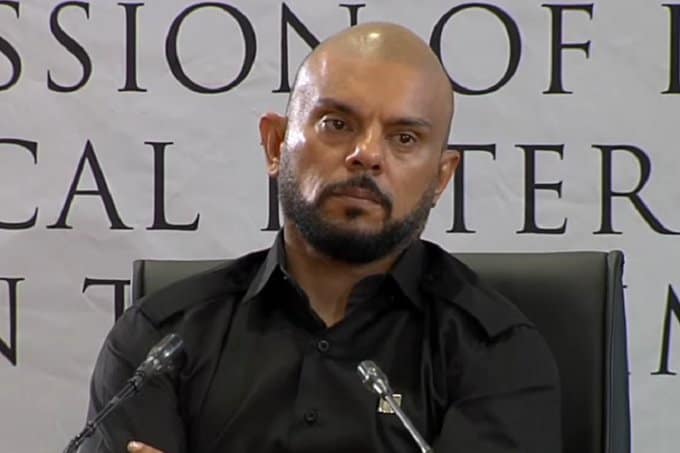
A tense legal and human drama is set to reach a pivotal moment on Monday morning at the Brigitte Mabandla Justice College, where the Madlanga Commission of Inquiry will deliver a crucial ruling that will determine the fate of North West businessman and African National Congress (ANC) member Suliman Carrim’s testimony. At the heart of the decision is a stark question: will Carrim be allowed to give his highly anticipated evidence behind closed doors, shrouded from public view, or will he be compelled to speak in the open, under the full glare of the nation?
Carrim, a well-connected political figure whose name has become synonymous with controversy during the commission’s proceedings, is scheduled to testify over two days, starting Monday. However, his legal team has launched a dramatic last-ditch application to have that testimony heard in camera—a legal term meaning in private, away from the public and the media. The basis for this request is as serious as it gets: Carrim claims his life is in danger.
His lawyer, Kameel Premhid, has painted a dire picture before the commission, alleging that his client has been subjected to a campaign of intimidation, including credible death threats against him, his family, and his business interests. Premhid has argued that forcing Carrim to testify publicly would expose him to unacceptable risk, effectively asking the state-funded commission to guarantee his safety in an environment where previous witnesses have met violent ends. During arguments last week, Premhid even went so far as to read aloud a threatening message sent to Carrim, intended to discourage him from cooperating with the inquiry .
But the application is being fiercely opposed. Evidence leader Adila Hassim has pushed back, arguing that the commission has the tools and the duty to protect its witnesses through other means—such as increased security—without resorting to the extreme measure of a secret hearing, which undermines the principle of transparency . “In light of the threats received, the commission can protect the witness in other ways, not through an in-camera application,” Hassim contended .
The commissioners themselves have expressed deep skepticism. During Friday’s proceedings, as Carrim’s team attempted to argue the merits of their application in a closed session—a request that was itself denied—Chairperson Justice Mbuyiseli Madlanga and his fellow panelists grilled the defense. Commissioner Sandile Khumalo pointedly noted that the threats against Carrim “don’t go away whether or not he testifies in camera,” questioning the logic of hiding the testimony if the danger already existed . Commissioner Sesi Baloyi also pressed the legal team, stating she saw no legal basis for the request to even argue the application privately .
Justice Madlanga himself, known for his no-nonsense approach, questioned what made Carrim’s case stand out from others who have testified under similar stress. “I don’t know what makes this one stand out,” he remarked last week, highlighting that previous witnesses granted in camera status had presented exceptionally compelling reasons .
A Pattern of Resistance
Carrim’s bid for secrecy is the latest chapter in what observers describe as a consistent and litigious strategy to avoid or delay his day of reckoning at the commission. His appearance has been a long time coming, marked by numerous legal maneuvers .
In early February, Carrim made an urgent bid to the Gauteng High Court in Johannesburg to block the subpoena compelling him to testify. That application was struck off the roll with costs. In her judgment, Judge Fisher described Carrim’s approach as a “process of stalling of the inevitable,” noting he had known since October 2025 that his testimony was required . Following that legal defeat, his testimony, originally set for February 6, was postponed for a month after his lawyers claimed they hadn’t had enough time to prepare, a delay that further frustrated the commission .
Now, with the postponement at an end, Carrim is seeking to place a veil of secrecy over the very testimony he fought so hard to delay. His application goes beyond just closing the doors to the public; reports suggest his legal team has even sought to restrict access to his statement from certain commission staff, including investigators, a request that commissioners have questioned as unworkable, given that the evidence must be investigated and responded to by those he implicates .
The Stakes: A R360 Million Question
The intense legal battle underscores the high stakes of Carrim’s expected testimony. He is set to answer explosive allegations regarding a now-cancelled R360 million South African Police Service (SAPS) tender.
Previous witnesses, including KwaZulu-Natal Police Commissioner Lieutenant-General Nhlanhla Mkhwanazi, have placed Carrim at the center of a web of influence-peddling. The allegations suggest that Carrim used his political connections to assist alleged crime figure Vusimuzi “Cat” Matlala, whose company, Medicare24 Tshwane District, was awarded the lucrative tender in June 2024 . When SAPS allegedly failed to pay invoices and the contract faced cancellation due to irregularities in May 2025, witnesses testified that Carrim stepped in, leveraging his relationship with Police Minister Senzo Mchunu to try and save the deal for Matlala .
Commissioner Mkhwanazi previously testified that Carrim maintained direct communication with Matlala about the contract, acting as an intermediary to the highest levels of police leadership .
The Verdict Awaits
As the commissioners gather on Monday morning, they carry the weight of balancing two fundamental principles: the witness’s right to safety and the public’s right to know. A ruling in Carrim’s favor would mean his evidence on the alleged corruption, the political interference, and the inner workings of the tender process would be heard in secret, leaving the public to rely on a sanitized summary.
A ruling against him would force him to testify in the open, facing the nation and the families of those who have lost their lives in South Africa’s violent political underbelly—a prospect his legal team insists is a direct threat to his life.
With Carrim scheduled to testify for two days, Monday’s ruling will either pull back the curtain on one of the commission’s most anticipated witnesses or close it for good. All eyes are on Justice Madlanga as he prepares to deliver his decision.
About The Author