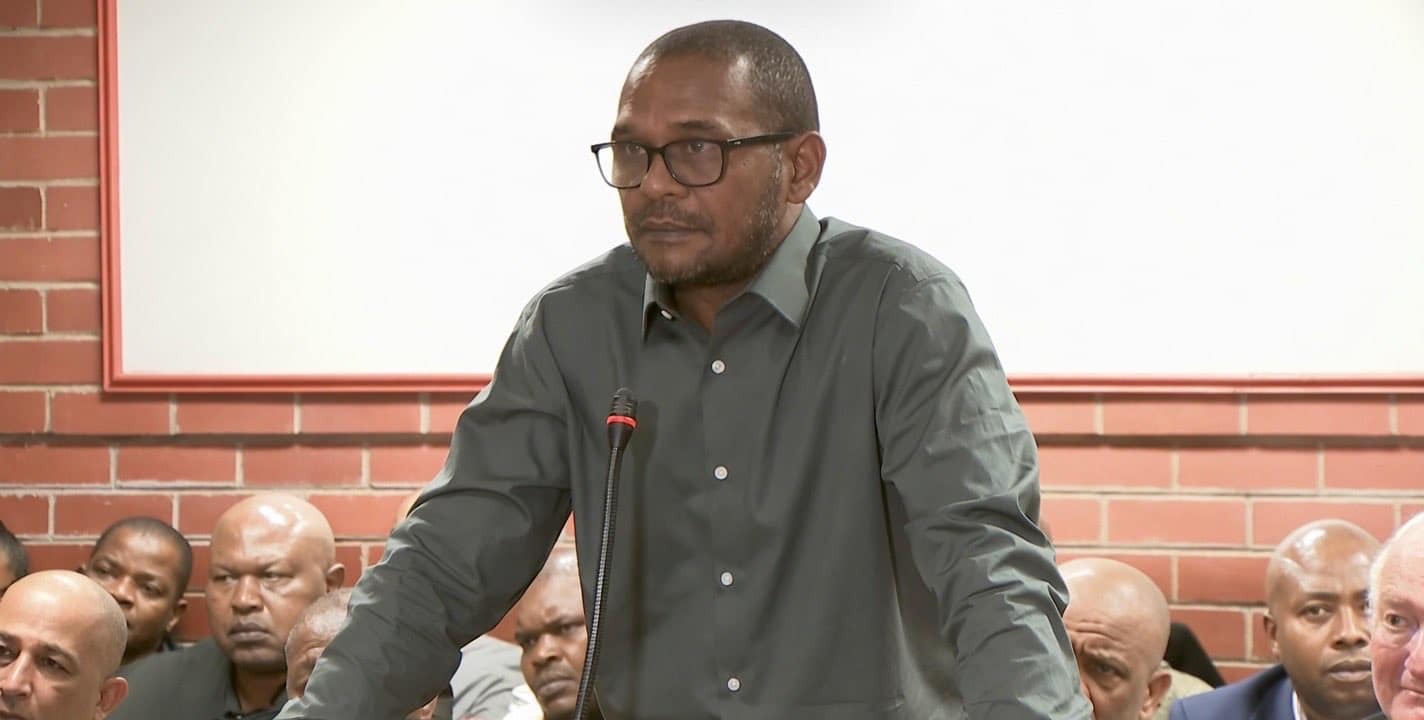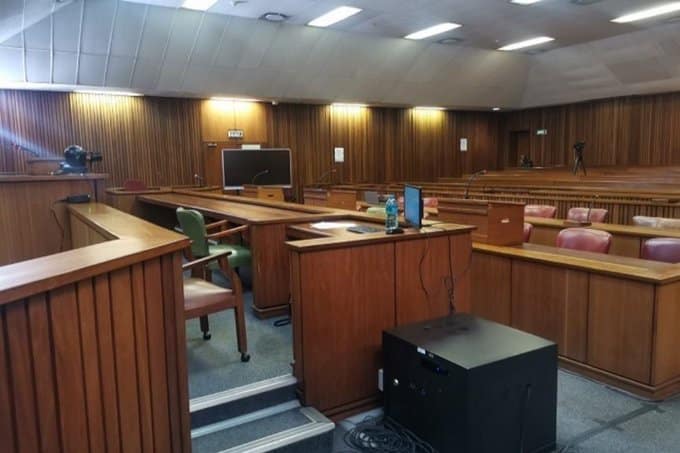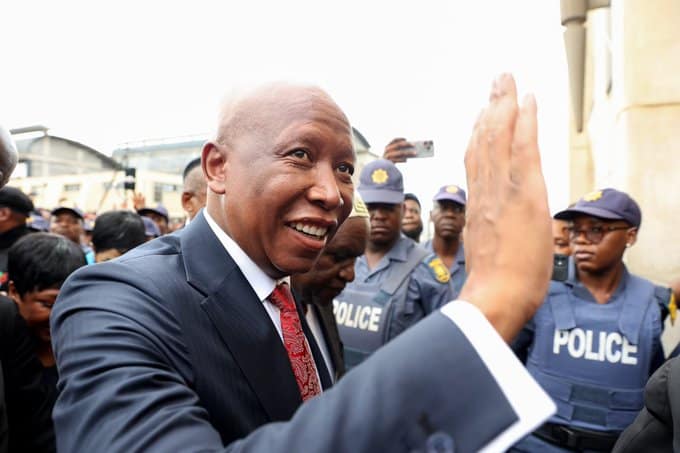
The courtroom on the third floor of the Limpopo High Court was packed to capacity long before the judge entered. Supporters of the Economic Freedom Fighters (EFF), many dressed in the party’s signature red berets and overalls, had gathered outside since dawn, singing struggle songs and holding placards reading “Hands Off Malema” and “Justice for the Commander-in-Chief.” Inside, journalists scrambled for position, legal analysts murmured predictions, and the man at the center of it all — Julius Malema — sat stone-faced in the dock, his eyes fixed on the judge’s bench.
When the ruling came, the room held its breath.
Judge Phuti Mafologele announced that Malema had been granted leave to appeal his five-year jail sentence in the high-profile firearm discharge case. Furthermore, the court ordered that Malema be released on bail pending the outcome of that appeal. The decision, which took the judge nearly 45 minutes to read in full, sent shockwaves through both the legal and political landscapes of South Africa.
Malema, flanked by his legal team led by advocate Tembeka Ngcukaitobi, showed no visible emotion. But outside, his supporters erupted in celebration. Car horns blared. Red flags waved. Chants of “Malema, Malema, Malema!” echoed through the streets of Polokwane.
But the celebration was tempered by the weight of what still lies ahead. Malema is not free. He is free on bail. And his five-year sentence — handed down last month after he was found guilty of discharging a firearm in a public space during a rally in 2018 — remains hanging over his head like a blade.
The case that brought a firebrand to the brink
The charges against Malema date back to 2018, when the EFF leader was attending the party’s fifth-anniversary celebrations at the Sisa Dukashe Stadium in Mdantsane, Eastern Cape. According to state prosecutors, Malema fired an assault rifle into the air while addressing thousands of supporters — an act that violated the Firearms Control Act, which strictly prohibits discharging a firearm in any public space without just cause.
Malema has consistently denied the charge, claiming that the weapon was a legally owned firearm and that he was merely “inspecting it” when it accidentally discharged. However, ballistics experts and eyewitness testimony presented during the trial contradicted that account, with multiple witnesses stating that Malema deliberately fired the weapon into the air as a theatrical gesture to energize the crowd.
The state also presented video evidence — widely circulated on social media at the time — showing Malema holding the rifle, pointing it upward, and a muzzle flash emanating from the barrel. Malema’s defense argued that the video was inconclusive and that the discharge could have been caused by a mechanical malfunction.
The court disagreed. In a scathing judgment last month, Judge Mafologele found Malema guilty of culpable discharge of a firearm and sentenced him to five years’ imprisonment — a sentence that legal analysts described as “unusually harsh” for a first-time offender.
“The accused is a public figure of significant influence,” the judge wrote in her sentencing remarks. “His actions were witnessed by thousands, including young and impressionable supporters. To send a message that such behavior is acceptable would be to invite chaos. A deterrent sentence is warranted.”
The appeal: Grounds and arguments
Malema’s legal team moved swiftly, filing an application for leave to appeal both the conviction and the sentence. Their arguments centered on three main pillars:
- Evidentiary disputes – Ngcukaitobi argued that the state’s ballistics evidence was flawed and that the video footage was not sufficient to prove intent beyond a reasonable doubt.
- Sentencing disparity – The defense pointed to similar cases in which individuals convicted of discharging a firearm received suspended sentences or fines, not custodial terms. “My client is being treated more harshly because of who he is, not what he did,” Ngcukaitobi argued.
- Judicial bias – In a more controversial line of argument, Malema’s legal team suggested that the original trial judge had demonstrated “hostility” toward the EFF leader, citing several remarks made during the proceedings. This ground is considered the longest shot by legal experts, but it was included nonetheless.
The state opposed the application, arguing that the conviction was sound and that the sentence was proportionate given Malema’s status and the public nature of the offense. Prosecutor Naledi Mokoena warned that granting bail would send “the wrong message” about accountability for powerful figures.
Judge Mafologele, however, was persuaded that there were reasonable prospects of success on appeal — particularly on the question of sentencing. “The sentence of five years’ imprisonment is at the upper end of the scale for this offense,” she noted. “An appellate court may reasonably arrive at a different conclusion. Leave is therefore granted.”
Bail conditions: Freedom with limits
Malema’s release on bail comes with conditions designed to ensure he does not flee or interfere with witnesses. The terms include:
- A bail payment of R20,000 (later reduced to R10,000 after his legal team argued financial constraints — a claim that drew ironic comments from opposition parties).
- Surrender of his passport to the investigating officer.
- Reporting to his local police station in Sandton every Monday and Friday between 6 a.m. and 6 p.m.
- No direct or indirect contact with state witnesses.
- No public statements regarding the specifics of the case (though political speech is broadly exempted).
Malema’s legal team accepted the conditions without objection. Within hours of the ruling, he had posted bail and walked out of the Polokwane holding cells, where he had been detained for three nights following the original sentencing.
Political earthquake
The case has transfixed South Africa not only because of the legal drama but because of the political identity of the accused. Julius Malema is not just any politician. He is the founder and commander-in-chief of the EFF, the third-largest party in Parliament, and one of the most polarizing — and electrifying — figures in post-apartheid politics.
His supporters see him as a revolutionary hero, a champion of land expropriation and economic justice who has been targeted by a “white-monopoly-capitalist” judicial system. His detractors see him as a dangerous demagogue who flouts the law and encourages violence.
The granting of leave to appeal has intensified both views.
“This is a victory for justice,” said EFF deputy president Floyd Shivambu, speaking outside the court. “Julius Malema is innocent. The original judgment was a travesty. The appeal court will see the truth.”
The African National Congress (ANC), which has often been the target of Malema’s sharpest attacks, offered a more measured response. “We respect the decision of the court,” said ANC national spokesperson Mahlengi Bhengu-Motsiri. “The law must take its course. No one is above the law, but everyone is entitled to a fair appeal.”
The Democratic Alliance (DA) struck a harsher tone. “Julius Malema is a convicted criminal who should be behind bars,” said DA leader John Steenhuisen. “The fact that he is walking free while appealing is a technicality, not an exoneration. We hope the appeal court upholds the original sentence.”
What happens next?
The appeal process is expected to take between six months and a year. Malema’s legal team will file their full heads of argument within 60 days. The state will respond. A date will then be set for oral arguments before either a full bench of the High Court or the Supreme Court of Appeal (SCA), depending on the complexity of the issues raised.
If the appeal fails, Malema will be required to surrender himself to begin serving his five-year sentence immediately. If it succeeds, he could see his conviction overturned or his sentence reduced — potentially to a fine, suspended sentence, or community service.
In the meantime, Malema is free to continue his political activities — including campaigning, speaking at rallies, and leading the EFF in Parliament. The only caveat: he cannot make public statements that directly discuss the evidence or witnesses in the case. Given Malema’s famously unscripted oratory, that condition may prove the most challenging of all.
A leader under a cloud
For all the celebration among his supporters, Malema leaves the Polokwane High Court a diminished figure in some respects. The conviction — even if under appeal — has stained his record. International travel is now restricted due to his surrendered passport. And the psychological weight of a potential five-year prison term hangs over every public appearance.
At a brief press conference after his release, Malema addressed his supporters with characteristic defiance.
“They thought they could break me,” he said, standing beside his car, a red EFF scarf around his neck. “They thought a jail sentence would silence the voice of the poor. They were wrong. I am still here. I am still fighting. And I will win — in court, at the polls, and in the streets.”
He did not take questions. He did not mention the specifics of the case. He simply got into the car, rolled down the window, raised a fist, and drove away — leaving behind a swirl of unanswered questions, a divided nation, and a legal process that is far from over.
The bigger picture
Beyond the fate of one politician, the Malema case has reignited a broader debate about South Africa’s criminal justice system. Are political figures treated more harshly than ordinary citizens — or more leniently? Does the spectacle of a leader in the dock strengthen or weaken democracy? And what message does it send to young people when a revolutionary icon is convicted of the very lawlessness he claims to oppose?
For now, those questions remain open. The only certainty is that the Julius Malema firearm case is not ending anytime soon. The appeal court will have the final word. And until then, South Africa watches, waits, and wonders whether its most famous firebrand will end up in a prison cell or a victory podium.
The red beret remains on his head. But for how long? That is a question only the judges can answer.
About The Author