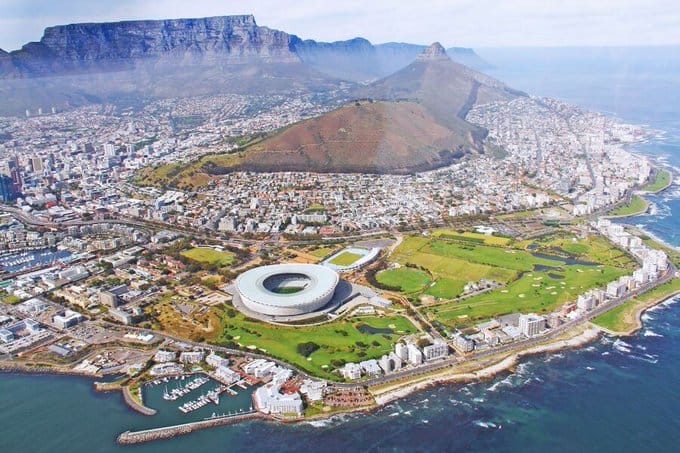
In a resounding endorsement of South Africa’s enduring appeal, the country’s tourism sector has posted its strongest monthly performance on record, with more than three million travellers processed across the nation’s ports of entry during March 2026. The figures, released Wednesday by the Department of Home Affairs in collaboration with the South African Tourism Board, signal a full-throated recovery—and then some—from the pandemic-era lows that decimated the industry nearly half a decade ago.
According to the newly published Border Management Authority (BMA) statistical digest, a total of 3,047,283 travellers—both foreign nationals and returning residents—were recorded entering or exiting South Africa throughout March. While this figure includes transit passengers and day-trippers, the headline number that has tourism executives popping champagne corks is the 985,412 overnight foreign visitors who chose to spend at least one night in the country. That represents a 12.6 percent increase compared to March 2025 and exceeds pre-pandemic March 2019 levels by nearly eight percent.
But beneath the top-line numbers lies a story of shifting traveller behaviour, changing demographics, and a strategic pivot by tourism authorities that appears to be paying handsome dividends.
Holiday Travel Dominates as Business Travel Plays Catch-Up
The single most striking insight from the data is the overwhelming dominance of leisure travel. Of the nearly one million overnight arrivals, a staggering 74 percent—approximately 729,000 visitors—cited “holiday” as their primary reason for visiting. Beaches, wildlife safaris, wine routes, and the iconic Table Mountain proved irresistible magnets. Business travel, once a reliable mainstay of the sector, accounted for just 13 percent, while visiting friends and relatives (VFR) made up the remaining 11 percent.
“We have never seen such a pronounced tilt toward pure leisure,” said Nombulelo Guliwe, CEO of South African Tourism, in an exclusive interview. “What this tells us is that the post-pandemic traveller is prioritising experience, memory, and escape. South Africa offers incredible value for money right now—stronger exchange rates, world-class infrastructure, and a diversity of experiences that few destinations can match. March was our sweet spot.”
Indeed, tourism analysts point to a confluence of favourable factors. March 2026 fell perfectly between the Northern Hemisphere winter blues and the European summer rush, making it an ideal month for British, German, and American travellers to chase the lingering African summer. The weakening of the rand against the dollar, pound, and euro further sweetened the deal, with luxury game lodges and five-star Cape Town hotels reporting near-capacity occupancy.
UK, Germany, US Lead Long-Haul Charge—But Surprises Lurk
As expected, South Africa’s traditional long-haul powerhouse markets delivered. The United Kingdom sent 54,312 overnight visitors, reclaiming its crown as the top European source market thanks in part to aggressive marketing campaigns targeting the “work-from-(the)-Cape” digital nomad demographic. Germany, ever-loyal to the safari circuits of Kruger and the arid landscapes of the Kalahari, followed closely with 48,907 arrivals. The United States rounded out the top three with a robust 41,203 visitors—a figure that impressed given the long flight times and the competing allure of closer Caribbean destinations.
However, some unexpected stars emerged. The Netherlands posted a 22 percent year-on-year surge, driven by increased direct flight capacity between Amsterdam and Cape Town. India, while still a relatively small market, showed explosive growth of 31 percent, with travel agents reporting a boom in wealthy Indian families booking multi-generational safari-and-beach holidays. And Brazil, boosted by a new codeshare agreement between South African Airways and LATAM, sent 12,500 visitors—more than double the number from March 2024.
“We are seeing the fruits of our visa-waiver and e-visa expansion efforts,” Guliwe noted. “India and Brazil were strategic targets. The numbers prove that when you remove friction, people come.”
SADC Neighbours Remain the Unshakable Backbone
For all the glamour of long-haul tourists posing with lion cubs and posting sunset Instagram reels, the real engine room of South Africa’s tourism boom remains its neighbours. The Southern African Development Community (SADC) region contributed a staggering 68 percent of all overnight arrivals—roughly 670,000 visitors—with Zimbabwe, Mozambique, Lesotho, Eswatini, Botswana, and Namibia leading the charge.
The reasons are simple: proximity, land border accessibility, and deep family and economic ties. The Beitbridge border post with Zimbabwe alone processed more than 180,000 travellers during March, many of them cross-border shoppers, informal traders, and families visiting relatives in Gauteng’s sprawling townships. The Lebombo border with Mozambique saw similar volumes, as Maputo residents flocked to Durban’s beaches for the last breath of summer before the Southern Hemisphere autumn set in.
“We often obsess over getting a German tourist to fly 14 hours to see a lion,” said Dr. Kwanele Mkhize, a tourism economist at the University of Johannesburg. “But the SADC visitor is the bread and butter. They stay longer relative to their distance, they spend on everyday goods and services that support local economies, and they return frequently. A recovery that ignores SADC is no recovery at all.”
Air and Road Dominate—But Rail and Sea Stir
Unsurprisingly, air travel accounted for 42 percent of arrivals, with OR Tambo International in Johannesburg and Cape Town International handling the bulk of long-haul and regional flights. Road travel, predominantly via South Africa’s land borders with its six neighbouring countries, made up 51 percent of arrivals—a testament to the deep integration of the Southern African transport corridor.
More intriguingly, the data hinted at the tentative return of niche travel modes. Cruise ship arrivals via the Port of Cape Town and the Durban Cruise Terminal recorded their best March since 2019, with 8,700 passengers arriving on vessels from Europe and the Middle East. Meanwhile, bus tourism—once a staple of the backpacker trail—showed a modest but promising resurgence, with companies like Intercape and Greyhound (now under new ownership) reporting increased bookings for the Garden Route and Panorama Route tours.
Who Is the Typical Tourist? Meet the 35-to-44 Crowd
Perhaps the most valuable insight for marketers came from the demographic breakdown. The largest single age segment among overnight visitors was 35 to 44 years old, accounting for 27 percent of arrivals. This is the so-called “peak earning and peak spending” demographic—professionals in their late thirties and early forties, often travelling with or without children, with disposable income for premium experiences, and comfortable booking flights and accommodation independently rather than through traditional tour operators.
“They are not backpackers, and they are not retirees,” explained travel industry analyst Sipho Dlamini. “They are lawyers, doctors, tech professionals, senior managers. They want a safari, but they want it with air conditioning and a private deck. They want wine tasting, but they want it curated. They are on Instagram and TikTok, and if you impress them, they become your most powerful marketers.”
Tourism South Africa’s digital team confirmed that video content targeting this age group—particularly short-form reels showcasing “seven days in South Africa” itineraries—had seen engagement rates triple in the past six months. “This demographic plans their holidays on their phones during their commutes,” Guliwe said. “We have learned to speak their language: authenticity, efficiency, value, and shareability.”
Challenges Linger Beneath the Gloss
For all the celebratory headlines, industry insiders caution that the record-breaking March should not obscure lingering structural problems. Airport infrastructure at OR Tambo remains stretched, with frequent baggage system breakdowns and passport control queues that can exceed two hours during peak periods. Crime perceptions continue to deter some potential visitors, particularly American families who express concerns about safety in Johannesburg’s CBD. And visa processing delays for citizens of high-potential markets like China and Nigeria remain a bureaucratic nightmare, with some applicants waiting eight weeks or more for approval.
“There is no room for complacency,” warned Guliwe. “One month does not make a trend. We have seen false dawns before. What we need is consistent, predictable growth over 12 to 18 months. That requires investment in infrastructure, training, safety, and—above all—political stability. Tourists do not respond to rhetoric. They respond to reliability.”
What Comes Next?
As autumn settles over the Southern Hemisphere, the tourism industry now braces for the traditionally quieter winter months of June through August. However, there is cautious optimism that the momentum from March may carry further than usual. The 2026 FIFA World Cup in Mexico and North America, while not on African soil, has nevertheless stimulated global travel appetite, and some of that spillover may benefit South Africa’s winter safari season—a prime time for game viewing as vegetation thins and animals gather at waterholes.
The Department of Tourism has also announced a new “Winter in Mzansi” campaign targeting domestic travellers, offering discounted rates at coastal hotels and game reserves during the school holidays. With South Africans increasingly choosing to holiday within their own borders due to the cost-of-living squeeze, the domestic market may provide a crucial buffer against the seasonal slump.
For now, though, the numbers speak for themselves. March 2026 was a watershed moment—proof that South Africa, despite its well-documented challenges, remains a destination that captures the global imagination. From the thundering falls of the Drakensberg to the quiet coves of the Wild Coast, from the cellars of Franschhoek to the plains of the Sabi Sand, the country has once again announced itself: open for business, open for wonder, and open for the world.
As one British tourist, queuing for a rental car at Cape Town International, put it: “I have been to 47 countries. This place? It’s different. You feel it when you land—the light, the air, the energy. I understand why people come back. I am already planning my return.”
About The Author