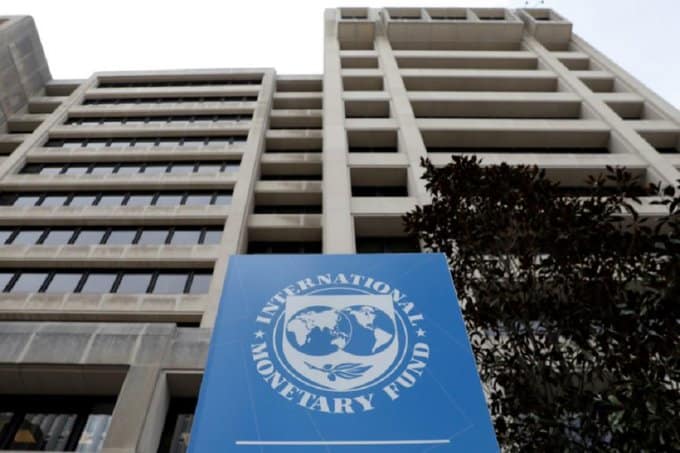
The marble hallways of the International Monetary Fund’s headquarters in Washington, D.C., are accustomed to bad news. For nearly eight decades, the institution has been the world’s economic firefighter, rushing to the scene of financial crises, sovereign defaults, and market meltdowns. But even by the IMF’s standards, the message delivered on Tuesday morning was sobering.
In its latest World Economic Outlook, released ahead of the Spring Meetings of the IMF and World Bank, the Fund slashed its forecast for global economic growth in 2026 to just 3.1%—a significant downward revision from the 3.5% projected just six months ago. The downgrade, IMF Chief Economist Pierre-Olivier Gourinchas told reporters, reflects a “perfect storm” of intersecting crises, with the ongoing war in the Middle East emerging as the most immediate and unpredictable threat.
“The global economy has shown remarkable resilience in recent years,” Gourinchas said, adjusting his glasses as he faced a packed room of journalists. “But that resilience is being tested as never before. The conflict in the Middle East—its duration, its intensity, its potential to widen—represents a grave risk to the global outlook. We are not yet in a recession. But we are walking a very narrow path.”
The Numbers Behind the Warning
The IMF’s 3.1% forecast for 2026 represents a modest but meaningful slowdown from the 3.5% growth recorded in 2025. While a global recession is not the baseline scenario, the Fund warned that the risks are “overwhelmingly tilted to the downside.”
The revised forecast reflects downgrades for most major economies. The United States, the world’s largest economy, is now projected to grow at just 2.1% in 2026, down from 2.8% in 2025. The euro area is expected to expand by a tepid 1.2%, with Germany—the continent’s traditional engine—lagging even further. China, once the unstoppable growth machine, is forecast to grow at 4.5%, its slowest pace in decades outside of the pandemic years.
Emerging markets and developing economies, which have long been the bright spots in global growth, are also feeling the pinch. The IMF projects they will grow at 4.0% in 2026, down from 4.5% in 2025. Sub-Saharan Africa, including South Africa, is expected to grow at just 3.2%—well below the rate needed to make a dent in poverty and unemployment.
“These numbers are not catastrophic,” said Eswar Prasad, a senior fellow at the Brookings Institution and former IMF economist. “But they are deeply concerning. We are seeing a synchronized slowdown across the world’s largest economies. And the Middle East conflict is adding a layer of uncertainty that makes forecasting almost impossible.”
The Middle East Wildcard
The IMF’s most urgent warning, however, was not about the numbers themselves but about the geopolitical storm gathering on the horizon. The war in the Middle East—which began with the October 2025 attacks on Israel and has since spiraled into a regional conflict involving Iran, Lebanon’s Hezbollah, and Yemen’s Houthi rebels—has already disrupted global shipping, spiked energy prices, and rattled financial markets.
But the IMF warned that the worst may be yet to come.
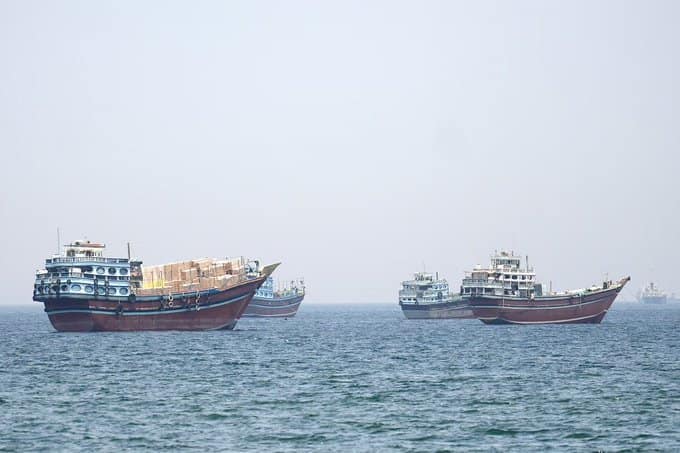
“The conflict has so far had a relatively contained impact on global energy markets,” Gourinchas said. “But that could change very quickly. A wider escalation—particularly one that affects the Strait of Hormuz, through which 20% of the world’s oil passes—would send energy prices soaring. That would be a game-changer for the global economy.”
The Strait of Hormuz, the narrow waterway between Iran and Oman, is the world’s most critical oil chokepoint. Iran has repeatedly threatened to close it in response to military action. If that threat were realized, analysts estimate that oil prices could spike to $150 per barrel or higher, triggering a global recession.
“The markets are pricing in a certain amount of geopolitical risk right now,” said Helima Croft, head of global commodity strategy at RBC Capital Markets. “But they are not pricing in a full-scale regional war. If that happens, all bets are off. You would see a supply shock unlike anything since the 1970s.”
The IMF’s report also highlighted the risk of a “sudden stop” in capital flows to emerging markets, as investors flee to the safety of U.S. Treasury bonds and other safe-haven assets. Countries with high levels of dollar-denominated debt—including many in Africa, Asia, and Latin America—would be particularly vulnerable.
“When geopolitical tensions rise, capital flees to safety,” said Carmen Reinhart, chief economist of the World Bank. “Emerging markets are always the first to feel the pain. They have less fiscal space, less monetary policy flexibility, and less access to international capital markets. A major escalation in the Middle East would be devastating for them.”
The Inflation Fight Continues
Even without a major escalation in the Middle East, the global economy is still grappling with the lingering effects of the post-pandemic inflation surge. Central banks around the world have raised interest rates at an unprecedented pace over the past three years, and while inflation has come down from its peaks, it remains above target in most major economies.
The IMF projects that global inflation will decline from 6.5% in 2025 to 4.5% in 2026—still well above the 2% targets that most central banks aim for. That means interest rates are likely to remain “higher for longer,” a prospect that weighs on investment, housing, and consumption.
“The inflation fight is not over,” Gourinchas said. “Central banks have made significant progress, but they cannot declare victory yet. Premature easing would risk a reacceleration of inflation and undo all the hard work of the past three years.”
The tension between fighting inflation and supporting growth is particularly acute in the United States, where the Federal Reserve has kept interest rates at a 23-year high. Fed Chair Jerome Powell has signaled that rate cuts are likely later this year, but the timing and magnitude remain uncertain.
“If the Fed cuts too soon, inflation could surge again,” said former Treasury Secretary Lawrence Summers. “If they cut too late, they could trigger a recession. It is a very narrow path. And the Middle East conflict is making it even narrower.”
The South African Angle
For South Africa, the IMF’s downgrade is particularly unwelcome. The country, which has struggled with weak growth, high unemployment, and persistent load-shedding for years, was hoping that 2026 would bring some relief. Instead, the global slowdown is likely to weigh on demand for South Africa’s exports, including platinum, coal, and agricultural products.
The IMF now projects South Africa’s GDP growth at just 1.2% in 2026—well below the 2% that Treasury had hoped for in its budget projections. That means less tax revenue, higher borrowing costs, and more pressure on an already strained fiscal position.
“The global environment is not helping,” said South African Reserve Bank Governor Lesetja Kganyago, speaking on the sidelines of the IMF meetings. “We are doing what we can domestically—reforming our energy sector, improving logistics, fighting corruption. But we are also at the mercy of forces beyond our control. If the global economy slows, we slow with it.”
The rand, which has been volatile in recent weeks on concerns about the Middle East conflict, is likely to remain under pressure. A weaker rand makes imports more expensive, feeding into domestic inflation and making it harder for the Reserve Bank to cut interest rates.
“We are in a holding pattern,” said economist Dawie Roodt of the Efficient Group. “We are waiting to see what happens in the Middle East. We are waiting to see what the Fed does. We are waiting to see if load-shedding eases. There are too many unknowns to be optimistic.”
The Policy Response
The IMF used its World Economic Outlook to urge policymakers to take action on multiple fronts. First, it called for continued vigilance on inflation, with central banks keeping a tight grip on monetary policy until price stability is assured. Second, it urged governments to rebuild fiscal buffers that were depleted during the pandemic, reducing their vulnerability to future shocks. Third, it called for structural reforms to boost productivity and potential growth over the medium term.
But the IMF’s most urgent plea was for diplomacy.
“The best way to reduce economic uncertainty is to reduce geopolitical uncertainty,” Gourinchas said. “We urge all parties in the Middle East to exercise restraint and pursue a diplomatic resolution to the conflict. The global economy cannot afford a wider war.”
The plea, while well-intentioned, is unlikely to be heeded. The Middle East conflict has deep roots and powerful dynamics that are resistant to diplomatic solutions. And the IMF, for all its economic heft, has little leverage in the realm of geopolitics.
“The IMF can issue statements and warnings,” said former IMF Managing Director Christine Lagarde, now president of the European Central Bank. “But it cannot stop a war. That is the sad reality. The best we can do is prepare for the worst and hope for the best.”
The Outlook for Trade
One of the most immediate channels through which the Middle East conflict is affecting the global economy is trade. The Red Sea, a critical artery for global shipping, has become a danger zone, with Houthi rebels attacking commercial vessels in what they describe as retaliation for the war in Gaza.
Major shipping lines have rerouted their vessels around the Cape of Good Hope, adding thousands of nautical miles and up to two weeks of transit time. Shipping costs have tripled since October 2025, and delivery delays have become the norm.
“The Red Sea crisis is a supply chain nightmare,” said Ngozi Okonjo-Iweala, director-general of the World Trade Organization. “It is raising costs, delaying deliveries, and adding to inflationary pressures. And there is no end in sight.”
The IMF estimates that the Red Sea disruptions could shave 0.5 percentage points off global trade growth in 2026. For countries that rely heavily on trade—including Germany, Japan, and many emerging markets—that is a significant drag.
The Debt Crisis Looming
Another major concern highlighted in the IMF’s report is the growing debt burden facing low- and middle-income countries. During the pandemic, many governments borrowed heavily to support their economies. Now, with interest rates high and growth slowing, those debts are becoming harder to service.
The IMF estimates that about 60% of low-income countries are either in debt distress or at high risk of it. That means they are spending more on interest payments than on health, education, or infrastructure—a recipe for a lost decade of development.
“The debt situation is dire,” said Ceyla Pazarbasioglu, director of the IMF’s Strategy, Policy, and Review Department. “We need faster, more effective debt restructuring mechanisms. The current system is too slow and too fragmented. We are seeing countries that have been waiting for years for a resolution.”
Zambia, Ghana, and Ethiopia have all gone through painful debt restructurings in recent years, but the process has been slow and uncertain. The IMF is calling for a more streamlined approach, including the expansion of the Common Framework for Debt Treatments, which has so far produced limited results.
A Fragile Optimism
Despite the downgrades and the warnings, the IMF’s report was not without notes of optimism. The global labor market remains strong, with unemployment at near-record lows in many countries. Consumer spending, while moderating, has not collapsed. And the banking system, after the scares of 2023, appears stable.
“The global economy is not falling off a cliff,” Gourinchas said. “It is slowing, yes. But it is still growing. And there are reasons to be hopeful. Inflation is coming down. Supply chains are healing. And policymakers have learned from past crises.”
But hope, as the IMF knows well, is not a strategy. And the risks—geopolitical, financial, and environmental—are mounting. The Middle East conflict could escalate. Energy prices could spike. Debt crises could multiply. Any one of those could push the global economy from a slowdown into a recession.
“The next few months will be critical,” said Kristalina Georgieva, the IMF’s managing director, in a closing speech at the Spring Meetings. “We need clear-eyed assessment, coordinated action, and a commitment to international cooperation. The challenges we face are global. The solutions must be global as well.”
The Road Ahead
As the IMF meetings concluded and the world’s finance ministers and central bankers boarded planes back to their capitals, the question hanging over all of them was simple: What happens next?
The answer, for now, is uncertain. The Middle East conflict could de-escalate, easing pressure on oil prices and global trade. Inflation could continue to fall, allowing central banks to cut rates and stimulate growth. Productivity-enhancing technologies—including artificial intelligence—could begin to deliver the long-promised boost to economic potential.
Or none of that could happen. The conflict could widen. Inflation could prove stubborn. Growth could slow further. And the global economy could find itself, once again, on the brink.
“Forecasting is not about certainty,” Gourinchas said as he closed his press briefing. “It is about probabilities. And right now, the probabilities are telling us to be cautious. To be prepared. And to hope for the best, while planning for the worst.”
He gathered his papers, nodded to the journalists, and walked out of the room. Behind him, the IMF’s logo—a stylized globe, encircled by olive branches—gleamed under the fluorescent lights. A symbol of international cooperation, of shared prosperity, of a world united by economics if not by politics.
But outside the windows of the IMF headquarters, the real world was waiting—a world of conflict, uncertainty, and slowing growth. The forecast had been delivered. The warnings had been issued. Now, it was up to the world to decide what happened next.
About The Author