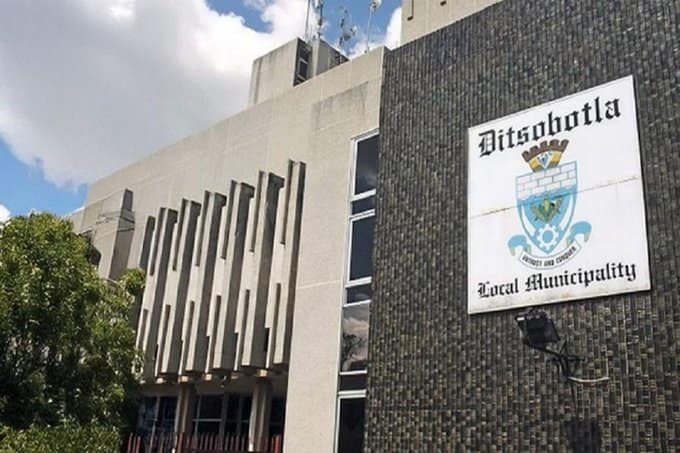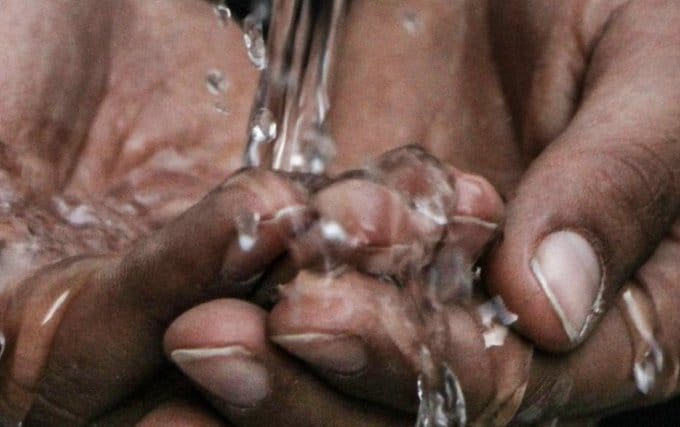
The tap in Nomsa Dlamini’s kitchen has been dry for eleven days. Not a trickle. Not a drip. Just the hollow, mocking sound of air when she turns the handle. In her backyard, a collection of plastic drums and rusted buckets sits under a corrugated iron awning, filled with water she hauled from a communal tap three blocks away—water that is brown, that smells of chlorine and something else, something earthy and wrong.
“We boil it,” she said, gesturing at a blackened kettle on a two-plate stove. “We boil it and we pray. What else can we do? The government does not answer. The municipality does not care. We are alone.”
Nomsa lives in Soweto’s Diepkloof extension, one of countless Gauteng neighborhoods where the taps have become unreliable to the point of uselessness. But her story is no longer just a local grievance. It is about to become the subject of a formal, legally empowered investigation by the South African Human Rights Commission (SAHRC), which announced on Thursday that it will hold a formal investigative inquiry into the ongoing water crisis in Gauteng next month.
The inquiry, scheduled to begin on 12 May 2026 at the SAHRC’s Braamfontein headquarters, will focus on persistent shortages, crumbling infrastructure, and what the Commission described as “systemic failures by government to deliver this basic human right to millions of residents.”
“Access to sufficient water is not a privilege. It is not a luxury. It is a right enshrined in Section 27 of our Constitution,” said SAHRC Commissioner Philile Ntuli at a press conference announcing the inquiry. “When that right is violated on a massive scale, affecting millions of people for months and years on end, the Commission has a duty to investigate. That is what we will do.”
The Scope of the Crisis
The water crisis in Gauteng, South Africa’s economic heartland and most populous province, has been building for years. But in recent months, it has reached what many describe as a tipping point.
Residents in Soweto, Alexandra, Tembisa, and parts of Johannesburg’s southern suburbs report weeks without running water. Hospitals have been forced to postpone elective surgeries. Schools have sent children home early because toilets could not be flushed. Small businesses—hair salons, car washes, spaza shops—have closed their doors, unable to operate without a reliable supply.
The crisis is the result of a perfect storm: aging infrastructure that has been neglected for decades, rapid population growth that has outpaced system capacity, mismanagement and corruption at municipal level, and a persistent lack of investment in maintenance and upgrades.
“We are trying to run a 21st-century economy on 19th-century pipes,” said water expert Dr. Anthony Turton, a former researcher at the Council for Scientific and Industrial Research (CSIR). “Some of the infrastructure in Gauteng dates back to the 1930s and 1940s. It is leaking, it is breaking, it is failing. And we have no plan to replace it.”
The numbers are staggering. Rand Water, the bulk water utility that supplies Gauteng and parts of four other provinces, estimates that it loses nearly 40% of the water it treats to leaks and illegal connections—a rate more than double the global average. That is water that has been purified, pumped, and paid for, only to disappear into the ground or be stolen before it ever reaches a tap.
The Constitutional Right
At the heart of the SAHRC’s inquiry is a fundamental question: Is the South African government fulfilling its constitutional obligation to provide access to sufficient water for all?
Section 27 of the Constitution guarantees everyone “the right to have access to sufficient food and water.” It also requires the state to take “reasonable legislative and other measures, within its available resources, to achieve the progressive realisation of this right.”
The SAHRC will examine whether the government’s actions—or inactions—meet this standard. Investigators will look at maintenance schedules, budget allocations, infrastructure planning, and the response to emergencies. They will also hear testimony from affected residents, civil society organizations, and expert witnesses.
“The Constitution does not require the state to provide water to every household overnight,” said legal scholar Professor Cathi Albertyn of the University of the Witwatersrand. “But it does require a reasonable plan. It does require progressive improvement. If the state is going backwards—if more people are without water today than five years ago—that is a violation. That is what the SAHRC will need to determine.”
The Municipal Breakdown
The water crisis in Gauteng is not a single problem with a single cause. It is a cascade of failures across multiple jurisdictions.
Johannesburg, Tshwane, and Ekurhuleni—the three metropolitan municipalities that make up most of Gauteng—each have their own water distribution systems, their own maintenance backlogs, and their own political dynamics. All three have faced allegations of corruption in water infrastructure contracts. All three have struggled to recruit and retain skilled engineers and technicians. All three have seen their budgets stretched thin by declining revenue from electricity sales (as residents install solar panels) and persistent non-payment by households and businesses.
“We have a governance crisis, not just an infrastructure crisis,” said Nic Borain, a political analyst who has studied municipal performance. “The municipalities are broke. They are dysfunctional. They are failing at the most basic tasks of local government. And the provincial and national government have not stepped in to fix them.”
The SAHRC inquiry will examine the role of each municipality, as well as the provincial government and national departments including Water and Sanitation, Cooperative Governance, and Finance. Witnesses may include mayors, municipal managers, engineers, and former officials who have blown the whistle on corruption or negligence.
The Human Toll
Behind the statistics and the legal arguments are real people, living real lives of quiet desperation. The SAHRC heard some of their stories during preliminary consultations held across the province over the past two months.
In Alexandra, a mother of four described bathing her children in a plastic basin with water she bought from a private vendor at five times the municipal rate. In Tembisa, an elderly woman on a fixed pension said she had stopped cooking hot meals because washing the pots used too much of her precious water supply. In Soweto, a diabetic man said he had been hospitalized twice after drinking untreated water from an unsecured valve.
“We are not statistics,” said Andile Mbatha, a community activist from Diepsloot who will testify at the inquiry. “We are human beings. We are South Africans. We pay taxes. We vote. And we deserve better than this. We deserve water.”
The health impacts of the water crisis are already visible. Gauteng’s provincial health department has reported a spike in cases of diarrheal disease, particularly among children under five. Informal settlements, where access to water is most unreliable and sanitation most precarious, have been hit hardest.
“When there is no water, people cannot wash their hands. They cannot clean their homes. They cannot flush their toilets,” said Dr. Naledi Mkhize, a public health specialist at Chris Hani Baragwanath Hospital. “Diseases that are entirely preventable—cholera, typhoid, dysentery—become killers. It is a public health emergency.”
The Political Fallout
The water crisis has become a political liability for the governing African National Congress (ANC) ahead of the 2026 local government elections, now just six months away. The party has governed Gauteng since the end of apartheid, but its hold on the province has weakened in recent years.
In the 2021 local elections, the ANC lost control of Johannesburg, Tshwane, and Ekurhuleni to coalitions led by the Democratic Alliance (DA) and ActionSA. But those coalitions have proven unstable, and service delivery has not improved. Residents are angry at all parties.
“They are all the same,” said Nomsa Dlamini, the Soweto resident with eleven days of dry taps. “The ANC had years to fix this. They did nothing. Now the DA is in charge. Also nothing. ActionSA? Nothing. They fight in council while we sit here with no water. I will not vote for any of them.”
The SAHRC inquiry, while not a political process, will inevitably have political consequences. Its findings, expected later this year, could trigger legal action against municipalities or national departments. It could also shape the debate in the run-up to the elections, forcing parties to spell out their plans for solving the crisis.
“The ANC is very nervous about this inquiry,” said political analyst Ralph Mathekga. “Water is a basic service. If people don’t have water, they blame the government. And the government is the ANC. This could cost them votes in Gauteng, and if they lose Gauteng, they lose their last major electoral stronghold.”
The Utility’s Perspective
Rand Water, the bulk supplier, has its own problems. The utility has been struggling to keep up with demand as the Gauteng population has grown from 8 million in 2001 to nearly 16 million today. Its system is old, leaky, and underfunded.
“We are pumping at maximum capacity 24 hours a day, 365 days a year,” said Rand Water CEO Sipho Mosai in a recent interview. “There is no slack in the system. When something breaks—and things break—we cannot simply divert supply from elsewhere. There is nowhere to divert it from.”
The utility has asked for R30 billion over the next decade to replace aging infrastructure, but the money has not been forthcoming. The national government, itself under fiscal pressure, has prioritized other spending. Municipalities, which buy water from Rand Water and resell it to residents, have struggled to pay their bills, leaving the utility with a growing debt burden.
“We are between a rock and a hard place,” Mosai said. “We need to invest. We don’t have the money. The municipalities need to pay. They don’t have the money. The residents need water. They don’t have the water. Something has to give.”
Civil Society Mobilizes
The SAHRC inquiry has galvanized civil society, with a coalition of community groups, environmental organizations, and human rights advocates preparing to participate as “friends of the court.”
“We have been screaming about this for years,” said Ferrial Adam of WaterCAN, a civil society organization that monitors water quality and access. “Finally, someone is listening. Finally, there is a formal process that can hold the government accountable. We will be there. We will present evidence. We will demand action.”
The coalition is also preparing for a “Water March” on the Union Buildings in Pretoria on 25 April, just two weeks before the inquiry begins. Organizers expect tens of thousands of residents from across Gauteng to participate, demanding immediate action to restore water supplies.
“We are not waiting for the inquiry to finish,” said organiser Naledi Mokoena. “People are suffering now. They need water now. The march is a warning: if the government does not act, the streets will be filled with angry people. And we will not be peaceful forever.”
The Inquiry Process
The SAHRC inquiry will be chaired by Commissioner Philile Ntuli, with two other commissioners sitting alongside her. The proceedings will be open to the public and the media, though certain witnesses may testify in camera if they fear retaliation.
The inquiry has the power to subpoena witnesses, compel the production of documents, and enter and inspect premises. It is not a court of law—it cannot impose criminal penalties—but its findings can form the basis for legal action, including applications to the High Court for declaratory orders or structural interdicts.
“We are not here to point fingers,” Ntuli said. “We are here to understand what went wrong, why it went wrong, and what must be done to fix it. If we find that rights have been violated, we will say so. If we find that officials have acted unlawfully, we will refer them for prosecution. That is our mandate.”
The inquiry is expected to sit for three weeks in May, with additional sessions in June if needed. A draft report will be circulated to affected parties for comment, with a final report and recommendations expected by September 2026.
The Cost of Inaction
As the SAHRC prepares its inquiry, the cost of inaction mounts. The water crisis is not just a human rights issue; it is an economic one. Businesses are relocating from Gauteng to other provinces, citing water unreliability. Property values in affected areas have fallen. Investment is drying up.
“We are shooting ourselves in the foot,” said economist Mike Schüssler. “Gauteng is the engine of the South African economy. If the engine is starved of water, it will overheat and seize. We are already seeing the signs. Job losses. Business closures. A flight of capital. This is not sustainable.”
The human cost is incalculable. Children who miss school because of water shortages fall behind. Elderly residents who cannot safely fetch water become isolated and ill. Families who cannot wash properly lose their dignity. Communities that lack water fray and fracture.
“We are not just failing to provide a service,” said Ntuli. “We are failing to respect the humanity of millions of our fellow citizens. That is what this inquiry is ultimately about. Not pipes and pumps, but people. Real people, with real rights, who are being failed by the very government that is supposed to protect them.”
A Glimmer of Hope?
Amid the despair, there are glimmers of hope. Some municipalities have begun to accelerate leak repair programs. Rand Water has secured partial funding for a new pipeline. And the SAHRC inquiry itself represents a recognition that the status quo is unacceptable.
But hope is not a strategy. And for the millions of Gauteng residents who turn on their taps each morning to find nothing, the promises of officials and the reports of commissions ring hollow.
“I have heard so many promises,” said Nomsa Dlamini, standing in her kitchen, her hand on the dry tap. “I have seen so many officials come and go. They take pictures. They shake hands. They promise action. Then they leave. And the water does not come. I am tired of promises. I want water. That is all. Just water.”
Outside, the sun was setting over Soweto, casting long shadows across the rows of houses and shacks. Somewhere in the distance, a child cried. A dog barked. A woman walked past, a bucket balanced on her head, heading toward the communal tap that might or might not have water.
The SAHRC inquiry will begin in 27 days. For Nomsa Dlamini and millions like her, that is 27 more days of uncertainty, of struggle, of thirst. The Commission has promised answers. It has promised accountability. It has promised a path forward.
But on the ground in Gauteng, the taps remain dry. And the water does not come.
About The Author