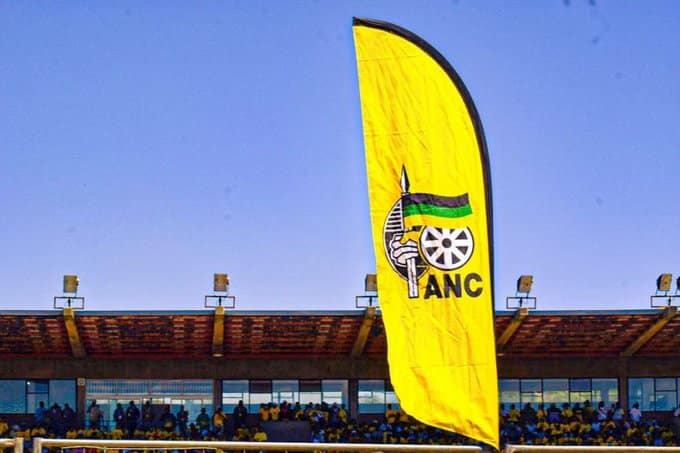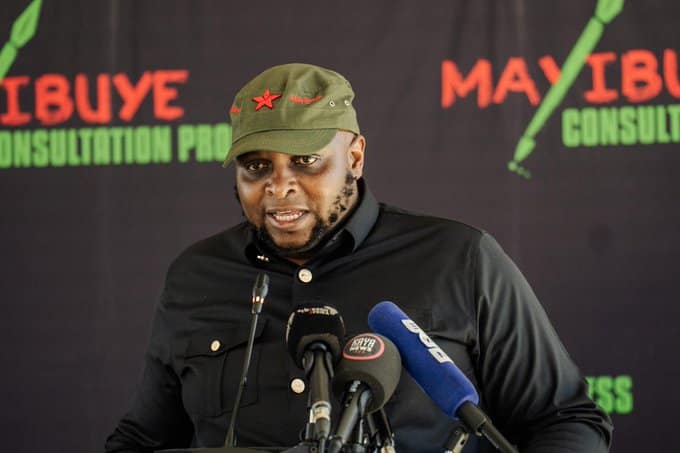
In a politically charged culmination to its landmark inaugural national convention, the Afrika Mayibuye Movement (AMM), led by former EFF deputy president Floyd Shivambu, has formally staked its claim as the ideological and electoral successor to the ruling African National Congress (ANC). Speaking to a packed auditorium at the University of Johannesburg’s Soweto campus on Sunday, 7 December 2025, Shivambu delivered a scathing indictment of the ANC’s 31-year reign, framing his new movement not as just another opposition party, but as the rightful heir to South Africa’s liberation mantle.
“The African National Congress, in its current form, is a corpse walking,” Shivambu declared, his rhetoric met with roaring approval from over 3,000 delegates. “It has abandoned the people, betrayed the revolution, and become a patronage network for a connected elite. The moral and ideological void it leaves behind will not be filled by palliatives or opposition tweaks. It will be filled by a movement that returns to the source—the uncompromising pursuit of economic freedom, land return, and Pan-African sovereignty. That movement is Afrika Mayibuye.”
A Convention of Reclamation and Reinvention
The three-day convention, themed “The People’s Takeback,” was meticulously orchestrated to signal both a break from and a continuity with liberation history. The choice of Soweto, a historic epicenter of anti-apartheid struggle, was deeply symbolic. The agenda blended policy workshops on land expropriation, state ownership of mines and banks, and radical constitutional change with cultural performances and invocations of historical figures like Steve Biko and Robert Sobukwe—figures often cited by critics who accuse the ANC of diluting its original radicalism.
The AMM’s foundational documents, adopted at the convention, propose a political system shift towards a “People’s Democracy,” advocating for the abolition of the Senate and its replacement with a directly elected “Assembly of the People’s Representatives,” alongside binding referendums on major issues. Economically, its platform mirrors much of the EFF’s leftist populism but frames it as the “unfinished business of the Freedom Charter.”
The “Movement,” Not “Party,” and the Target Voter
Consistently referring to the AMM as a “movement,” Shivambu drew a clear distinction between it and established political parties mired in bureaucracy. The target, analysts note, is clear: the disillusioned, predominantly young, Black working-class and unemployed voters who feel alienated by the ANC’s perceived compromises but may view the EFF as overly theatrical or unstable.
“We are not here to play parliamentary games,” stated Nomvula Mabhena, a newly elected AMM national coordinator. “We are here to organize, mobilize, and prepare for the transfer of power from the hands of the sell-outs to the hands of the people. The 2029 elections are not our end goal; they are a checkpoint.”
Political Calculus and the Fragmented Left
The AMM’s emergence further fragments South Africa’s opposition landscape, particularly on the left. It poses a direct intellectual and strategic challenge to both the ANC and the EFF, from which Shivambu and other key founders defected following internal disputes. The move is seen as an attempt to capture the votes of those who desire radical economic transformation but are skeptical of the EFF’s leadership style and internal governance.
Political analyst Professor Richard Calland observed, “Shivambu is executing a classic flanking maneuver. He’s arguing that the EFF has become part of the noisy but ineffective opposition circus, while the ANC is morally bankrupt. He’s positioning the AMM as the purer, more serious vehicle for revolutionary change. Whether this resonates beyond this fervent launch crowd depends on ground organization and whether they can project coherence, not just critique.”
The ANC’s Dismissive Retort
The ANC, through spokesperson Mahlengi Bhengu-Motsiri, dismissed the AMM as a “splinter group of a splinter group” driven by personal ambition rather than principle. “The ANC remains the proven, broad church of the people,” the statement read. “New formations come and go, especially in election seasons, but they cannot match the deep roots, history, and delivery record of the liberation movement.”
As the convention concluded with the singing of “Mayibuye iAfrika”—a pointed alternative to the national anthem—the AMM has launched itself into South Africa’s turbulent political arena with a bold, declarative challenge. Shivambu has effectively thrown down a gauntlet, declaring open season on the ANC’s heartland support and setting the stage for a bruising ideological and electoral battle that will test the loyalty of voters and reshape the landscape ahead of the 2026 local and 2029 national elections. The quest for the soul of South Africa’s liberation legacy has entered a new, and decidedly more crowded, chapter.
About The Author