In a political defection that has sent shockwaves through KwaZulu-Natal’s volatile political landscape, Dr. Bongani Mncwango, the recently deposed Secretary General of the uMkhonto weSizwe Party (MKP), has officially crossed the floor to join the Inkatha Freedom Party (IFP).
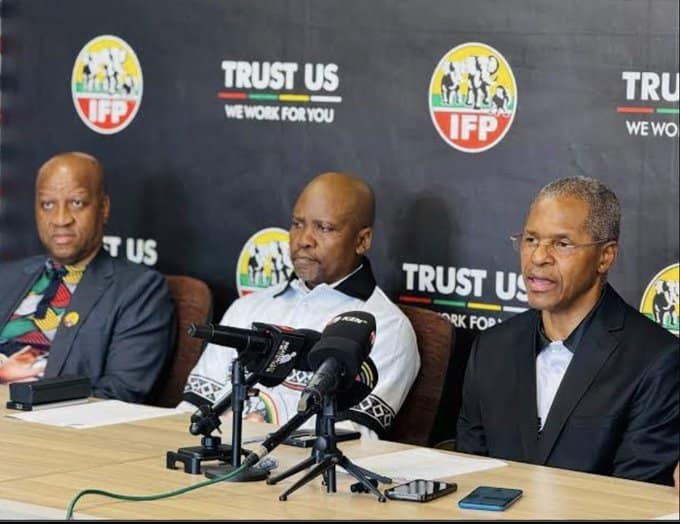
The announcement, made at a packed press conference at the IFP’s Prince Mangosuthu House in Durban on Wednesday morning, marks one of the most significant political realignments in the province since the MKP’s dramatic emergence onto the national stage ahead of the 2024 general elections.
Mncwango, a former military veteran and one of the founding architects of the MKP, stood shoulder-to-shoulder with IFP President Velenkosini Hlabisa as he formally renounced his membership in the party he helped build—just weeks after being unceremoniously removed from his post as Secretary General.
“I have not come to the IFP because I am bitter or because I seek revenge,” Mncwango told a room of stunned journalists and party loyalists. “I have come because the IFP represents the values that I once believed the MKP stood for: discipline, respect for veterans, and a genuine commitment to the people of KwaZulu-Natal. Those values have been hollowed out by the very people I once called comrades.”
The Fallout Within MKP
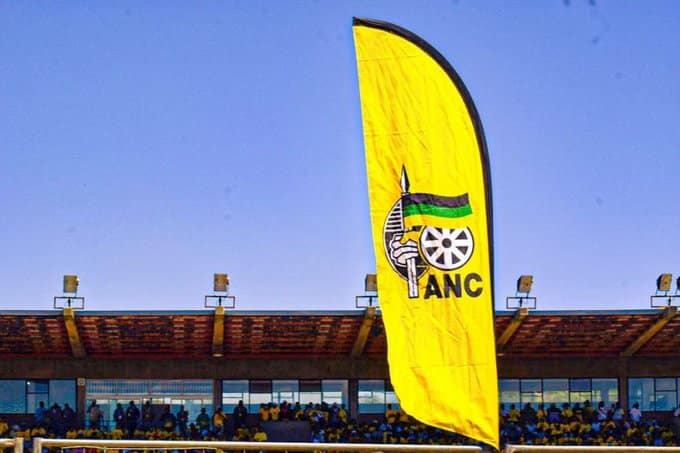
Mncwango’s departure is the latest and most dramatic chapter in what insiders describe as a deepening crisis within the MKP, a party formed by former Umkhonto weSizwe military veterans after they broke away from the African National Congress (ANC).
Just three weeks ago, Mncwango was removed as Secretary General following a contentious national executive committee meeting that sources describe as “explosive.” The official reason given by the party was “organizational restructuring,” but those close to the matter point to a power struggle between Mncwango and MKP President Jabulani “JZ” Khumalo over the party’s direction.
“The tension had been building for months,” said a senior MKP official who spoke on condition of anonymity. “Mncwango wanted the party to professionalize, to build proper structures, to prepare for governance. Others wanted to ride the wave of populism and anti-ANC sentiment without doing the hard work of building an institution. In the end, the populists won. Mncwango was pushed out, and now he has taken his followers with him.”
Mncwango himself was more direct. “I was removed because I refused to sign off on financial transactions that I believed were not in the best interest of the party,” he alleged during the press conference. “I raised concerns about the lack of transparency, about the direction of leadership, about the erosion of the very principles for which our comrades died. For that, I was shown the door. So be it. I will not compromise my integrity for any party or any person.”
The MKP has not yet responded formally to Mncwango’s allegations, but party spokesperson Nhlamulo Ndlovu released a brief statement earlier Wednesday dismissing the claims as “sour grapes from a bitter individual who failed to understand collective leadership.”
The IFP’s Strategic Gain
For the IFP, Mncwango’s defection represents a major strategic victory in the ongoing battle for political dominance in KwaZulu-Natal. The province, long a three-way battleground between the ANC, the IFP, and now the MKP, has seen its political fault lines shift dramatically since the MKP’s strong performance in the 2024 elections, where it won over 15% of the provincial vote.
IFP President Velenkosini Hlabisa did not hide his delight at the acquisition. “Dr. Mncwango is a man of stature, a man of principle, and a man who understands the struggles of our people,” Hlabisa said, placing a ceremonial IFP beret on Mncwango’s head. “He is not coming to the IFP as a job seeker. He is coming as a leader, as a builder, as someone who will help us take this province forward. We welcome him with open arms.”
Political analysts see the move as a calculated effort by the IFP to eat into the MKP’s support base, particularly among military veterans and disaffected ANC members who feel alienated by the current political establishment.
“The IFP is playing a long game,” said political analyst Professor Sipho Dlamini of the University of KwaZulu-Natal. “They know that the MKP is internally fragile. By bringing in a figure like Mncwango—someone with credibility, with organizational experience, and with a network of supporters—they are sending a message to MKP members: ‘Your leadership is failing. There is a home for you here.’ It is a classic political poaching strategy, and it may well work.”
Mncwango’s Political Journey
Dr. Bongani Mncwango is no stranger to political controversy. A former commander in Umkhonto weSizone, the armed wing of the ANC during the anti-apartheid struggle, Mncwango spent years in exile in Zambia and Zimbabwe before returning to South Africa after Nelson Mandela’s release.
He served in various capacities within the ANC for nearly two decades before becoming disillusioned with what he described as “the capture of the liberation movement by careerists and corrupt elements.” He was among the founding members of the MKP in 2022, and his organizational skills were widely credited with helping the party achieve its surprisingly strong electoral performance in 2024.
“I gave everything to that party,” Mncwango said, his voice thick with emotion. “I worked 18-hour days. I traveled to every corner of this province. I slept in my car because there was no money for hotels. I did it because I believed we were building something new, something pure. To watch it fall apart because of ego and greed… it breaks my heart. But I am not broken. I still have work to do.”
Reactions Across the Political Spectrum
News of Mncwango’s defection has drawn sharp reactions from across South Africa’s political landscape.
The African National Congress (ANC) in KwaZulu-Natal released a terse statement describing the move as “musical chairs among the opposition” and expressing confidence that “the ANC remains the only true home for the majority of our people.”
The Economic Freedom Fighters (EFF), which has also been eyeing gains in the province, dismissed the defection as “irrelevant.” “One person moving from one failed party to another failed party changes nothing for the workers and the poor,” said EFF KZN chairperson Vusi Khoza.
The Democratic Alliance (DA) struck a more analytical tone, with provincial leader Francois Rodgers saying the move “highlights the instability of the opposition landscape in KZN” and calling for “a realignment of serious, competent, and ethical leadership.”
But the most dramatic reaction came from within the MKP itself. In an interview with a local radio station, a visibly agitated MKP President Jabulani Khumalo accused Mncwango of being a “traitor” and a “spy” who had been planted in the party by hostile forces.
“Let him go,” Khumalo said. “We know who he is. We know what he has done. The people will see. The people will judge. We do not need him. The MKP will continue without him.”
Mncwango responded with a wry smile when asked about Khumalo’s comments. “Traitor? I gave that party my blood, my sweat, my time, my money. If that makes me a traitor, then I am proud to be one. I would rather be called a traitor by dishonest men than be called a comrade by them.”
What This Means for KZN Politics
The defection could have significant implications for the balance of power in KwaZulu-Natal, particularly in the run-up to the 2026 local government elections.
Currently, the province is governed by a fragile coalition between the ANC and the IFP, a partnership that has been tested repeatedly by tensions over resource allocation, traditional leadership disputes, and competing visions for the province’s future.
Mncwango’s addition to the IFP strengthens the party’s hand both within the coalition and in its broader competition with the MKP for the votes of former ANC loyalists, military veterans, and rural communities.
“If Mncwango brings even a fraction of his network with him, the IFP could see a significant boost in key municipalities,” said Professor Dlamini. “The MKP, meanwhile, is now facing an existential crisis. They have lost one of their most visible and capable leaders. Their internal divisions are now public. The question is whether they can hold together or whether we will see more defections in the coming weeks.”
The Human Element
Behind the political maneuvering and the strategic calculations, however, there is a human story—one of loyalty, betrayal, and the search for political home.
“I have been called a hero and a villain in the same week,” Mncwango admitted, leaning back in his chair after the press conference. “That is politics. You learn to live with it. But what matters to me is what my grandchildren will say. I want them to say: ‘He stood for something. He fought for what he believed in. He never sold out.’ That is all that matters.”
As he walked out of Prince Mangosuthu House, flanked by IFP security and greeted by party supporters singing “Thina Sizwe” (We Are the Nation), Mncwango paused and looked back at the building.
“This is a new chapter,” he said. “I do not know how it will end. But I know how it begins: with hope. Hope that there is still a place in South African politics for principle. Hope that the dream of a better KZN is not dead. Hope that I have not made a mistake.”
Only time will tell whether that hope is justified. For now, the political earthquake in KwaZulu-Natal continues to rumble—and no one is certain where the next tremor will strike.
About The Author