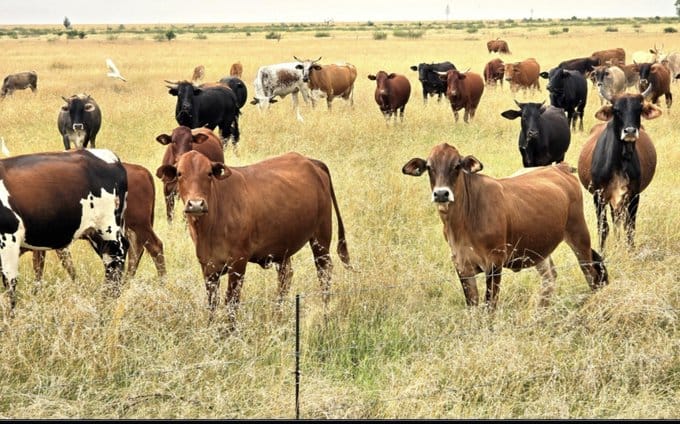
The rolling grasslands of the Free State have long been the pride of South African agriculture. From the golden maize fields of the east to the cattle-rich plains of the west, this province has fed the nation for generations. But today, those same grasslands have become a battleground. An invisible enemy is sweeping through the herds. And despite the best efforts of veterinarians, farmers, and government officials, it is winning.
The Foot-and-Mouth Disease (FMD) outbreak in the Free State has worsened significantly, with the provincial Department of Agriculture, Rural Development and Environmental Affairs confirming 10 new cases on Thursday. The latest infections bring the total number of outbreaks to a staggering 443 across 18 local municipalities — more than half the municipalities in the province.
“This is no longer an outbreak. It is a crisis,” said Dr. Thabo Mokoena, the provincial director of veterinary services, speaking at an emergency press conference in Bloemfontein. “We are seeing new cases every day. The disease is spreading faster than we can contain it. We are stretched thin. We are running out of time.”
The news sent shockwaves through the agricultural sector, which is already reeling from months of containment efforts, culling operations, and trade restrictions. For the farmers of the Free State — many of whom have devoted their entire lives to their herds — the numbers represent not just statistics but shattered dreams.
The scale of the disaster: 443 outbreaks and counting
The first cases of FMD in the Free State were detected in March 2026 in the Mangaung metropolitan area. At the time, officials expressed confidence that the outbreak could be contained through quarantine, movement controls, and targeted culling.
Three weeks later, that confidence has evaporated.
The 443 outbreaks are distributed across the province, with the hardest-hit municipalities including:
- Mangaung – 87 outbreaks
- Matjhabeng – 62 outbreaks
- Nketoana – 41 outbreaks
- Dihlabeng – 38 outbreaks
- Mafube – 29 outbreaks
- Phumelela – 24 outbreaks
- Masilonyana – 19 outbreaks
- Tokologo – 16 outbreaks
The remaining 10 municipalities have recorded between 5 and 15 outbreaks each. Only four municipalities in the province remain completely FMD-free, according to the department.
“The geographical spread is extremely concerning,” said Dr. Mokoena. “This is not a localized cluster. The disease has jumped across the province. It is now present in the north, the south, the east, and the west. Containing it at this point is like trying to catch smoke with your bare hands.”
What is Foot-and-Mouth Disease?
Foot-and-Mouth Disease is a highly contagious viral infection that affects cloven-hoofed animals, including cattle, sheep, goats, and pigs. While the disease is rarely fatal in adult animals, it causes severe symptoms: fever, blisters on the mouth and feet, lameness, reduced milk production, weight loss, and infertility.
The economic impact is devastating. Infected herds must be quarantined or culled. Meat and dairy exports are banned from affected regions. The agricultural supply chain is disrupted for months, sometimes years.
“FMD is not a death sentence for individual animals, but it is a death sentence for agricultural economies,” said Professor Elsie van der Merwe, a veterinary epidemiologist at the University of the Free State. “The disease spreads like wildfire. And once it is in an area, you lose access to export markets. That means lower prices for farmers. That means job losses. That means rural communities collapse.”
The current outbreak is the worst in the Free State since 2022, when the province recorded 112 cases over a six-month period. This outbreak has already quadrupled that number — in less than one month.
The human cost: Farmers on the brink
Behind the statistics are real people. Real families. Real livelihoods hanging by a thread.
Pieter van der Merwe, 58, is a third-generation cattle farmer outside Kroonstad. He has 400 head of cattle. Last week, FMD was detected in his herd.
“I woke up one morning and three of my cows were limping,” he said, his voice cracking. “The vet came. He confirmed it. FMD. My whole herd must be quarantined. I cannot sell. I cannot move them. I just have to watch and wait. And pray.”
Van der Merwe estimates that the outbreak will cost him at least R2 million in lost revenue over the next six months. He does not know if his farm will survive.
“I have insurance, but it does not cover everything,” he said. “The bank still wants its bond payments. The workers still want their salaries. The feed still needs to be bought. I am bleeding money. And there is no end in sight.”
For small-scale farmers, the situation is even more dire.
Nomsa Mthembu, 45, keeps 15 cattle on a smallholding outside Thaba Nchu. She sells milk and beef to her local community. Last week, four of her cattle showed symptoms of FMD. The state veterinarian ordered her to quarantine the entire herd.
“I have no income now,” she said, tears streaming down her face. “No milk to sell. No meat to sell. My children need to eat. They need school fees. I have nothing. I don’t know what to do.”
The provincial government has announced a relief fund for affected farmers, but Mthembu has not yet received any assistance.
“They say help is coming,” she said. “But help cannot come fast enough. I am already hungry. My children are already hungry. Help is not here yet.”
The economic impact: Billions at stake
The FMD outbreak is not just a tragedy for individual farmers. It is a national economic disaster.
South Africa’s livestock industry is worth an estimated R60 billion annually and employs over 100,000 people directly, with hundreds of thousands more in related industries such as feed production, transport, and processing. The country is a major exporter of beef, lamb, and pork to markets in Africa, the Middle East, and Asia.
But FMD has triggered immediate trade restrictions. Botswana, Namibia, Eswatini, Lesotho, and Mozambique have all suspended imports of livestock and livestock products from the Free State. The European Union, which normally imports millions of rands worth of South African beef annually, has placed the entire country under heightened scrutiny.
“Every day that this outbreak continues, we lose millions in export revenue,” said Dr. John Purchase, CEO of Agbiz, the agricultural business chamber. “And those losses are permanent. You cannot recover a lost export contract. The buyer goes elsewhere. They find other suppliers. By the time we are declared FMD-free again, the market may be gone.”
The Red Meat Producers’ Organisation (RPO) has estimated that the current outbreak could cost the industry as much as R3 billion in direct and indirect losses over the next year.
“This is a catastrophe,” said RPO chairperson James Lombard. “We are watching a lifetime of work being destroyed in front of our eyes. And we are helpless to stop it.”
The government’s response: Vaccination, culling, and movement controls
The provincial and national governments have mobilized significant resources to combat the outbreak. The response includes:
- Vaccination campaigns – Over 200,000 doses of FMD vaccine have been distributed to affected areas, with priority given to high-risk herds.
- Culling operations – Infected animals are being humanely euthanized and disposed of to prevent further spread. To date, over 12,000 animals have been culled.
- Movement controls – The movement of livestock within and out of the Free State has been severely restricted. Farmers require permits to move any animal.
- Surveillance and testing – Veterinary teams are conducting door-to-door inspections in affected areas. Over 5,000 tests have been conducted in the past week alone.
But officials acknowledge that these measures may not be enough.
“We are doing everything we can with the resources we have,” said Free State MEC for Agriculture, Saki Mokoena (no relation to Dr. Mokoena). “But we need more resources. We need more vaccines. We need more veterinarians. We need more funding. The national government has been supportive, but the scale of this outbreak is unprecedented. We are learning as we go.”
The national Department of Agriculture, Land Reform and Rural Development has deployed an additional 50 veterinarians and 100 animal health technicians to the Free State. The department has also released R50 million in emergency funding.
“We stand with the farmers of the Free State,” said Minister of Agriculture Thoko Didiza. “This is a difficult time, but we will get through it together. Our teams are on the ground. Our resources are being deployed. We will not rest until this outbreak is under control.”
The blame game: Who is responsible?
As the crisis deepens, so too has the political blame game. Opposition parties have accused the government of being slow to respond and poorly prepared.
“The government knew that FMD was circulating in neighboring provinces,” said DA shadow minister of agriculture Annette Steyn. “They knew that biosecurity measures were inadequate. They knew that vaccination coverage was too low. And they did nothing. Now farmers are paying the price. The government must take responsibility.”
The EFF has gone further, calling for the resignation of senior officials in the national and provincial agriculture departments.
“Incompetence has destroyed the livelihoods of thousands of farmers,” said EFF spokesperson Leigh-Ann Mathys. “Heads must roll. Not tomorrow. Not next week. Now.”
The government has pushed back, arguing that the outbreak is the result of a highly contagious disease that no amount of preparation could have fully prevented.
“FMD is a global problem,” said Minister Didiza. “It spreads through wildlife. It spreads through contaminated vehicles. It spreads through wind. We have strong biosecurity measures, but no system is perfect. We are doing our best. We ask for patience and cooperation.”
The wildlife connection: A difficult variable
One of the challenges in containing the outbreak is the role of wildlife, particularly buffalo, which are natural carriers of the FMD virus. The Free State is home to several game reserves and wildlife farms, and infected buffalo can spread the disease to domestic cattle through fence-line contact.
“We have detected FMD in buffalo populations in at least three reserves,” said Dr. Mokoena. “That complicates everything. You cannot vaccinate wild animals. You cannot quarantine them. You cannot cull them without public outcry. They are a permanent reservoir of the virus. As long as they are infected, the risk of re-infection to domestic herds remains.”
The provincial government has erected additional fencing around affected reserves and is working with wildlife owners to increase surveillance. But some farmers are demanding more drastic action.
“Shoot the buffalo,” said Van der Merwe, the Kroonstad farmer. “I know that sounds harsh. I love wildlife as much as anyone. But my livelihood is being destroyed. My family’s future is being destroyed. We have to make hard choices.”
Conservation groups have rejected that call, arguing that culling wildlife is not the answer.
“Buffalo are not the enemy,” said Dr. Jane Goodall (no relation to the famous primatologist), a veterinarian with the Endangered Wildlife Trust. “They are victims of the same disease. The solution is better biosecurity, not mass culling. We can coexist. We must coexist.”
The farmers’ plea: ‘Help us’
As the outbreak continues to spread, farmers across the Free State are making a desperate plea: help us.
“We are not asking for handouts,” said Hendrik van Wyk, 67, a sheep farmer from Bethulie who has lost 200 animals to FMD. “We are asking for a fighting chance. We need vaccines. We need veterinarians. We need movement permits to be processed faster. We need the government to take this seriously. We are bleeding. Help us stop the bleeding.”
Van Wyk’s wife, Martha, wiped tears from her eyes as she spoke.
“We have been farming here for 40 years,” she said. “We have survived droughts. We have survived floods. We have survived economic crises. But this — this is different. This is a disease that we cannot see, cannot stop, cannot control. It is destroying everything we have built. Please. Someone help us.”
The road ahead: No quick fix
There is no quick fix for an FMD outbreak. Once the virus is established in an area, it can take months — sometimes years — to eradicate.
The provincial government has developed a three-phase response plan:
Phase 1: Containment (current) – Aggressive vaccination, culling, and movement controls to slow the spread.
Phase 2: Eradication (expected May–August) – Targeted elimination of remaining infected herds, intensive surveillance, and repopulation planning.
Phase 3: Recovery (expected September–December) – Lifting of movement controls, resumption of exports, and financial support for affected farmers.
“The timeline is optimistic,” acknowledged Dr. Mokoena. “It depends on many factors: the weather, the cooperation of farmers, the availability of vaccines, the behavior of wildlife. We could be looking at a longer fight. Farmers need to prepare for that possibility.”
A community united
Despite the despair, there are glimmers of hope. Farmers are helping farmers. Neighbors are sharing vaccines. Communities are rallying around affected families.
“We are competitors in good times,” said Van der Merwe. “But in bad times, we are brothers. I have had calls from farmers I barely know, offering to help. Offering to share feed. Offering to lend equipment. That is the spirit of the Free State. We will survive. We always do.”
The Red Cross has established a food relief program for families affected by the outbreak. The agricultural unions have set up a legal fund to help farmers navigate insurance claims and government compensation. And the national Department of Social Development has deployed counselors to farming communities to provide mental health support.
“This is traumatic,” said social worker Lerato Moloi, who is based in Bethlehem. “Farmers are losing their life’s work. They are losing their identity. They are losing hope. We are here to listen, to support, to remind them that they are not alone.”
The final word
As the sun set over the Free State on Thursday evening, the full scale of the disaster was impossible to ignore. The fields were still green. The cattle were still grazing. But behind every farm gate, there was fear.
Four hundred and forty-three outbreaks. Eighteen municipalities. Thousands of farmers. Millions of animals. And a disease that shows no signs of slowing.
“The next few weeks will be critical,” said Dr. Mokoena. “We will either turn the corner or lose the battle. I am praying for the former. But I am preparing for the latter.”
For the farmers of the Free State, prayer and preparation are all they have left. The government is trying. The veterinarians are working around the clock. The international community is watching.
But in the end, the disease will decide.
And the farmers can only wait.
🕊️ Bloemfontein, 17 April 2026 – A province under siege. A people holding on. A crisis that will define a generation.
About The Author