The Roosevelt Room of the White House has seen its share of dramatic moments. But on a tense Thursday afternoon, as flags fluttered at half-mast for a fallen service member whose name had not yet been released, President Donald Trump delivered a message that defied the gravity of the moment. The war with Iran, he said with characteristic bravado, could end soon — perhaps very soon.
“The war with Iran could end soon, maybe in the next two days,” Trump told a small group of reporters gathered in the briefing room. His voice was measured but carried an unmistakable undercurrent of urgency. “We are having some amazing conversations. Not everyone knows about them. But the world should prepare for what is coming. An amazing two days. You will see.”
The President did not elaborate on what those “amazing” developments might entail. He did not specify whether they involved diplomacy, military action, or a combination of both. He offered no timeline beyond the cryptic forty-eight-hour window. But the implications of his words — delivered just hours after the Pentagon confirmed that US naval forces had tightened a blockade of Iranian ports — sent shockwaves through global capitals, oil markets, and diplomatic circles.
“This is either the prelude to a breakthrough or the prelude to a much wider war,” said Dr. Reza Marashi, a former State Department official now with the National Iranian American Council. “Trump’s language is deliberately ambiguous. That is not accidental. He is creating maximum suspense — and maximum pressure.”
The blockade: Turning the screws
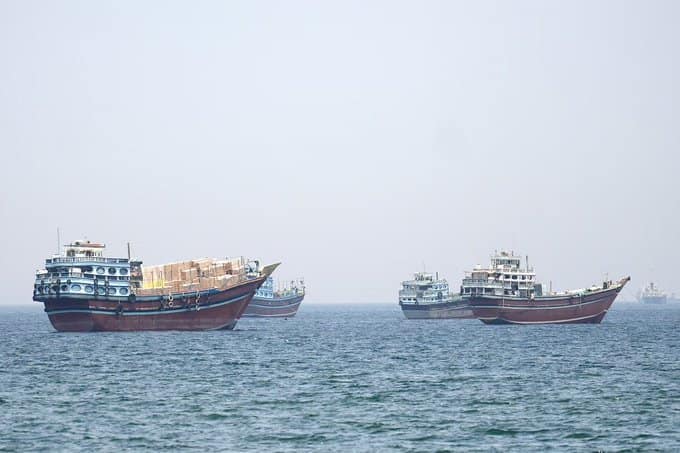
The military backdrop to Trump’s comments is anything but ambiguous. For the past eleven days, a flotilla of US Navy vessels — led by the USS Dwight D. Eisenhower aircraft carrier strike group and augmented by British and French warships — has been enforcing a naval blockade of Iranian ports along the Persian Gulf and the Gulf of Oman. The stated goal: to prevent weapons shipments, intercept contraband, and, according to Pentagon officials speaking on condition of anonymity, “degrade Iran’s ability to resupply its proxies in Yemen, Syria, and Lebanon.”
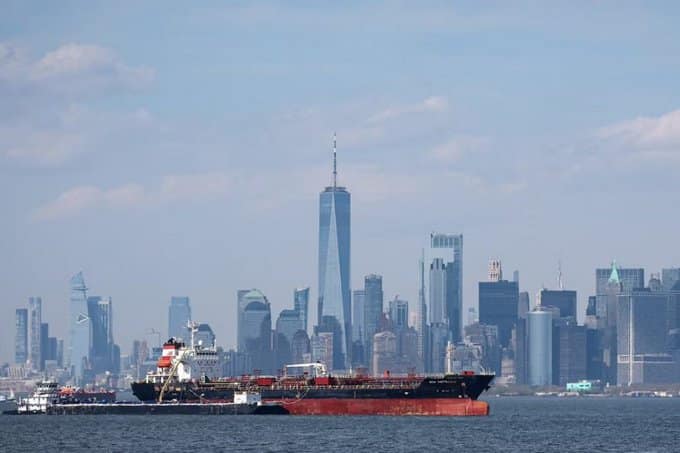
But the blockade has gone further. In recent days, US naval forces have turned back not only military cargo vessels but also commercial tankers attempting to leave Iranian ports. Oil markets have spiked in response, with Brent crude briefly touching $98 per barrel before settling at $94. The Strait of Hormuz, through which nearly 20% of the world’s oil passes, remains open but heavily militarized.
“Iran cannot export oil. Iran cannot import food or medicine if the blockade remains at this intensity,” said retired General Mark Kimmitt, a former assistant secretary of state for political-military affairs. “That is not a sustainable situation. Either Iran blinks, or the blockade expands into a shooting war.”
According to US Central Command, there have been three “close encounters” between US and Iranian naval vessels in the past seventy-two hours — none of which resulted in gunfire, but all of which CENTCOM described as “potentially escalatory.” Iranian fast-attack craft have shadowed US destroyers. US helicopters have flown low over Iranian patrol boats. The margin for error is shrinking by the hour.
What ‘amazing two days’ could mean
Trump’s promise of an “amazing two days” has triggered a frenzy of speculation among intelligence analysts, former diplomats, and military experts. Several scenarios are being weighed:
Scenario one: A diplomatic breakthrough – Despite the blockade, back-channel negotiations between the United States and Iran have reportedly continued through Swiss and Omani intermediaries. Sources familiar with the talks say that Iran has signaled a willingness to cap its uranium enrichment at 60% — below weapons grade — and to permit more intrusive IAEA inspections, in exchange for a phased lifting of sanctions. Trump’s “amazing” announcement could be a preliminary deal: a cessation of hostilities in exchange for Iranian concessions.
Scenario two: A targeted military strike – The President could authorize a limited strike on Iranian nuclear facilities, such as the Fordow or Natanz enrichment sites. Such strikes, while risky, would be framed as a “proportional response” to Iranian provocations. The “amazing” element could be the precision and limited scope of the attack — designed to degrade Iran’s program without triggering a full-scale regional war.
Scenario three: A grand bargain – The least likely but most transformative possibility: Trump could announce a comprehensive agreement in which Iran agrees to dismantle large portions of its nuclear program, end support for regional militias, and rejoin the JCPOA framework in exchange for full sanctions relief and a US security guarantee. Such a deal would require Iran’s Supreme Leader Ali Khamenei to make a historic reversal — something most analysts consider nearly impossible under current conditions.
Scenario four: Regime change rhetoric – Trump could simply announce a new policy of “maximum pressure plus,” potentially including recognition of Iranian opposition groups or a shift in US policy toward supporting regime change. While not a military escalation, such a move would be “amazing” in its audacity — and deeply destabilizing.
“This is Trump’s style,” said Dr. Sanam Vakil, director of the Middle East and North Africa programme at Chatham House. “He creates a vacuum of information and then fills it with hints and superlatives. ‘Amazing.’ ‘Big.’ ‘You will see.’ It keeps everyone off balance. But when you are dealing with nuclear brinkmanship, that style is dangerous. Miscalculations happen when people are off balance.”
Iran’s position: Defiance and diplomacy
In Tehran, official responses to Trump’s comments have been characteristically defiant. Foreign Ministry spokesman Nasser Kanaani told state television that “the Islamic Republic does not respond to threats or vague boasts” and that “any American aggression will be met with a response that will surprise them.”
But behind the rhetoric, signals are more mixed. Iranian officials have quietly signaled a willingness to return to nuclear talks, albeit from a position of perceived strength. Iran’s uranium stockpile now exceeds 6,000 kilograms — more than twenty times the limit set by the original JCPOA. Its 60% enriched uranium is just a technical step away from weapons-grade material. Supreme Leader Khamenei, now 86, has reportedly been consulting with military commanders on “worst-case scenarios.”
“Iran is not looking for a war,” said a former Iranian diplomat who spoke on condition of anonymity. “The economy is in shambles. The protests of 2022-2023 have not been forgotten. But Iran also cannot afford to be seen as capitulating to Trump’s pressure. There is a very narrow path to a deal. The question is whether both sides can find it in the next forty-eight hours.”
Allies and adversaries react
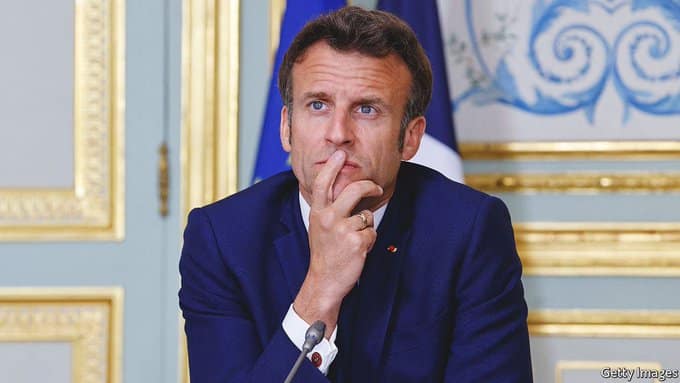
Reactions from US allies have been cautious. British Prime Minister Keir Starmer’s office issued a statement saying that the UK “supports de-escalation and a diplomatic resolution” without commenting on Trump’s “amazing two days” remark. French President Emmanuel Macron, who has long sought to mediate between Washington and Tehran, was more direct: “We have been in contact with both parties. I hope that the next two days bring the peace that the region desperately needs.”
Israel, which views a nuclear-armed Iran as an existential threat, has been less restrained. Prime Minister Benjamin Netanyahu has reportedly urged Trump to “finish the job” if diplomacy fails, and Israeli Air Force assets have been placed on heightened alert. Some analysts believe that Trump’s “amazing two days” could include coordinated US-Israeli strikes.
“They are not bluffing,” said retired Israeli General Amos Yadlin, a former head of military intelligence. “If Iran does not agree to verifiable caps on its nuclear program within days — not weeks — military action becomes inevitable. Trump has drawn a line. Iran has to decide whether to step back or step over it.”
Russia and China, both of which maintain close ties with Iran, have urged restraint. Russian Foreign Minister Sergey Lavrov called for “urgent de-escalation” and offered to host talks in Moscow. China’s Foreign Ministry reiterated its support for the JCPOA framework and warned that “regional war would be catastrophic for the global economy.”
The human cost: War by another name
Behind the diplomatic theater and military maneuvers, a humanitarian crisis is already unfolding. The naval blockade has severely restricted the flow of food and medicine into Iran. While Tehran blames US “economic terrorism,” US officials argue that humanitarian goods are exempt from the blockade — though independent aid organizations dispute this.
“We have reports of insulin shortages in three major Iranian cities,” said a spokesperson for the International Committee of the Red Cross, speaking from Geneva. “Cancer patients are being turned away from hospitals. Newborns are dying because of a lack of specialized formula. Whatever the political objectives, the blockade is causing real human suffering. That suffering will not be solved by ‘amazing’ announcements. It will be solved by lifting the blockade.”
The Trump administration has not commented on these reports. When asked at the briefing whether civilian suffering was a factor in his calculations, the President pivoted to his broader point: “We want peace. But we want a good peace. A peace that lasts. And sometimes, you have to be strong to get that peace. The world will understand in two days.”
The clock ticks
As the sun set over Washington, the machinery of the US government hummed with anticipation. The State Department’s Iran desk was working around the clock. The Situation Room was on standby. The aircraft carrier Eisenhower remained on station in the Gulf of Oman. And in Tehran, the Supreme Leader’s bunker was lit late into the night.
No one knows what the next two days will bring. Perhaps a deal. Perhaps a strike. Perhaps more ambiguity, more brinkmanship, more waiting. But one thing is certain: Donald Trump has placed his presidency — and the world’s peace — on a forty-eight-hour clock.
“Amazing” can mean many things. In the context of US-Iran relations, it could mean a breakthrough that ends decades of enmity. It could mean a bombing campaign that opens a new chapter of conflict. Or it could mean nothing at all — just another Trumpian tease, another headline without follow-through.
But for the families of the US service members stationed in the Gulf, for the Iranian mothers scrambling to find medicine for their children, for the oil traders watching their screens, and for the diplomats working furiously behind the scenes, the next two days will feel like an eternity.
The world holds its breath. And in Washington and Tehran, the clock ticks on.
About The Author