For years, the rolling hills of the Eastern Cape have told a painful story. They are green, fertile, and full of promise — yet too many of the province’s households go to bed hungry. The contradiction has haunted policymakers for generations: a land that could feed its people, but somehow does not. Now, the provincial government is making its most aggressive move yet to rewrite that narrative.
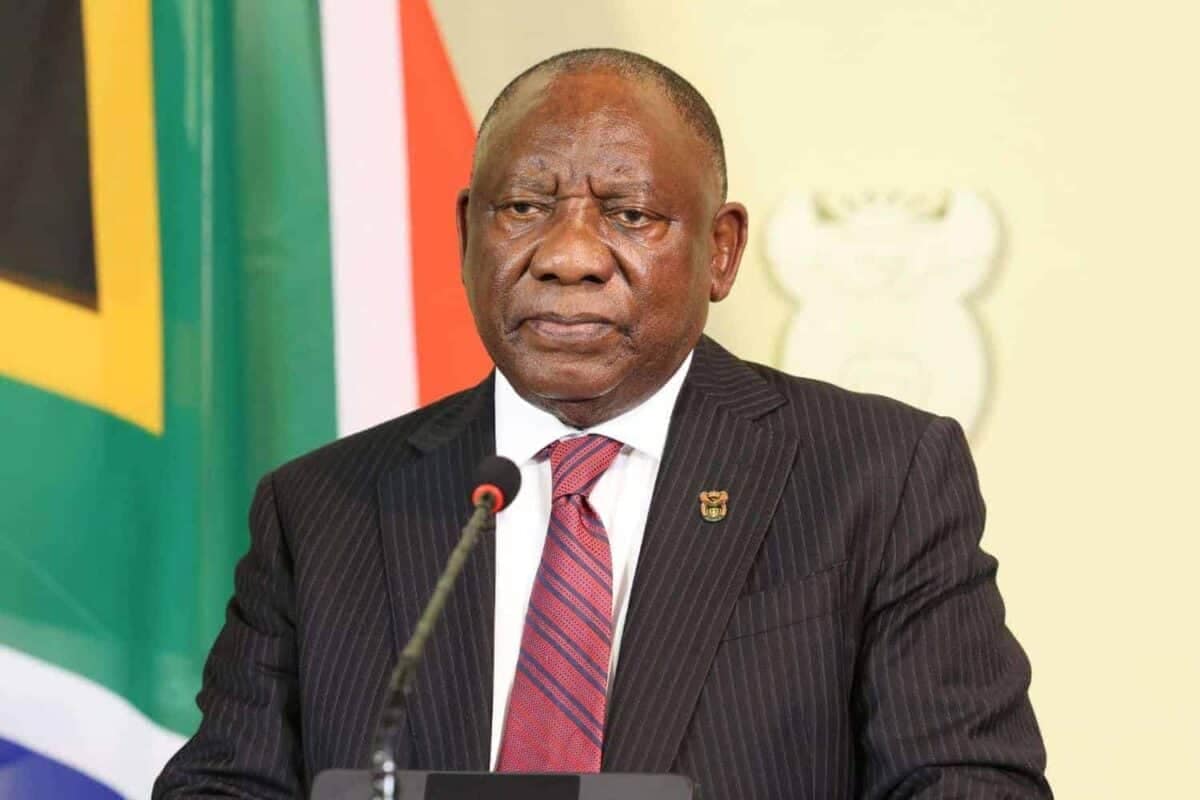
The Eastern Cape government has set aside R600-million to strengthen agriculture and improve food security across the province, Premier Oscar Mabuyane announced during his State of the Province Address delivered at the Bisho Legislature on Thursday. The funding, drawn from the provincial budget and supplemented by national conditional grants, will be channelled directly into supporting small-scale farmers with tools, infrastructure, and training — targeting the very people who till the soil but often struggle to feed their own families.
“This is not a handout,” Mabuyane said, his voice echoing through the chamber. “This is an investment. An investment in our people. An investment in our land. An investment in the future of the Eastern Cape. We have the soil. We have the water. We have the will. What we have been missing is the resources. That changes now.”
The announcement was met with applause from government benches and cautious optimism from opposition parties, many of whom have long argued that the Eastern Cape’s agricultural potential has been criminally underfunded.
The Ilima Lokulima Programme: From household gardens to food security
At the heart of the R600-million boost is the Ilima Lokulima Programme — a name that means “cultivation” or “farming” in isiXhosa, evoking the deep connection between land, labor, and life. The programme, which has existed in pilot form since 2023, is now being scaled up dramatically with a clear target: to expand food production at the household level, reaching 35,000 homes in the coming year.
The concept is simple but powerful. Instead of focusing exclusively on large-scale commercial farming, Ilima Lokulima prioritizes the smallholder — the grandmother with a backyard plot, the young father with a few chickens, the cooperative of women tilling a communal field. By providing these households with improved seeds, basic tools, fencing, water access, and hands-on training, the programme aims to turn subsistence farmers into surplus producers — people who grow enough not only to feed their families but to sell at local markets.
“The household is the smallest unit of the economy, but it is also the most resilient,” said Eastern Cape MEC for Rural Development and Agrarian Reform, Nonceba Kontsiwe, during a detailed briefing following the Premier’s address. “When a household can feed itself, that household is free. Free from hunger. Free from dependence. Free to think about the future instead of just surviving the present.”
The 35,000 homes targeted for the coming year will be selected across all six districts of the province — from the rural depths of Alfred Nzo to the coastal plains of OR Tambo, from the arid Karoo regions of Joe Gqabi to the fertile valleys of Chris Hani. Priority will be given to female-headed households, families with young children, and communities with limited access to formal food retail.
More than seeds and hoes: A comprehensive package
The R600-million is not a single lump sum dropped on an uncoordinated mess of projects. According to budget documents released alongside the announcement, the funding is divided into four strategic pillars:
Infrastructure and inputs (R250 million) – This covers the construction of small-scale irrigation schemes, rehabilitation of agricultural access roads, installation of water tanks and boreholes, and the bulk purchase of seeds, fertilizers, and tools for distribution to qualifying households.
Training and extension services (R120 million) – The province plans to recruit and deploy 200 new agricultural extension officers over the next 18 months. These officers will provide on-the-ground training in crop rotation, pest management, soil conservation, post-harvest handling, and basic financial literacy for farmers.
Market access and aggregation (R130 million) – Producing food is one thing; selling it is another. This pillar funds the establishment of village-level collection points, transport subsidies to get produce to larger markets, and partnerships with local retailers and school feeding schemes to create guaranteed demand.
Monitoring and evaluation (R100 million) – In a departure from past practices, the provincial government has set aside a significant portion of the budget for tracking outcomes. Every household receiving support will be registered, visited quarterly, and assessed for food security improvements. The data will be publicly reported.
“We are done with throwing money at problems and hoping for the best,” Kontsiwe said. “This budget has teeth. If a household is not improving after two seasons, we will find out why. If an extension officer is not showing up, we will know. Accountability is baked into every rand.”
The hunger crisis in numbers
The scale of food insecurity in the Eastern Cape is staggering. According to Statistics South Africa’s latest General Household Survey, approximately 28% of Eastern Cape households reported experiencing hunger in the 12 months preceding the survey — the highest rate of any province in the country. In some rural districts, the figure exceeds 40%.
Child malnutrition remains a persistent crisis. The provincial Department of Health reported over 5,000 hospital admissions for severe acute malnutrition in 2025 alone — a figure that health officials describe as “a national disgrace.” Stunting, which causes irreversible developmental damage, affects nearly one in four children under five in the province.
“These numbers are not statistics. They are children,” said Dr. Thandiwe Mbekela, a pediatrician at the Nelson Mandela Academic Hospital in Mthatha. “I see them every day. Listless. Wasted. Their bodies eating their own muscle because there is no food. The R600-million cannot come fast enough. But it is a start — a real start — and that is more than we have had in years.”
A history of underinvestment
The Eastern Cape’s agricultural struggles are not new. Despite having some of the most arable land in South Africa — particularly in the former Transkei homelands — the province has consistently underperformed its potential. Decades of apartheid-era neglect, followed by post-1994 governance challenges and a slow-moving land reform process, have left small-scale farmers without the support they need to thrive.
A 2022 report by the Human Sciences Research Council found that Eastern Cape smallholder farmers were producing at less than 15% of their potential yield, primarily due to lack of access to irrigation, quality seeds, and market linkages. Many farmers relied on hand hoes rather than tractors. Most had no access to cold storage, forcing them to sell produce immediately after harvest at whatever price buyers offered.
“The Eastern Cape is a classic case of policy failure meeting geographic isolation,” said agricultural economist Dr. Sipho Dlamini of the University of Fort Hare. “We have spent decades telling people to farm, but we have not given them the tools to farm productively. It is like telling someone to run a marathon without giving them shoes. This R600-million is the first serious attempt to provide those shoes.”
Voices from the ground: ‘We have been waiting for this’
In the village of Qunu, just outside Mthatha, 58-year-old Nokuzola Mbeki tends a small plot of maize and pumpkins. Her husband died of tuberculosis in 2019. She supports four grandchildren on the vegetables she grows and a small child support grant. When news of the R600-million agricultural boost reached her village via community radio, she put down her hoe and listened carefully.
“We have been waiting for this my whole life,” she said, speaking in isiXhosa as she wiped sweat from her forehead. “Every year, the government says they will help farmers. Every year, we see nothing. But this time, they mentioned names. They mentioned numbers. Thirty-five thousand homes. That is specific. That is different. I will go to the extension officer tomorrow and ask: am I one of them?”
In Libode, a cooperative of 12 women farmers — calling themselves “Sisonke” (We Are Together) — has been struggling to keep their vegetable project alive. Their irrigation pump broke six months ago. They have no funds to fix it. Their tomatoes have withered. Their spirits have followed.
“We are not asking for luxury,” said cooperative chair Ntomboxolo Ndlovu, 45. “We are asking for water. For seeds. For someone to teach us how to reach the market in Mthatha. If this R600-million reaches us, we can employ more women. We can send our children to school. We can be something.”
Challenges ahead: Implementation is everything
For all the optimism, the road from budget line to bumper harvest is long and littered with the skeletons of failed programmes. The Eastern Cape’s provincial administration has a mixed record on implementation. Corruption scandals have plagued the Department of Rural Development and Agrarian Reform in the past, and oversight mechanisms have often been weak.
Premier Mabuyane acknowledged these concerns directly in his address, promising that the R600-million would be “ring-fenced, audited, and transparent.”
“I know there is skepticism,” he said. “I know that many of you have heard promises before. But I am here to tell you: this time is different. Not because I am a better leader. Because we have built better systems. Every rand will be tracked. Every household will be counted. And anyone who tries to steal from this fund will face the full might of the law.”
Civil society organizations, while welcoming the funding, have called for independent oversight. “We need a multi-stakeholder committee that includes farmers, not just politicians and bureaucrats,” said Mandla Gcwabaza of the Eastern Cape Rural Development Forum. “The people who will till the soil must have a say in how the money is spent. Otherwise, this becomes another top-down failure.”
The bigger picture: Reducing dependence on external food
Beyond the immediate goal of feeding hungry families, the R600-million boost is part of a longer-term strategy to reduce the Eastern Cape’s heavy dependence on food imported from other provinces. Currently, the province imports an estimated 70% of its staple foods — maize meal, rice, cooking oil, bread — from Gauteng and the Free State. That dependence leaves the province vulnerable to supply chain disruptions, price shocks, and the economic drain of money leaving the region.
“The vision is simple: grow what we eat, eat what we grow,” said MEC Kontsiwe. “We have the land. We have the people. What we lack is the system. The Ilima Lokulima Programme is the foundation of that system. Start with households. Then villages. Then districts. Then the entire province. It is a long road, but we have taken the first step.”
A moral and economic imperative
For the people of the Eastern Cape, hunger is not an abstraction. It is the hollow feeling in a child’s stomach at night. It is the mother who dilutes porridge with extra water to make it last longer. It is the elderly man who skips meals so his grandchildren can eat.
The R600-million agricultural boost will not solve all of these problems overnight. But it represents something that has been missing for too long: a serious, funded, accountable effort to put the province’s own land to work for its own people.
As the sun set over the rolling hills of Qunu, Nokuzola Mbeki picked a single ripe pumpkin from her garden and placed it on her kitchen table. “This is what I have,” she said. “One pumpkin. But with help, I could have a field of them. I could sell them. I could buy shoes for my grandchildren. I could send them to school with full stomachs. That is not too much to ask. That is what this R600-million should mean.”
The money has been allocated. The plans have been drawn. The extension officers are being hired. Now, the real work begins: turning a budget line into a harvest. And turning a province of hunger into a province of hope.
The Eastern Cape has waited long enough. The seeds are about to be planted.
About The Author