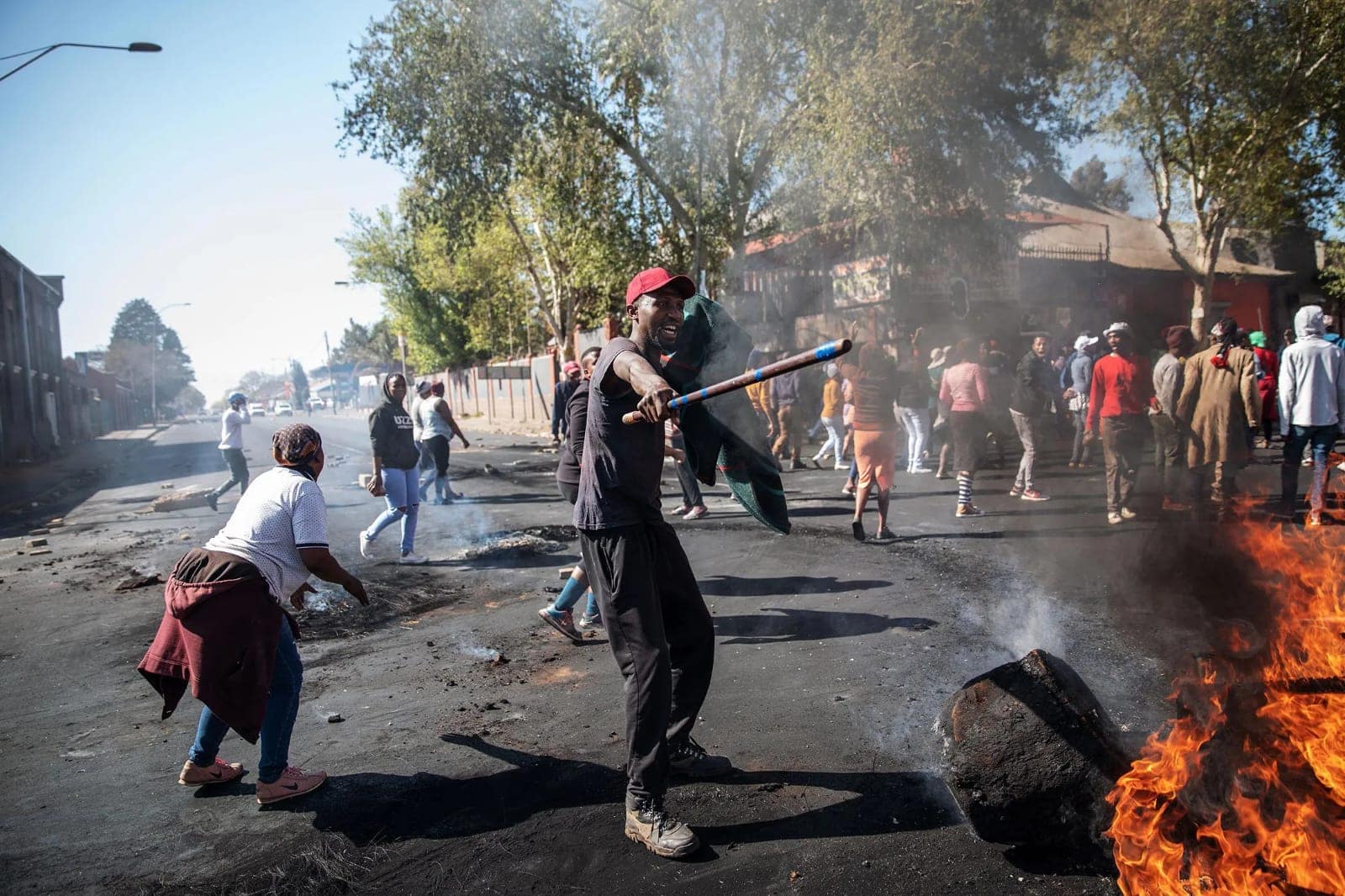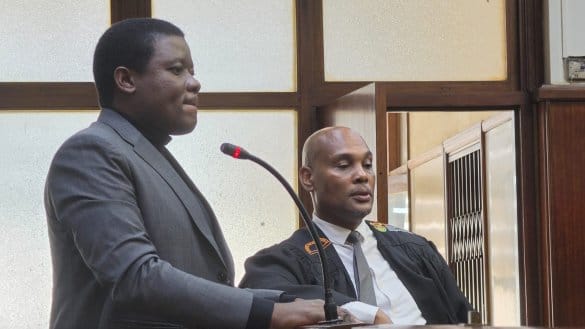
In a dramatic and unexpected twist that has sent shockwaves through the Durban Regional Court, the high-profile trial of alleged 2021 July unrest instigator Bonginkosi Khanyile was abruptly postponed on Monday after a key defence witness—controversial anti-immigration activist Ngizwe Mchunu—became unavailable to testify due to a devastating fire that destroyed his rural homestead over the weekend.
Magistrate Velekhaya Mngadi granted the postponement until Tuesday morning, expressing sympathy for Mchunu’s situation while also voicing concern over the growing pattern of disruptions in a trial already plagued by delays, legal wrangling, and heightened political tensions. The courtroom, packed with journalists, legal observers, and anxious family members, fell into hushed murmurs as Khanyile’s defence team explained the unprecedented situation.
“Your worship, our witness has suffered a catastrophic loss,” defence attorney Thulani Mkhize told the court, holding up a cellphone displaying photographs of the smoldering remains of Mchunu’s traditional homes in Mbumbulu, south of Durban. “Mr. Mchunu is in no emotional or practical state to testify today. His home was deliberately set alight on Sunday afternoon. He has lost property, sentimental belongings, and his sense of security. We request a postponement to allow him to recover and to allow the court to secure his safe participation.”
The state prosecutor did not oppose the application, though she noted that the trial had already exceeded its scheduled timeline and expressed concern about further delays. “We understand the extraordinary circumstances,” she said. “However, the State remains ready to proceed and trusts that the defence will ensure Mr. Mchunu’s availability at the earliest possible opportunity.”
A Witness Central to Khanyile’s Defence
Ngizwe Mchunu, a former Ukhozi FM radio personality turned political firebrand, has been listed as a crucial witness for Khanyile, who faces charges of inciting public violence, contravening the Riotous Assemblies Act, and attempting to overthrow the government during the July 2021 civil unrest. That unrest, which followed the imprisonment of former President Jacob Zuma, left over 350 people dead and caused billions of rands in damage across KwaZulu-Natal and Gauteng.
Khanyile, a prominent activist and former leader of the now-defunct political movement #ShutdownSA, has consistently maintained that his actions during the unrest were constitutionally protected forms of protest. Mchunu, who himself was arrested and later released without charge in connection with the unrest, was expected to testify about his own interactions with Khanyile in the days leading up to the violence, as well as broader political dynamics that Khanyile’s defence team argues contextualize – and potentially mitigate – his actions.
“Mchunu is not just any witness,” explained legal analyst Professor Sibusiso Ndlovu, speaking outside court. “He is a figure who was deeply embedded in the same political ecosystem as Khanyile. His testimony could help corroborate Khanyile’s claim that there was no coordinated plan to incite violence – only spontaneous outrage. Without Mchunu, the defence loses a central pillar.”
The Fire: A Suspicious Weekend Arson
The fire that rendered Mchunu unavailable occurred on Sunday afternoon, 10 May 2026, at his rural property in Mbumbulu. According to police reports, three unidentified men arrived at the homestead, asked for Mchunu by name, and upon being told he was away in either Cape Town or Johannesburg, proceeded to douse several traditional thatched-roof structures with accelerant and set them ablaze. The attackers fled before authorities arrived. No injuries were reported, as family members were also absent at the time.
The arson attack came just days after Mchunu led a series of controversial “March and March” protests against undocumented immigration – a campaign that drew both fervent support and sharp condemnation. While Mchunu’s supporters have blamed foreign nationals for the attack, accusing them of retaliation for his anti-immigration rhetoric, police have not yet publicly identified any suspects or a motive. A parallel arson investigation is ongoing, with the Hawks reportedly monitoring the case due to its potential to incite community violence.
The timing of the fire – on the eve of Mchunu’s scheduled court appearance – has not gone unnoticed. Outside court, Khanyile’s supporters gathered in small clusters, some holding placards reading “Justice for Bonginkosi” and “Who Burned the Witness?” One supporter, who identified herself only as Thandi, said: “First they try to silence Khanyile. Now they burn his witness’s house. This is not coincidence. This is sabotage.”
Skepticism and Theories: Staged or Targeted?
Not everyone is convinced the fire was an attempt to derail the trial. Mchunu has faced accusations of staging the attack for sympathy, particularly given that his empty homestead burned cleanly with no injuries and that he had publicly announced his travel plans in advance. Others have suggested the fire may have been linked to his anti-immigration activism rather than the Khanyile trial. A third theory holds that the fire was an unrelated act of criminality – a robbery or personal vendetta – that coincidentally disrupted court proceedings.
Defence attorney Mkhize rejected any suggestion of bad faith. “Mr. Mchunu has lost his family home. To suggest he would burn his own ancestral property for a trial postponement is not only absurd – it is offensive. We ask only for a short delay to allow a victim of arson to compose himself.”
Magistrate Mngadi appeared to accept this reasoning, though his order came with a pointed warning: “The court is sympathetic to Mr. Mchunu’s plight. However, this trial has been ongoing for months. The postponement is granted until tomorrow morning, 9 a.m. sharp. If Mr. Mchunu is not available then, the court will consider whether his evidence is essential or whether the defence may proceed without him.”
What Happens Next
As of Monday evening, Mchunu had not issued a public statement, though his social media accounts showed him reposting images of the burned homestead alongside messages thanking supporters for their prayers. Police have increased security around his temporary accommodation, though his exact location has not been disclosed.
For Khanyile, who has been out on bail of R10,000 since his arrest in 2021, the postponement is a double-edged sword. It gives his defence team time to prepare Mchunu’s testimony and allows the witness to recover – but it also prolongs a trial that has kept the activist under legal pressure for nearly five years. Khanyile himself appeared composed in the dock, whispering briefly to his lawyer before nodding at the magistrate’s decision.
Outside the courthouse, the postponement drew mixed reactions. Human rights lawyer Fatima Hassan noted: “The right to present witnesses is fundamental to a fair trial. If Mchunu cannot testify today, the court must accommodate that. But there is also a responsibility on the defence to ensure this delay is not abused. The public deserves a conclusion to this case.”
The trial resumes on Tuesday at 9 a.m. Whether Ngizwe Mchunu will appear – and what he will say if he does – remains one of the most closely watched questions in South African legal circles. One thing is certain: the fire in Mbumbulu has added another layer of intrigue to a case already thick with political heat, and the eyes of the nation remain fixed on the Durban Regional Court.
About The Author