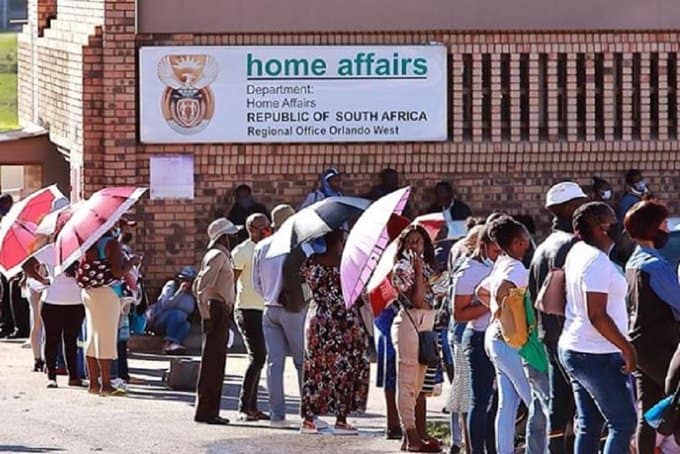
For a foreign national living illegally in South Africa, the dream of a green ID book is worth everything. It is the key to a bank account, a driver’s license, a job that pays more than cash under the table, and—most importantly—the ability to move through the world without the constant, gnawing fear of a knock on the door. According to prosecutors, Portia Mtshweni, 41, and Nondumiso Maboyi, 40, understood that desperation perfectly. And they priced it accordingly.
The two former Home Affairs officials were arrested in late April following a lengthy intelligence investigation into identity document fraud in Mpumalanga. They now face multiple charges of identity theft, fraud, and corruption for allegedly issuing legitimate-looking South African identity documents to at least four Zimbabwean nationals and one Mozambican national—individuals with no legal right to such papers. In a particularly brazen act, the pair also allegedly fabricated a fake birth certificate for a foreign child, effectively creating a paper trail for a human being who, in the eyes of the law, should not exist.
Both women were remanded in custody after their first court appearance. They are scheduled to return to the dock on May 7 for a formal bail hearing. But investigators say this is not the end of the story—it is merely the first thread pulled from a much larger tapestry of deceit.
How the Scheme Worked
According to court documents and sources close to the investigation, Mtshweni and Maboyi exploited their positions as front-line officials at a Home Affairs office in the Nkangala district. Their roles gave them direct access to the National Population Register—the central database that holds the biographical and biometric information of every South African citizen.
The alleged process was chillingly simple. A foreign national seeking documents would pay a fee—sources suggest between R5,000 and R15,000 depending on the complexity of the request. The women would then search the database for the identities of deceased South Africans, typically children who died young or elderly people whose deaths had not been properly reconciled with the population register. They would attach the foreign national’s photograph to that deceased identity, issue a fresh ID document, and file the paperwork as a routine “reissue” or “lost document” application.
The only limit was their imagination. The fake birth certificate for a foreign child was allegedly produced using the name and details of a South African infant who had been stillborn years earlier—a ghost child suddenly resurrected on paper.
“The people receiving these documents did not simply steal an identity,” said a Home Affairs investigator who spoke on condition of anonymity. “They were given a completely new life. A new name. A new ID number. A new history. That is far more dangerous than ordinary document fraud. It is the erasure of a real South African’s existence.”
The ‘Runners’ and the Network
Mtshweni and Maboyi did not work alone. Investigators believe the two women acted as the “factory floor” of a larger syndicate that included middlemen—known colloquially as “runners”—who recruited clients from foreign nationals living in Mpumalanga’s border communities. These runners, often trusted figures within immigrant networks, would collect money, transport passport photographs, and deliver completed documents, taking a cut for their trouble.
Detective Captain Thabo Nkosi, the lead investigator on the case, confirmed that at least three runners have been identified and are being tracked. “These are not small-time operators. They have been doing this for years. They know the system. They know who to bribe and how much to pay. Our arrests so far have disrupted one node of the network. But the network itself is still breathing,” he told reporters outside the Mbombela Magistrate’s Court.
Authorities have also seized cellphones, notebooks, and a laptop from the homes of the two accused. Forensic analysis of that data is ongoing, and investigators expect to extract a trove of messages, photographs, and financial records that could lead to dozens more arrests across Mpumalanga and neighboring provinces.
The Human Cost: South Africans Left in the Queue
While the fraudsters profited, ordinary South Africans paid the price. The same Home Affairs office where Mtshweni and Maboyi worked has been the subject of multiple complaints over the past two years. Residents spoke of endless queues, “system offline” notices, and lost applications. Now, they understand why.
“I stood in that line for three days to get my child’s birth certificate,” said Nonhlanhla Dlamini, a mother of two who lives in a township outside Middelburg. “I took leave from work. I lost wages. And all along, these women were printing documents for foreigners in five minutes because they were being paid under the table. It makes me sick.”
Her anger is shared widely. South Africa’s unemployment rate hovers near 33%, with youth unemployment even higher. In a country where access to government services is already stretched thin, the idea that officials are selling citizenship to foreigners while locals struggle to get basic documents has become a political powder keg. Social media posts about the arrests have been flooded with comments demanding harsher sentences and calling for a complete overhaul of Home Affairs.
The Wider Crackdown
The Mpumalanga arrests are not isolated. Over the past six months, Home Affairs Minister Leon Schreiber has overseen a sweeping anti-corruption drive within his department, which has long been plagued by allegations of fraud, bribery, and organized criminal infiltration.
In February, two Home Affairs officials in Limpopo were arrested for issuing fraudulent passports to undocumented foreign nationals. In March, a senior official in the Eastern Cape was caught allegedly selling “fake death certificates”—documents that allowed living people to be declared legally dead, a scam often used to claim pensions or avoid debt. And just last week, an investigation was launched into a ring in KwaZulu-Natal accused of selling visas to Chinese nationals for up to R50,000 each.
Schreiber, who took office promising to “clean the stables,” issued a brief statement welcoming the Mpumalanga arrests. “Every fraudulent ID issued is a betrayal of every law-abiding South African. It is theft of identity, theft of opportunity, and theft of the integrity of our state. There will be no amnesty for those who sell our citizenship to the highest bidder.”
What Happens to the Fake Documents?
A pressing question remains: what becomes of the fraudulent IDs already in circulation? Home Affairs has confirmed that it has identified the specific identity numbers compromised in the Mpumalanga scheme. Affected individuals—the real South Africans whose identities were stolen, many of whom may be deceased or unaware—have been flagged in the system. But recalling physical ID books from foreign nationals who may now be living anywhere in the country is a monumental challenge.
“We can deactivate the numbers. But if someone is already using that ID to work, to open accounts, to travel, the damage is done,” the anonymous investigator admitted. “We are playing whack-a-mole with a system that was never designed for this level of insider threat.”
The Bail Hearing and Beyond
As May 7 approaches, the legal fate of Mtshweni and Maboyi hangs in the balance. The State is expected to oppose bail, arguing that the two women are flight risks and that they may interfere with the ongoing investigation. Their defense lawyer has not yet made a public statement.
Whatever the outcome, the case has already achieved one thing: it has forced a reluctant conversation about how deep corruption runs in the machinery of the South African state. For every official caught, there are whispers of dozens more who have not yet been exposed. For every fake ID seized, there are hundreds that have never been questioned.
And for the foreign nationals who bought those documents, the clock is now ticking. An ID book that was once their greatest shield has become a liability. One knock on the door. One routine traffic stop. One alert in a police database. And the paper life they purchased will dissolve into handcuffs, deportation, and the long, humiliating bus ride back to a border they thought they had crossed for good.
In a cramped flat in a Johannesburg suburb, a Zimbabwean man who bought his ID from the Mpumalanga ring three years ago sits with his back to the window. He does not turn on the lights. He does not answer his phone. He waits—for news, for a raid, for the past to catch up.
The women who sold him a new life are in custody. His old life is the only one he has left.
About The Author