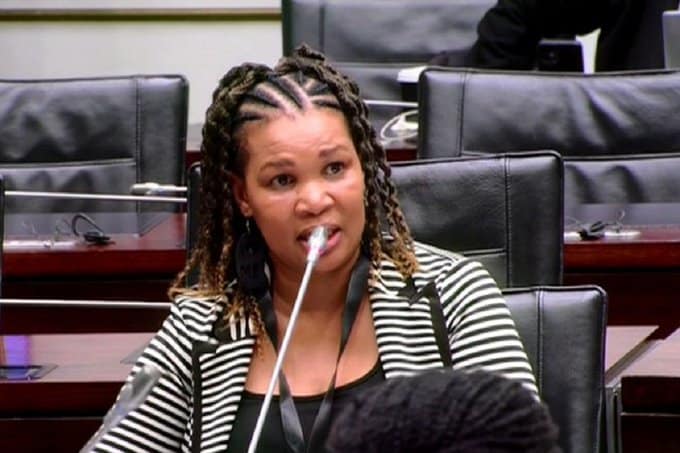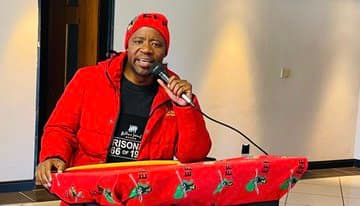
The courtroom gallery was packed with red-clad supporters, their berets held in their laps rather than on their heads—a small gesture of respect for the judge who was about to decide the fate of a bitter, ugly feud that has torn apart the Economic Freedom Fighters (EFF) in the Free State. On one side of the aisle sat Malefane Msimanga, the party’s Provincial Secretary, known to his legion of followers simply as “Bosanku.” On the other, the chair remained conspicuously empty. April Tibisi Motaung, the former party member and target of the legal action, was not in attendance.
But his absence did not spare him.
Justice Nthabiseng Mokoena, presiding in the Free State High Court, delivered a sweeping ruling that granted Bosanku an urgent interdict against Motaung, effectively slamming a legal padlock on the former member’s mouth and ordering him to undo the damage he has allegedly already done.
The ruling, handed down on May 5, restrains Motaung from making any further defamatory statements against Msimanga—whether on social media, in print, or in public speeches. It further orders Motaung to remove all existing defamatory posts from his digital platforms within 48 hours, to issue a public apology in a format approved by the court, and to face potential damages claims in a subsequent hearing.
For Msimanga, the interdict was not just a legal victory. It was a vindication after months of what his legal team described as “a sustained, malicious campaign of character assassination.”
“I have been called every name imaginable. My family has been harassed. My integrity as a leader has been shredded in public forums,” Msimanga said outside the courthouse, clutching a copy of the order. “The court has now affirmed that there are limits. Freedom of speech does not include the freedom to lie.”
The Feud: From Comrades to Combatants
To understand the vitriol, one must rewind to late 2025, when cracks first began to appear in the EFF’s Free State leadership. Motaung, once a rising star within the party and a close ally of Msimanga, fell out spectacularly with the provincial leadership over what he described as “gatekeeping, factionalism, and the hijacking of branch structures by a small cabal.”
Motaung was subsequently expelled from the EFF following an internal disciplinary process—a decision he has fiercely contested, claiming it was procedurally flawed and politically motivated. Since his expulsion, he has waged a one-man war against the party’s provincial leadership, with Msimanga as his primary target.
Over a period of roughly six months, Motaung allegedly published dozens of social media posts and recorded video statements in which he leveled a series of serious accusations against Msimanga. According to court papers filed by Msimanga’s legal team, these included allegations of corruption, tender fraud, the manipulation of party funds, and unethical personal conduct. Some posts, the court heard, included claims that Msimanga had used his position to secure state contracts for family members.
Motaung, acting in his own defense for much of the legal battle, has maintained that his statements were either true or protected as fair comment on matters of public interest. He has not filed a formal response to the interdict application, which Justice Mokoena noted in her ruling as a factor in her decision.
“The respondent has been given multiple opportunities to present evidence substantiating his claims. He has failed to do so,” the judge stated in her written order. “In the absence of any proof, the statements made are prima facie defamatory and have caused demonstrable harm to the applicant’s reputation and standing.”
The Ruling: What It Means
The urgent interdict is, as the name suggests, an interim measure. It is designed to prevent further harm while the underlying legal dispute—a defamation lawsuit in which Msimanga is seeking damages—proceeds through the courts. But in practical terms, the effect is immediate and severe for Motaung.
Under the order, Motaung must:
- Remove all social media posts, videos, or other publications containing defamatory statements about Msimanga within 48 hours of the ruling being served.
- Refrain from making any further defamatory statements—directly or indirectly, online or offline—about Msimanga.
- Issue a public apology, the wording of which must be submitted to Msimanga’s legal team for approval before publication.
- Pay the costs of the urgent application, which are expected to run into tens of thousands of rands.
Additionally, the court has scheduled a separate hearing to determine the quantum of damages Motaung may be required to pay Msimanga for reputational harm already suffered. That hearing is expected to take place within the next 90 days.
Failure to comply with the interdict could result in contempt of court proceedings, which carry the risk of fines or even imprisonment.
Motaung’s Response
As of Tuesday evening, Motaung had not issued a public statement regarding the ruling. His social media accounts, previously a torrent of posts tagging Msimanga and EFF leaders, appeared to have fallen silent. It was unclear whether he had been served with the court order or whether he would comply voluntarily.
In a brief telephone interview with a local news outlet before the ruling was handed down, Motaung had signaled defiance. “No court will silence the truth. I am not afraid. Let them bring their interdict. The people of the Free State know what is happening inside that party,” he said.
But legal experts say defiance is a dangerous strategy. “Once a court order is granted and served, compliance is not optional,” said attorney Jan van Rensburg, who is not involved in the case. “If Mr. Motaung continues to post, he will be in contempt. A court does not look kindly on individuals who thumb their nose at its authority.”
The EFF’s Internal Turbulence
The Bosanku-Motaung feud is not an isolated incident. The EFF, which has positioned itself as South Africa’s third-largest political force and a disciplined, centralized organization under the command of Julius Malema, has experienced repeated internal convulsions in the Free State—a province that has historically been a stronghold for the party.
Provincial structures have been dissolved and reconstituted multiple times. Allegations of financial mismanagement have surfaced and been denied. And a string of high-profile expulsions, including that of Motaung, have fueled accusations that the party’s leadership is more interested in loyalty than accountability.
Political analyst Dr. Mpho Letlala noted that the legal battle could have ripple effects beyond the two individuals involved.
“The EFF presents itself as a united front, but the Free State has long been a trouble spot,” Letlala said. “When internal disputes spill into courtrooms, it suggests that the party’s internal dispute resolution mechanisms are failing. That is a problem for a party that prides itself on revolutionary discipline.”
The EFF’s national leadership has remained conspicuously quiet on the interdict, issuing no statement either in support of Msimanga or in condemnation of Motaung. This silence, some insiders say, reflects a desire to let the courts handle the matter without the party appearing to take sides in a dispute that still divides provincial members.
The Personal Toll
For Msimanga, the legal victory is bittersweet. While the interdict offers protection, the wounds inflicted by the public mudslinging are not so easily healed. Friends describe him as withdrawn and frustrated, spending long hours with lawyers rather than with constituents.
“I joined politics to serve the people, not to fight in courtrooms,” Msimanga said as he left the courthouse. “But if someone tries to destroy my name—the only thing I truly own—I will defend it. And I will do so using every legal tool available.”
He paused, adjusting his red EFF cap. “I hope this is the end of it. But I suspect it is not. The person who started this fire is not known for putting out flames.”
What Comes Next?
The immediate future holds several milestones. The next 48 hours will determine whether Motaung complies with the removal and apology orders. The damages hearing will follow within three months. And behind the scenes, the EFF’s provincial leadership will be watching closely to see whether the interdict stabilizes the region or merely drives the conflict further underground.
For now, the red berets who filled the gallery have returned to their branches, their WhatsApp groups buzzing with interpretations of the ruling. Some see it as justice served. Others see it as the strong crushing the weak. And a few—the weary realists who have survived every factional war the Free State has thrown at them—simply shrug.
“In the EFF, nobody loses forever,” one longtime member muttered as he lit a cigarette outside the courthouse. “And nobody wins forever. Today it’s Bosanku. Tomorrow, who knows?”
The rain that had been threatening all morning finally began to fall. The red berets pulled up their hoods and scattered. The courthouse doors swung shut. And the legal machinery that will decide the next chapter of this bitter feud continued its slow, inexorable turning.
About The Author