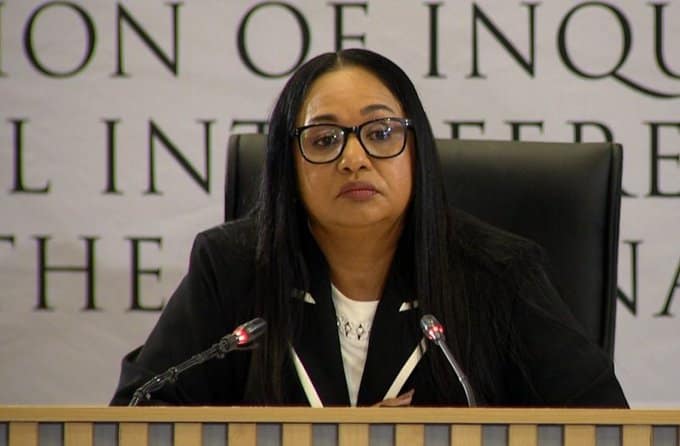
In a stunning admission that has raised serious questions about internal oversight and national security protocols, Tshwane Metro Police Department (TMPD) chief Yolande Faro has confirmed that not all of her deputy commissioners hold the requisite top-level security clearance required for their positions.
The revelation, made during a tense appearance before the City of Tshwane’s Community Safety Committee on Wednesday morning, has sent shockwaves through both the metro police and the broader law enforcement community. It comes just weeks after the department was rocked by separate allegations of fund siphoning and criminal activity within its ranks.
“We have identified a compliance gap,” Faro told committee members, her tone measured but grave. “Some senior officials are operating in acting capacities or were elevated before the full verification process was completed. I cannot say with certainty today that every deputy commissioner currently serving has a valid, top-secret security clearance. That is unacceptable, and we are moving urgently to rectify it.”
What Security Clearance Means
In South Africa’s law enforcement and intelligence framework, top-level security clearance—often referred to as “Secret” or “Top Secret” classification—is not a mere formality. It involves an exhaustive background investigation that typically includes:
- Verification of citizenship and residency history
- Criminal record checks at both national and international levels
- Credit and financial history reviews to identify potential vulnerability to bribery
- Interviews with former employers, colleagues, and neighbors
- Assessment of foreign travel and any foreign associations
- Evaluation of personal conduct, including drug and alcohol use
For metro police deputy commissioners, such clearance is essential because their roles grant them access to:
- National intelligence briefings on terror threats and organized crime
- Confidential police databases containing ongoing investigations
- Sensitive information about undercover operations and informants
- Protected infrastructure security plans, including for government buildings and VIP movements
- Coordinated operations with the South African Police Service (SAPS) and State Security Agency (SSA)
Without that clearance, an official is legally barred from viewing or handling such information—yet the nature of their work makes exposure almost inevitable.
“How do you lead a tactical response team if you cannot be briefed on the threat landscape?” asked one senior SAPS official who requested anonymity due to the sensitivity of the matter. “How do you coordinate with national intelligence on a terrorism alert if you are not cleared to know what that alert contains? It is like putting someone in a cockpit and telling them they cannot look at the instruments.”
How Did This Happen?
The admission has triggered a furious round of blame-shifting within the city administration. Faro, who took over the department following the suspension of her predecessor amid the fund-siphoning scandal, inherited a leadership team that had been assembled piecemeal over several years.
According to internal TMPD documents obtained by local media, at least three of the department’s six deputy commissioner positions have been filled by acting appointees who never underwent formal security vetting. In one case, a deputy commissioner has served for 14 months without clearance, his appointment repeatedly rubber-stamped by human resources due to “operational urgency.”
“The system has been broken for a long time,” said a former TMPD senior official who spoke on condition of anonymity. “People were promoted because they were loyal, or because they were available, or because someone in the political sphere liked them. The security clearance process was seen as a box to tick—until suddenly it wasn’t ticked at all.”
Faro herself acknowledged a culture of complacency. “There has been a lax approach to compliance across multiple areas of this department,” she said. “The security clearance issue is a symptom of a deeper disease: a belief that rules apply to other people, not to us. That ends now.”
National Security Implications
The revelation has alarmed national security officials. The State Security Agency, which conducts vetting for all senior law enforcement positions, has reportedly launched its own inquiry into how unvetted individuals were allowed to occupy sensitive posts.
“If unvetted individuals have access to classified material, that is a breach of the Intelligence Act,” said security analyst and former intelligence officer Mike Bolhuis. “It exposes South Africa’s national security apparatus to potential compromise. You do not know these people’s financial vulnerabilities, their foreign contacts, their private behaviors. For all you know, a deputy commissioner could be sharing a bed with a foreign intelligence asset. That is not paranoia. That is the entire point of vetting.”
The timing is particularly concerning. South Africa is currently on high alert following intelligence reports of increased activity by foreign criminal syndicates and, according to some sources, the resurgence of extremist networks in southern Africa. Any gap in the vetting of senior metro police officials creates a potential vulnerability that hostile actors could exploit.
Political Fallout
The City of Tshwane’s coalition government, already under fire for its handling of the earlier fund-siphoning scandal, reacted swiftly. Mayor Cilliers Brink called for an urgent independent audit of all senior TMPD appointments dating back five years.
“This is not a paperwork error,” Brink said in a media statement. “This is a systemic failure of oversight that potentially compromises the safety of every resident of this city. The officials responsible for allowing unvetted individuals to occupy sensitive positions must be held accountable.”
The Democratic Alliance (DA), which leads the coalition, has called for the suspension of the city’s human resources director pending an investigation into how the clearances were bypassed. The Economic Freedom Fighters (EFF), meanwhile, have demanded Faro’s resignation, arguing that she either knew about the lapse and failed to act or did not know—which they say is equally damning.
“Chief Faro cannot have it both ways,” said EFF caucus leader Obakeng Ramabodu. “Either she is in control of her department, or she is not. These security breaches happened on her watch. She must fall.”
Faro, however, has pushed back against calls for her resignation, insisting that she is the one who brought the issue to light. “I inherited a broken system, and I am the one standing here fixing it,” she said. “If that makes me a target, so be it. But I will not be chased away while there is still work to do.”
Reaction from Within the TMPD
Among rank-and-file TMPD officers, the news has been met with a mixture of anger and weary resignation. Many feel that a culture of impunity at the top has trickled down, demoralizing those who follow the rules.
“We have to submit to drug tests, background checks, and continuous vetting just to carry a firearm,” said a TMPD constable who asked not to be named. “But the deputy commissioners—the people who write our performance reviews—don’t even have clearance? It makes a mockery of everything. Why should I bother being clean if the people above me are not even checked?”
Others expressed concern about operational safety. “We go into high-risk situations based on intelligence that comes from the top,” said a sergeant stationed in Pretoria East. “If that intelligence is being handled by someone who hasn’t been vetted, how do we know it is reliable? How do we know it hasn’t been leaked? Our lives depend on that information.”
Next Steps
Faro has outlined a three-point plan to address the crisis:
- Immediate Verification: All deputy commissioners will be required to submit proof of security clearance within 72 hours. Those who cannot will be reassigned to non-sensitive duties effective immediately.
- Expedited Vetting: The TMPD has reached an agreement with the State Security Agency to fast-track clearance applications for senior officials, with a completion target of 90 days.
- Policy Overhaul: A new protocol will require that no officer above the rank of colonel be allowed to assume duties—even in an acting capacity—without a valid clearance certificate on file.
“We are drawing a line in the sand today,” Faro said. “Going forward, compliance is not optional. If you occupy a position that requires clearance, you will have it, or you will not occupy that position. It is that simple.”
A Deeper Crisis
For the TMPD, the security clearance scandal is the latest in a cascade of crises that have battered the department’s reputation. The fund-siphoning allegations, the ghost fleet scandal, and now this—all within a matter of months.
“This is not a department in crisis,” said political analyst Professor Susan Booysen. “This is a department in freefall. Each new revelation undermines public trust further. The question is whether there is any leadership left, at any level, that the public can believe in.”
As the sun set over Pretoria on Wednesday, the TMPD’s headquarters on Johannes Ramokhoase Street remained busy—but the mood was somber. In the corridors, officials whispered about who might be next to fall. In the parking lot, officers lingered by their vehicles, reluctant to go home to families who would ask questions they could not answer.
And at the heart of it all, Chief Yolande Faro sat in her office, staring at a stack of personnel files, each one a potential landmine. The security clearance crisis, she knew, was not an isolated failure. It was a symptom. And until she found the cure, no one in the TMPD was truly safe.
About The Author