In the gilded committee rooms of Parliament’s International Relations and Cooperation portfolio, the conversation has often been one of careful diplomacy—measured statements, calculated ambiguities, and the quiet language of multilateral consensus. But yesterday, that careful decorum was shattered by a voice demanding something altogether different: audacity.
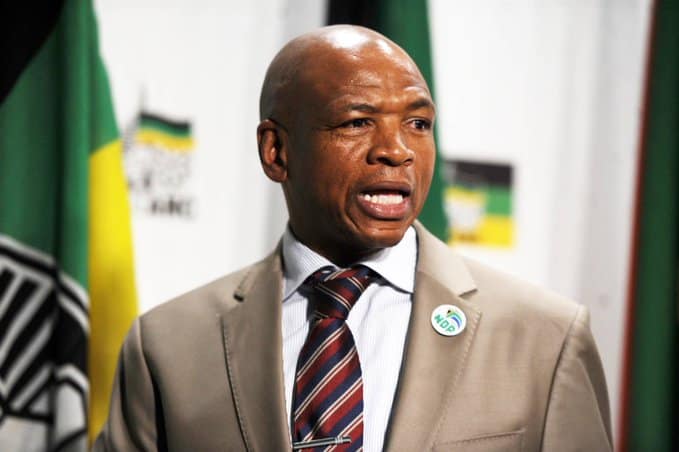
Supra Mahumapelo, the outspoken Chairperson of Parliament’s Portfolio Committee on International Relations and Cooperation, has issued a clarion call for South Africa to shed its hesitancy and assert a far stronger, more confident presence on the global stage. Speaking during a committee briefing on the Department of International Relations and Cooperation’s (DIRCO) strategic plan for the 2026/27 financial year, Mahumapelo argued that the nation can no longer afford the luxury of diplomatic modesty.
“South Africa has the economy, the intellectual capital, the institutional memory, and the moral authority to lead,” Mahumapelo declared, his voice echoing off the marble floors of the Good Hope Chamber. “But leadership is not given. It is taken. We have been waiting for an invitation to the top table. The invitation will never come. We must pull out our own chair and sit down.”
The remarks, which drew a mixture of applause and uncomfortable shifting from DIRCO officials, represent a significant departure from the tone typically struck by Parliament’s oversight structures. While previous committee chairs have focused on budgetary scrutiny and administrative compliance, Mahumapelo is positioning himself—and by extension, the committee—as a shaper of foreign policy doctrine, not merely a checker of departmental boxes.
The Case for a Louder Voice
Mahumapelo’s intervention comes at a moment of profound flux in the international order. The unipolar moment that followed the Cold War has given way to a multipolar landscape where influence is fragmented and contested. The United States and China vie for supremacy. Russia tests the boundaries of the post-WWII consensus. The Global South, long relegated to the margins of decision-making, is increasingly demanding a seat at the table.
South Africa, Mahumapelo argued, is uniquely positioned to be the bridge and the voice of that rising bloc.
“We are not a small country. We are not a weak country. We are not a country that should be taking instructions from London, Washington, or Beijing,” he said. “We are the most developed economy on the African continent. We are the only African member of the G20. We are a former non-permanent member of the UN Security Council. We have the legacy of Nelson Mandela, Thabo Mbeki, and the anti-apartheid movement. And yet, too often, we speak as if we are asking for permission.”
The chairperson did not name specific instances where he believes South Africa has been overly deferential. But those familiar with his thinking point to several recent episodes: South Africa’s muted response to the Gaza conflict relative to other Global South nations like Brazil and South Africa’s own previous vigor under the Mbeki administration; the country’s perceived equivocation on the Russia-Ukraine war, which drew criticism from both Western and non-Western capitals; and what Mahumapelo reportedly views as insufficient advocacy for African Union positions within the G20 framework.
“We have become experts at the art of the carefully worded statement that offends no one,” Mahumapelo told the committee. “But diplomacy is not about avoiding offense. Diplomacy is about advancing interests. Whose interests have we been advancing? I am not always sure.”
The Economic Imperative
While Mahumapelo’s language is often philosophical—drawing on Pan-Africanist thought and anti-colonial theory—the practical heart of his argument is economic. A stronger global presence, he contends, is not a matter of national pride but of national survival.
South Africa faces a trio of economic crises: chronically high unemployment (hovering above 32%), anaemic growth (projected at barely 1.5% for 2026), and mounting fiscal pressure from debt servicing and social spending. In Mahumapelo’s analysis, these problems cannot be solved domestically alone.
“We need investment. We need trade agreements that are not extractive. We need technology transfer. We need debt relief or restructuring. All of these things require us to negotiate from a position of strength, not weakness,” he said. “When we go to the World Trade Organization or the G20 or the BRICS+ summits, we should not be asking for favours. We should be demanding fair terms. But you cannot demand anything if you have not first asserted your own worth.”
Mahumapelo pointed to South Africa’s successful diplomatic offensive at the World Trade Organization’s 2024 ministerial conference, where Pretoria led a coalition of developing nations to secure a waiver on intellectual property rules for COVID-19 vaccines. That, he said, is the model—not an exception.
“We showed what we can do when we are organized, when we are confident, when we speak with one voice. That was South African diplomacy at its best. We need that energy, that audacity, in every forum, every single time.”
Criticism and Controversy
Not everyone in the foreign policy establishment shares Mahumapelo’s appetite for confrontation. Some diplomats and analysts have cautioned that a more assertive posture could backfire, alienating traditional partners and closing off avenues for quiet, behind-the-scenes negotiation.
“Diplomacy is not a shouting match,” said a senior DIRCO official who spoke on condition of anonymity. “Sometimes the most effective influence is exercised in private, through relationships built over decades. Mahumapelo comes from a domestic political background where rhetoric is rewarded. International relations does not work that way. You can be the loudest voice in the room and still leave with nothing.”
Others have questioned whether Mahumapelo’s vision is sufficiently clear. What does “a stronger presence” actually mean? Does it mean more military deployments? More aggressive UN Security Council bids? A formal realignment away from Western alliances and toward the BRICS bloc? Mahumapelo’s committee remarks were long on ambition but notably short on specifics.
“The chairperson is very good at diagnosing the problem,” said a foreign policy analyst at the Institute for Global Dialogue. “South Africa is indeed underleveraging its potential. But the ‘how’ matters enormously. You cannot just tell DIRCO to be more confident. You need to give them a doctrine, a set of priorities, a theory of change. That was missing from his presentation.”
Mahumapelo, for his part, dismissed such critiques as “technocratic timidity.”
“I am not a bureaucrat. I am a political leader,” he said. “My job is not to write the operational manuals. My job is to set the direction. The direction is clear: South Africa must lead. The details of how we lead—that is a conversation we will have across government, across civil society, across the continent. But first, we must agree that the status quo is unacceptable. That is what I am demanding.”
The Pan-African Dimension
No discussion of South Africa’s global role is complete without its African anchor, and Mahumapelo was emphatic on this point. A stronger South African presence on the world stage, he argued, cannot come at the expense of African solidarity. Rather, the two must be mutually reinforcing.
“We are not the United States of Africa. We are South Africa. Our first loyalty is to our own people. But our second loyalty is to the African project,” he said. “When South Africa speaks, we must speak not only for ourselves but for the continent. That is the source of our moral authority. That is what makes us different from other middle powers. We carry the hopes of 1.4 billion Africans.”
Mahumapelo called for a renewed push to reform the UN Security Council, including a permanent seat for Africa—and specifically, a permanent seat for South Africa as the continent’s representative. He also urged faster implementation of the African Continental Free Trade Area (AfCFTA), arguing that a more economically integrated Africa would be a more powerful negotiating partner with the rest of the world.
“We have the institutions. We have the agreements. What we lack is the political will to implement,” he said. “South Africa must be the engine of that implementation. Not because we are bossy. Because we have the capacity. And with capacity comes responsibility.”
Domestic Politics and Foreign Policy
Mahumapelo’s remarks cannot be fully understood without reference to the domestic political landscape. A former Premier of North West province and a senior figure in the African National Congress (ANC), Mahumapelo is widely seen as a representative of the party’s more nationalist, interventionist wing. His call for a stronger global presence aligns with the ANC’s longstanding commitment to an “African-centered, progressive internationalism”—but also reflects a more recent impatience with what some in the party view as DIRCO’s cautious, career-diplomat culture.
The portfolio committee chairperson’s intervention may also signal a broader shift in Parliament’s approach to foreign policy oversight. Historically, DIRCO has enjoyed relatively light scrutiny from MPs, with most attention focused on budgets and administrative issues rather than strategic direction. Mahumapelo appears determined to change that.
“We are not a rubber stamp,” he said. “The Constitution gives Parliament the power to oversee the executive, including in matters of international relations. We intend to use that power. If DIRCO cannot articulate a clear, ambitious vision for South Africa’s role in the world, then we will help them develop one. That is not hostility. That is accountability.”
What Comes Next
The committee has requested that DIRCO return within 30 days with a revised strategic plan that incorporates Mahumapelo’s call for greater assertiveness. Specifically, the department has been asked to identify three to five “flagship diplomatic initiatives” that would demonstrate South Africa’s enhanced global role within the next 18 months.
DIRCO Director-General Zane Dangor, who attended the briefing, offered a measured response. “We welcome the chairperson’s guidance,” Dangor said. “South Africa already plays an active and respected role in multilateral forums. We are always seeking ways to increase our impact. We will take the committee’s input seriously.”
But behind the diplomatic language, tensions are simmering. DIRCO officials privately worry that Mahumapelo’s rhetoric could undermine the department’s careful, relationship-based approach—particularly with Western capitals that have grown weary of what they perceive as South Africa’s tilt toward Russia and China.
“Every time we are seen as confrontational, it costs us,” one official said. “Not in dramatic ways. But in small ways: a trade preference not renewed, a visa waiver not granted, an investment that goes to Kenya instead. The chairperson does not feel those costs. We do.”
A Reckoning on the Horizon
For now, Mahumapelo has achieved what he set out to achieve: a public debate about South Africa’s global posture, conducted in the open, with real political stakes. Whether that debate leads to a change in policy or merely a change in tone remains to be seen.
But as the chairperson gathered his papers and left the committee room, he offered a final thought to the journalists waiting outside.
“We have been polite for too long,” he said. “Politeness is not a foreign policy. The world does not respect the polite. The world respects the powerful. And power, in diplomacy, is not about guns or money. It is about clarity of purpose and the courage to act. South Africa has both. It is time we showed them.”
Whether the nation’s diplomats agree—or are ready to follow—is a question that will define South Africa’s place in the world for the next decade. Mahumapelo has thrown down the gauntlet. Now, it is DIRCO’s turn to pick it up—or explain why it should remain on the floor.
About The Author