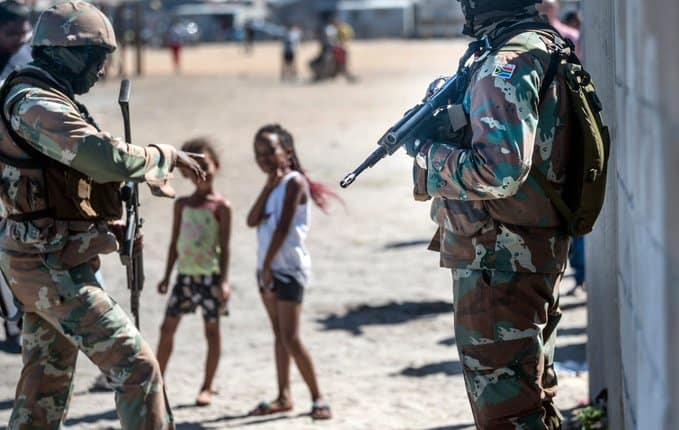
The army has arrived. Green uniforms patrol streets where gang lords once held unchallenged sway. Armored vehicles sit at intersections that were, until recently, kill zones. And yet, as the South African National Defence Force (SANDF) settles into its controversial new role on the Cape Flats, a growing chorus of voices in Parliament is asking a deceptively simple question: on what intelligence was this deployment actually based?
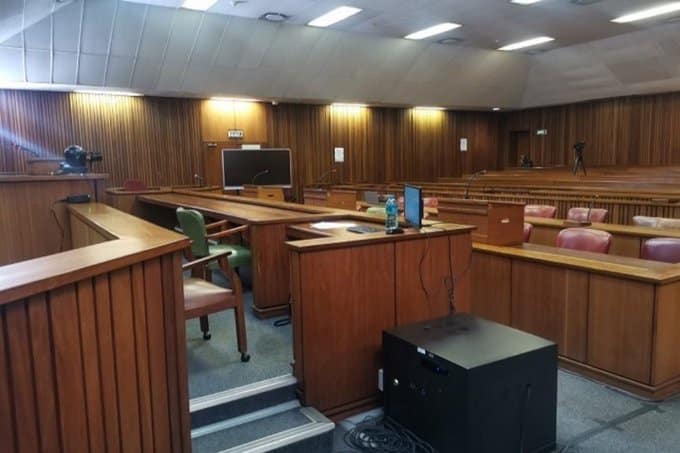
During a heated session of Parliament’s Portfolio Committee on Police, held yesterday in the Good Hope Chamber, several committee members openly challenged the executive on the rationale behind the latest military intervention in one of South Africa’s most violent ganglands. While the government has framed the deployment as a necessary response to spiraling murder rates, lawmakers from across the political spectrum demanded to see the evidence—and found it lacking.
“Respectfully, Minister, we cannot support soldiers on our streets based on vibes,” said one opposition MP, speaking on condition of anonymity due to the sensitivity of the discussions. “You say this is intelligence-driven. Then show us the intelligence. Show us the threat assessment. Show us the operational plan. Show us the exit strategy. Right now, we are being asked to take all of that on faith. And faith, Minister, is not a military doctrine.”
The Deployment: A Brief Refresher
The latest SANDF deployment to the Cape Flats was announced in late February following a particularly bloody weekend that saw 23 people killed in gang-related shootings across Philippi, Hanover Park, Nyanga, and Manenberg. The death toll included three children caught in crossfire. Public outrage was swift and seismic.
President Cyril Ramaphosa authorized the deployment of approximately 1,500 SANDF personnel to support the South African Police Service (SAPS) in what the government termed “an intensified multi-agency stabilization operation.” The soldiers were granted Section 201(2) powers under the Constitution, allowing them to conduct patrols, set up vehicle checkpoints, and—crucially—use force in self-defense or defense of others. They were not, however, granted powers of arrest or detention, which remain with SAPS.
The initial deployment was authorized for three months, with a possible three-month extension. The cost to the fiscus: an estimated R164 million.
At the time, Police Minister Senzo Mchunu described the deployment as “intelligence-led, targeted, and time-bound.” Defence Minister Thandi Modise echoed the language, promising that “the SANDF will not be a permanent fixture on the Cape Flats.”
But yesterday, in the sharp light of parliamentary scrutiny, those assurances began to fray.
The Committee Hearing: What Was Said
The Portfolio Committee on Police had convened to receive an update on the deployment from SAPS management. But within minutes, the questioning veered sharply toward the military component—and the apparent lack of a coherent intelligence framework guiding it.
Committee Chairperson Tina Joemat-Pettersson (ANC) opened the floor by noting that “multiple members have raised concerns about the strategic clarity of this operation.” She then invited the SAPS delegation to present the intelligence assessment that had triggered the request for military assistance.
What followed, according to multiple sources in the room, was a rambling and contradictory presentation.
Brigadier General Makhosini Nkosi, head of SAPS intelligence in the Western Cape, presented a slide deck showing “crime density mapping” of the Cape Flats. The maps highlighted 17 precincts with “acute gang-related violent crime.” But when pressed by MPs on whether the data demonstrated a threat beyond SAPS’s capacity to manage, Nkosi acknowledged that “the intelligence does not suggest an organized insurgency or a threat to the state’s territorial integrity.”
That admission landed like a grenade.
“Then why are we deploying soldiers?” demanded Leon Schreiber (DA), his voice rising. “The Constitution is very clear. The SANDF may be deployed in support of the police only when the police are unable to maintain public order or when the threat is of such a nature that the police lack the capacity to respond. You just told us there is no insurgency. You told us there is no threat to territorial integrity. So what exactly is the threat?”
Nkosi attempted to clarify, explaining that “the threat is to civilian lives—the murder rate constitutes a public emergency.” But Schreiber was not mollified. “Murder rates are a policing problem, not a military problem. If the answer to every spike in crime is to send in the army, we have abandoned the very idea of civilian policing.”
The Intelligence Question: Is There a “Gang-State”?
The subtext of the committee’s questioning was a long-simmering debate within South Africa’s security establishment: are the Cape Flats gangs merely a criminal justice problem, or do they constitute a form of parallel governance—a “gang-state” that requires a military response?
Some intelligence analysts have argued that gangs on the Cape Flats have evolved beyond simple criminal enterprises. The Numbers gangs, the Americans, and the Hard Livings have been linked to extortion networks that control informal settlements, run protection rackets on minibus taxi routes, and have infiltrated local government tender processes. In some areas, gang leaders operate as de facto mayors, settling disputes, collecting “taxes,” and even funding funerals and school uniforms to build community loyalty.
If that analysis is correct, the argument goes, then the threat is not merely criminal but quasi-insurgent—warranting a military response.
But MPs on the committee appeared unconvinced that the intelligence community has made that case.
“Where is the evidence that these gangs pose an organized, coordinated threat to the state?” asked Chris Pappas (DA). “We have seen no evidence of command-and-control structures that span multiple gangs. We have seen no evidence of political wings or territorial ambitions beyond drug-selling turf. What we have is very violent, very well-armed criminals. That is a SAPS problem. That is not a SANDF problem.”
Even some ANC members expressed unease. “I support the deployment in principle because our people are dying,” said Zolile Mkiva (ANC). “But I cannot support a blank check. The committee must see the intelligence. We must know what problem we are trying to solve. Otherwise, we are sending young soldiers into a situation we do not understand.”
The Operational Plan: Does One Exist?
If the intelligence basis was shaky, the questioning around the operational plan was even more damning.
Several MPs noted that the SANDF has been deployed to the Cape Flats multiple times before—in 2019 under Operation Lockdown, and again in 2021 under Prosper. In both previous deployments, soldiers conducted patrols, set up roadblocks, and then withdrew after a few months. And in both cases, gang violence returned to pre-deployment levels within weeks of the army’s departure.
“The definition of insanity is doing the same thing and expecting different results,” said Barbara Creecy (ANC), a veteran MP who has represented Cape Town constituencies for two decades. “We have done this twice before. Twice, the violence came back. Now we are doing it a third time, and I am asking: what is different? What have we learned? What is the new operational plan that will break the cycle?”
The SAPS delegation struggled to provide concrete answers. A written operational plan, dated two weeks before the deployment, was circulated to committee members. But multiple MPs described it as “vague” and “aspirational.”
The plan listed three objectives:
- Reduce gang-related homicides by 30% within 90 days.
- Disrupt gang supply chains for firearms and narcotics.
- Restore public confidence in the state’s ability to provide safety.
But the plan did not specify how these objectives would be measured, what tactics would be used to achieve them, or what the exit criteria would be. Notably, the plan did not include any mention of intelligence collection, gang infiltration, or witness protection—all of which experts say are essential to dismantling gang networks.
“It is a patrol plan, not a defeat plan,” said a security analyst who reviewed the document but was not authorized to speak publicly. “The army is being asked to walk around, look intimidating, and hope the gangs get scared. That is not a strategy. That is theater.”
The Human Cost of Unclear Strategy
For residents of the Cape Flats, the parliamentary debate may seem abstract. In Manenberg, where shootings are a near-daily occurrence, some residents have welcomed the army’s presence with open arms.
“I have lived here for forty years,” said Fatima Williams, 62, a community activist in Manenberg. “I have seen my son shot. I have buried my nephew. I have watched police drive past while gangsters stand on the corner. If the army brings one week of peace, I will take it. I do not care about their intelligence reports. I care about my grandchildren walking to school alive.”
But even Williams expressed skepticism about the long-term. “The army came before. They left. The gangsters came back. This time, I pray it is different. But in my heart, I know: if there is no plan to arrest the leaders, to protect the witnesses, to give our young people jobs, then the army is just a bandage on a wound that needs surgery.”
What Happens Next?
The committee has given the SAPS and SANDF seven days to provide a classified briefing to a small subset of committee members (cleared for state secrets) detailing the intelligence that underpins the deployment. That briefing will determine whether the committee recommends that Parliament approve the deployment’s extension beyond the initial three months.
In the meantime, the soldiers remain on the streets. The gangs, by all accounts, have not disarmed—they have simply moved some of their operations indoors, waiting for the green uniforms to leave.
“The army cannot arrest anyone,” said a Philippi community policing forum member who asked not to be named for fear of reprisal. “The army cannot gather evidence. The army cannot put gangsters in jail. All the army can do is stand there. And the gangsters know that. So they wait. They are patient. They have been waiting for decades. They can wait three more months.”
The parliamentary committee’s next public hearing on the matter is scheduled for May 15. By then, the army will be halfway through its initial deployment. And the question that MPs posed yesterday will still hang in the air—unanswered, uncomfortable, and urgent:
What, exactly, are we hoping the soldiers will achieve?
For the residents of the Cape Flats, the answer is simple: safety. But between that simple hope and the complex reality of gang violence lies a gap that intelligence reports, operational plans, and parliamentary hearings have yet to bridge. The army is here. But for how long? And to what end? Those questions, unlike the soldiers, refuse to stand still.
About The Author