In an intelligence-driven operation that shattered the tranquil Sunday morning silence of one of Johannesburg’s most affluent suburbs, Gauteng police have uncovered a sophisticated suspected drug laboratory hidden inside an upmarket Sandton home, seizing a substantial cache of chemicals, specialized equipment, and finished drug products with an estimated street value of R1.5 million.
The raid, which took place at approximately 6:00 AM on Sunday in the leafy, security-conscious enclave of Bryanston, marks one of the most significant drug lab discoveries in an upper-income area in recent years—and has raised troubling questions about the reach of organized crime syndicates into neighborhoods long considered safe havens from the drug trade.
Three suspects, two Zimbabwean nationals aged 34 and 41, and a 29-year-old South African woman, were arrested at the property and are expected to appear in the Johannesburg Magistrate’s Court on Tuesday facing charges of manufacturing and dealing in illicit substances, possession of precursor chemicals, and contravening the Drug Trafficking Act.
“This is not a small-time operation,” said Brigadier Brenda Mkhitaryan, the Gauteng provincial police spokesperson, speaking at a media briefing outside the cordoned-off property on Sunday afternoon. “The level of sophistication we encountered—the equipment, the chemicals, the organization—suggests this laboratory was supplying a significant network of dealers across Gauteng and potentially beyond. The fact that it was operating in Sandton, behind high walls and electric fences, tells us that criminals are becoming bolder and more creative in hiding their activities.”
The Raid: A Wake-Up Call in the Suburbs
The operation was the culmination of a three-month investigation by the Gauteng Provincial Anti-Drug Task Team, working in conjunction with the Hawks’ Serious Organised Crime Unit and the South African Narcotics Enforcement Bureau (SANEB). According to sources close to the investigation, police had been monitoring a syndicate believed to be importing precursor chemicals from Asia via the Port of Durban, then distributing finished drugs to nightclubs, shebeens, and street-level dealers throughout the province.
Acting on a tip-off from an informant who had purchased drugs from the Bryanston address, a team of 15 officers—including members of the Tactical Response Team and forensic specialists—executed a search warrant at the property just after dawn. The home, a three-bedroom house with a swimming pool and manicured garden, was rented by one of the Zimbabwean suspects under a false identity, according to property records.
Neighbors, many of whom had been woken by the sound of breaking glass and shouted police commands, expressed shock and disbelief.
“I’ve lived here for twelve years,” said Margaret du Plessis, 67, a retired accountant who lives two doors down. “We have a neighborhood watch. We have armed response. We have security cameras at every entrance. And all along, there was a drug lab operating right under our noses? It makes you question everything. What else is happening behind these walls?”
Another neighbor, who asked not to be named for fear of reprisal, said the occupants of the house had kept to themselves but had not aroused suspicion. “They had deliveries late at night sometimes, but we assumed it was just people working from home. They were polite, never any trouble. Now I feel sick thinking about what was actually happening in there.”
Inside the Lab: Chemicals, Cash, and Crystalline Drugs
Forensic teams spent over eight hours processing the scene, wearing hazmat suits and respirators due to the hazardous chemicals found on the premises. What they uncovered painted a picture of a professional, well-funded drug manufacturing operation.
According to Brigadier Mkhitaryan, the seized items included:
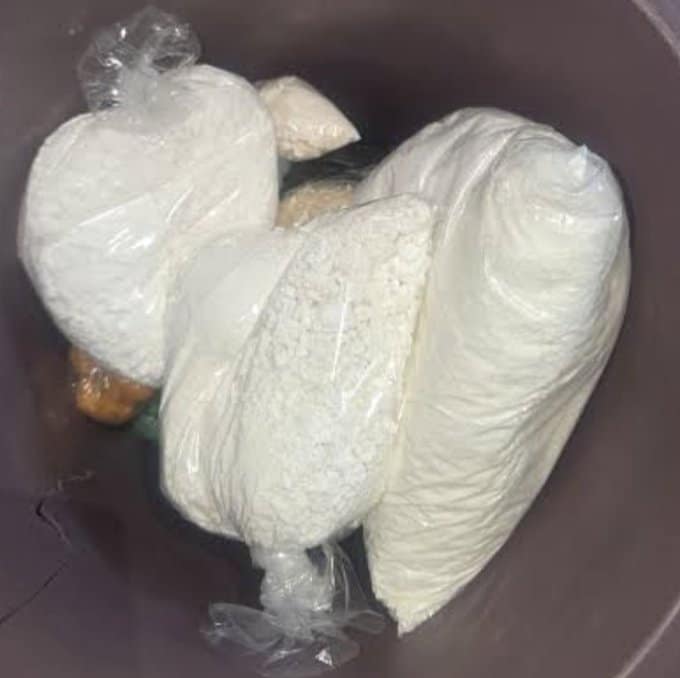
- 5 kilograms of finished crystal methamphetamine (known locally as “tik” or “crystal”), packaged in small resealable bags ready for street-level sale. The estimated street value of the finished meth alone is R1.2 million.
- Approximately 2 kilograms of a crystalline powder that preliminary tests suggest is a potent synthetic cathinone—commonly known as “bath salts” or “flakka”—a highly addictive stimulant that has been linked to violent psychotic episodes and has recently emerged as a growing problem in South Africa’s club scene.
- 3 kilograms of methaqualone powder (the active ingredient in “Mandrax”), a depressant that remains one of South Africa’s most widely abused hard drugs.
- Industrial-grade glass beakers, heating mantles, vacuum pumps, and a pill press —all consistent with a medium-scale drug manufacturing laboratory capable of producing hundreds of thousands of doses per month.
- 15 liters of acetone, 8 liters of hydrochloric acid, 10 kilograms of iodine, and 5 kilograms of red phosphorus —all precursor chemicals used in the synthesis of methamphetamine and other stimulants. The storage of these chemicals in a residential area posed a significant fire and toxic inhalation risk to neighbors, police said.
- R340,000 in cash , found in a safe hidden behind a false wall in the master bedroom, along with a ledger containing names, quantities, and what appear to be outstanding debts.
- Two 9mm pistols (one with a filed-off serial number) and a magazine of live rounds—adding firearms charges to the suspects’ legal woes.
“The presence of firearms in a drug lab is deeply concerning,” said Hawks spokesperson Captain Lloyd Ramovha. “It suggests that the individuals running this operation were prepared for violence, either to protect their product from rival gangs or to resist law enforcement. We are investigating whether this laboratory is linked to any of the recent gang-related shootings in the Johannesburg CBD and surrounding areas.”
The Suspects: Foreign Nationals and a Local Accomplice
The three arrested individuals are currently being held at the Sandton Police Station and are expected to apply for bail on Tuesday. Their identities have not been formally released pending a verification process, but sources have confirmed the following:
- Suspect A (Zimbabwean male, 41): Alleged to be the “chemist” or mastermind behind the operation. He is a trained chemical engineer who entered South Africa on a visitor’s visa in 2022 and overstayed. Police found a passport in his possession containing multiple entry stamps from China and India—countries known as sources for precursor chemicals. He has no prior criminal record in South Africa.
- Suspect B (Zimbabwean male, 34): Alleged to be the “logistics coordinator,” responsible for procuring chemicals, managing deliveries, and distributing finished product to dealers. He has a previous conviction for possession of an unlicensed firearm in 2019, for which he received a suspended sentence.
- Suspect C (South African female, 29): Alleged to be the “front” for the operation, having rented the property using her identity documents and paid the monthly rent of R22,000 in cash. She worked as a part-time real estate agent and told neighbors she was a “fashion consultant.” She has no prior criminal record.
The defense lawyers for the three suspects have not yet commented publicly, but sources indicate that legal aid has been arranged for the South African woman, while the two Zimbabwean nationals are expected to hire private counsel.
The Broader Context: Gauteng’s Drug Economy
The discovery of a drug lab in Sandton is the latest in a series of high-profile drug busts across Gauteng, which remains the epicenter of South Africa’s illicit drug trade. According to the South African Community Epidemiology Network on Drug Use (SACENDU), Gauteng accounts for over 40% of all drug-related arrests in the country, with methamphetamine, cocaine, heroin, and Mandrax being the most commonly seized substances.
What makes the Bryanston lab notable is its location. Traditionally, drug labs in South Africa have been found in industrial areas (where chemical smells are less noticeable), on remote farms (where privacy is assured), or in poorer townships (where policing is less intensive). A lab operating in a residential area of Sandton—home to corporate executives, diplomats, and wealthy professionals—represents a tactical shift.
“Organized crime syndicates are increasingly using affluent suburbs as cover,” said Dr. Rashida Manjra, a criminologist at the University of Johannesburg. “They know that police resources are stretched and that high-income areas are often patrolled by private security, not the SAPS. They also know that neighbors in these areas tend to mind their own business. There’s a perception that ‘crime happens in the townships, not here.’ That perception is dangerously naive.”
The police have not ruled out the possibility that the Bryanston lab was connected to larger, more established syndicates. “We are following the money and the chemical supply chain,” Brigadier Mkhitaryan said. “This lab did not appear out of nowhere. Someone funded it. Someone supplied it. Someone protected it. We are determined to find those people and bring them to justice.”
Community Reaction: Fear, Anger, and a Call for Vigilance
In the hours after the raid, the Bryanston Community Policing Forum (CPF) held an emergency meeting at a local church hall, attended by over 200 residents. The mood was a mixture of shock, anger, and a dawning realization that no neighborhood—no matter how wealthy—is immune to the drug trade.
“We pay exorbitant levies for security. We have patrol cars. We have biometric access gates. And yet this still happened,” said CPF chairperson Michael Berger. “We need to ask hard questions about how our security systems failed. Were the guards bribed? Were the cameras disabled? Or did we simply not want to see what was in front of us?”
Others were more sympathetic to the police, praising the operation as a success. “The system worked,” said resident Thabo Nkosi, 42. “The police did their job. They found the lab. They made the arrests. Now we need the courts to do their job. No bail. Serious sentences. We need to send a message that Sandton is not a safe haven for criminals.”
The City of Johannesburg’s Environment and Infrastructure Services Department has been called in to assess the property for chemical contamination. Preliminary tests have found traces of volatile organic compounds in the soil near the house’s rear wall, where chemicals appear to have been disposed of via a makeshift drain. A full environmental remediation could cost hundreds of thousands of rands, officials said.
The Legal Road Ahead: Charges and Possible Sentences
The three suspects face a raft of charges under South Africa’s stringent drug laws. The Drug Trafficking Act (Act 140 of 1992) prescribes a maximum sentence of 25 years imprisonment for the manufacture of illicit substances, with a minimum sentence of 15 years for first-time offenders where the value of the drugs exceeds R500,000.
Given the estimated R1.5 million street value of the seized drugs, the prosecution is expected to push for the maximum penalties. Additionally, the two Zimbabwean nationals face charges under the Immigration Act for overstaying their visas and for entering the country using fraudulent documentation.
The possession of unlicensed firearms adds another layer of severity. Under the Firearms Control Act (Act 60 of 2000), the minimum sentence for illegal possession of a firearm is 5 years imprisonment for a first offense. If the firearm is linked to any other crime (such as drug trafficking), the sentence can be imposed consecutively rather than concurrently.
Bail is expected to be vigorously opposed by the State, which will argue that the suspects are flight risks (in the case of the foreign nationals) and that they pose a danger to the community if released (given the presence of firearms and the scale of the operation).
What Comes Next: A Warning to Criminal Syndicates
For the South African Police Service, the Bryanston raid is both a victory and a reminder of the scale of the challenge ahead. While the bust removed a significant source of illicit drugs from Gauteng’s streets, it also highlighted the adaptability of organized crime.
“We are not naive,” said Gauteng Police Commissioner Lieutenant General Elias Mawela in a statement released Sunday evening. “For every lab we shut down, there are others we haven’t found yet. For every dealer we arrest, there are ten more waiting to take their place. But this raid sends a clear message: no place is off-limits to the long arm of the law. Not Sandton. Not Bryanston. Not anywhere. If you are poisoning our communities with drugs, we will find you. We will arrest you. And we will ensure that you face the full consequences of your actions.”
As forensic teams packed up their equipment and the last police vehicles departed the Bryanston street, the neighborhood began the slow process of returning to normal. But normal, for the residents who had watched the raid unfold through their security cameras and bedroom windows, would never quite mean the same thing again.
Behind the high walls and electric fences, a new awareness had taken root: the drug trade is not a distant problem. It is here. In the suburbs. Next door.
About The Author