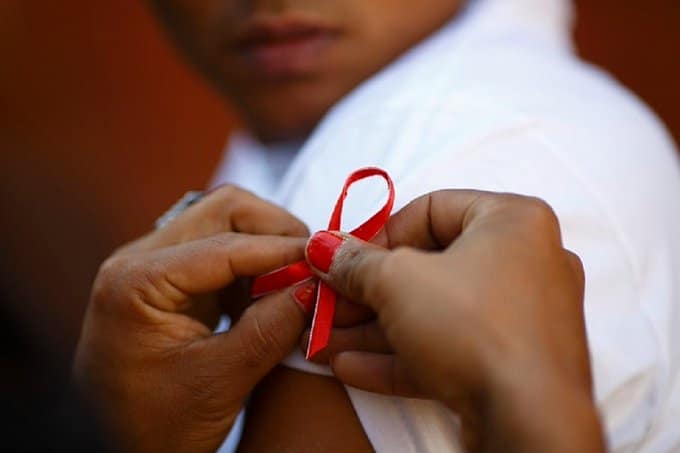
In a development being hailed as the most significant breakthrough in HIV prevention since the advent of oral pre-exposure prophylaxis (PrEP) a decade ago, the South African National AIDS Council (SANAC) has formally welcomed the arrival of lenacapavir, a revolutionary new antiretroviral drug that offers unprecedented convenience and efficacy.
The announcement, made during a special media briefing at SANAC’s headquarters in the Hatfield district of Pretoria, was met with sustained applause from activists, clinicians, and civil society representatives who have spent years advocating for expanded HIV prevention options. Lenacapavir, manufactured by Gilead Sciences, is the first HIV prevention drug administered as a twice-yearly injection—a dramatic departure from daily pills or bimonthly shots that has the potential to transform the landscape of epidemic control in a country that remains home to the world’s largest HIV burden.
“We stand at a pivotal moment in our 30-year battle against HIV,” said SANAC CEO Thembisile Xulu, her voice thick with emotion. “Lenacapavir is not merely a new drug. It is a new paradigm. For the first time, we can offer young women, adolescent girls, key populations, and anyone at ongoing risk of HIV infection a prevention method that does not rely on daily adherence, does not require frequent clinic visits, and does not announce itself to nosy family members or suspicious partners. This is the closest we have come to an HIV vaccine in terms of real-world usability.”
The Science Behind the Breakthrough
Lenacapavir belongs to a novel class of antiretrovirals known as capsid inhibitors. Unlike traditional drugs that target viral enzymes (reverse transcriptase, integrase, or protease), lenacapavir attacks the protective protein shell—the capsid—that surrounds HIV’s genetic material. By disrupting the capsid at multiple stages of the viral life cycle, the drug effectively disarms HIV before it can integrate into human cells.
The clinical trial data that led to the drug’s approval is nothing short of stunning. In the PURPOSE 1 trial, which enrolled over 5,300 cisgender women in South Africa and Uganda, lenacapavir administered every six months demonstrated 100% efficacy in preventing HIV infection. Not a single woman in the lenacapavir arm acquired HIV during the trial period. The PURPOSE 2 trial, which included men who have sex with men, transgender women, and gender-diverse individuals across multiple countries, showed 99.9% efficacy.
“Zero infections in the treatment arm of a major trial is something I have never witnessed in my 25-year career,” said Professor Linda-Gail Bekker, director of the Desmond Tutu HIV Centre at the University of Cape Town, who served as a principal investigator for the African trials. “We have seen good results with oral PrEP. We have seen very good results with the dapivirine ring and the bimonthly cabotegravir injection. But lenacapavir is in a league of its own. Twice a year. No pills to hide. No monthly appointments. It is a game-changer.”
Why Twice-Yearly Matters
For many South Africans, particularly young women between the ages of 15 and 24 who account for nearly a quarter of all new HIV infections in the country, daily oral PrEP has been a challenge. Stigma remains a formidable barrier: a young woman seen taking a daily pill may be accused of having HIV or of being promiscuous. Relationship dynamics can be coercive, with male partners demanding to know what the pills are for or flushing them down the toilet. And for those living in remote or rural areas, traveling to a clinic every month to collect a refill is a logistical and financial burden.
The twice-yearly injection collapses these barriers. A young woman can visit a clinic on her birthday and six months later, receive two quick injections (one in each buttock), and walk out protected for half a year. There is no daily reminder of her HIV risk. No pill bottle that can be discovered. No monthly commute.
“This is prevention for people who have lives,” said Naledi Mkhize, a 22-year-old peer educator from Soweto who participated in the PURPOSE 1 trial. “I am a student. I work part-time. I have a boyfriend who used to ask why I was ‘always at the clinic.’ With lenacapavir, I got my shots in January and again in July. I didn’t have to explain anything to anyone. I just lived my life. And I am still HIV-negative.”
SANAC’s Formal Welcome
At the media briefing, SANAC released a formal statement welcoming the drug’s arrival and calling for rapid, equitable, and large-scale rollout. The statement, co-signed by all four SANAC sectors—government, civil society, labor, and the private sector—laid out a series of urgent recommendations:
- Immediate registration with SAHPRA: While lenacapavir has received approvals in the United States, Europe, and several other African countries, South African Health Products Regulatory Authority (SAHPRA) approval is expected within the next 90 days. SANAC has offered to fast-track its own technical review to assist the regulator.
- Price negotiation and voluntary licensing: Gilead Sciences has announced a voluntary licensing agreement that will allow generic manufacturers in low- and middle-income countries to produce lenacapavir at affordable prices. SANAC has called for South Africa to secure a place in the first wave of generic supply, potentially bringing the cost per patient per year below $40 (approximately R750).
- Integration into existing PrEP programs: Rather than creating parallel systems, SANAC recommends that lenacapavir be offered as an additional choice within existing oral PrEP and dapivirine ring distribution networks. “Choice is the cornerstone of prevention,” the statement read. “What works for a university student in Cape Town may not work for a sex worker in Rustenburg or a truck driver in Durban. We need all options on the table.”
- Targeted initial rollout to high-incidence populations: Given limited initial supplies, SANAC has recommended that the first doses prioritize adolescent girls and young women in high-incidence districts (uMgungundlovu in KwaZulu-Natal, Buffalo City in the Eastern Cape, and Ekurhuleni in Gauteng), as well as key populations including sex workers and men who have sex with men.
The Cost Challenge
Despite the optimism, significant hurdles remain. The list price for lenacapavir in the United States is over $40,000 per patient per year—a figure that is both absurd and irrelevant to the South African context, given the voluntary licensing agreement. But even at generic prices, scaling up to reach the estimated 2.5 million South Africans who could benefit from PrEP (including current oral PrEP users and those who have never started) will require substantial domestic and donor funding.
South Africa currently spends approximately R4 billion annually on HIV prevention, most of which goes to condom distribution, voluntary medical male circumcision, and oral PrEP. Adding lenacapavir will require either new funding or reallocation from existing streams—a politically fraught decision.
“We cannot afford not to invest,” argued Mitchell Warren, executive director of AVAC, a global HIV prevention advocacy organization. “Every new HIV infection costs the state approximately R2.5 million in lifetime treatment costs. Preventing a single infection with lenacapavir, even at generic prices, is a fraction of that. This is not an expense. It is an investment with an extraordinary return.”
Voices from the Ground
Outside the SANAC briefing, a small group of activists from the Treatment Action Campaign (TAC) held a quiet vigil, holding placards that read “Twice-Yearly Freedom” and “Lenacapavir for All, Not for Few.” TAC’s deputy general secretary, Sibongile Tshabalala, addressed the media with measured urgency.
“We welcome SANAC’s welcome,” she said dryly, drawing a few chuckles. “But welcoming is not delivering. We have seen too many miracle drugs announced with fanfare and then rationed into irrelevance. South Africa has the largest HIV epidemic in the world. We should be first in line for the best prevention tools. Not third. Not tenth. First.”
She pointed to the delay in rolling out cabotegravir (the bimonthly injectable PrEP), which received regulatory approval over two years ago but remains unavailable in most public sector clinics. “That cannot happen again,” she said. “Lenacapavir must go from the port to the patient in months, not years.”
The Global Context
South Africa is not alone in its enthusiasm. The World Health Organization has already included lenacapavir in its updated guidelines for HIV prevention, and the Global Fund to Fight AIDS, Tuberculosis and Malaria has signaled its willingness to finance procurement for eligible countries. Meanwhile, PEPFAR (the US President’s Emergency Plan for AIDS Relief), which provides significant HIV funding to South Africa, has launched a technical working group to explore implementation strategies.
But the global supply of lenacapavir will initially be limited. Gilead has announced that it will prioritize low- and middle-income countries with the highest HIV burdens, and South Africa’s sheer scale of need—over 7.5 million people living with HIV, and an estimated 150,000 to 200,000 new infections annually—makes it an obvious priority.
“We are not just a customer,” said Dr. Sandile Buthelezi, Director-General of the National Department of Health, who attended the SANAC briefing. “We are a partner. South African researchers led the trials. South African communities participated. South African regulators are reviewing the data. We have earned the right to early access.”
A Roadmap to Rollout
SANAC has proposed an ambitious but realistic roadmap for lenacapavir’s introduction:
- Months 1-3: SAHPRA approval, price negotiation, and training materials development
- Months 4-6: Initial procurement of 50,000 doses, training of clinic staff at 200 sentinel sites
- Months 7-12: Phased rollout in high-incidence districts, with real-time monitoring of uptake and adherence
- Year 2: Expansion to all districts, integration into school-based health programs, and targeted outreach to key populations
- Year 3: Full national coverage, with lenacapavir offered as a standard option alongside oral PrEP at all primary healthcare facilities
The roadmap, SANAC officials stressed, is contingent on sustained political will and adequate funding. With national elections recently concluded and a new administration settling in, there is cautious optimism that HIV prevention will remain a bipartisan priority.
The Human Face of Prevention
As the briefing drew to a close, SANAC played a short video featuring Thandiwe (not her real name), a 19-year-old from KwaMashu in Durban who became pregnant at 17 and tested HIV-positive at her first antenatal visit. She had never been offered PrEP. She had never heard of lenacapavir. Her baby, fortunately, was born HIV-negative, but Thandiwe will take antiretrovirals for life.
“I am not here to make anyone feel guilty,” she said in the video, her face partially obscured to protect her identity. “I am here to say that my infection was preventable. I did not know my risk. I did not have a choice. Lenacapavir is a choice. Please give it to young women before they become me.”
The room fell silent. Several people wiped their eyes. Thembisile Xulu, the SANAC CEO, walked to the podium one last time.
“That is why we are here,” she said softly. “Not for headlines. Not for political credit. For Thandiwe. For the next Thandiwe. For the millions of young South Africans who deserve a future free of HIV. Lenacapavir is here. Now we must ensure it reaches them.”
The briefing ended. Cameras were packed away. Notebooks closed. But the work—the hard, grinding, bureaucratic, political, financial work of turning a scientific breakthrough into a public health reality—was only just beginning.
About The Author