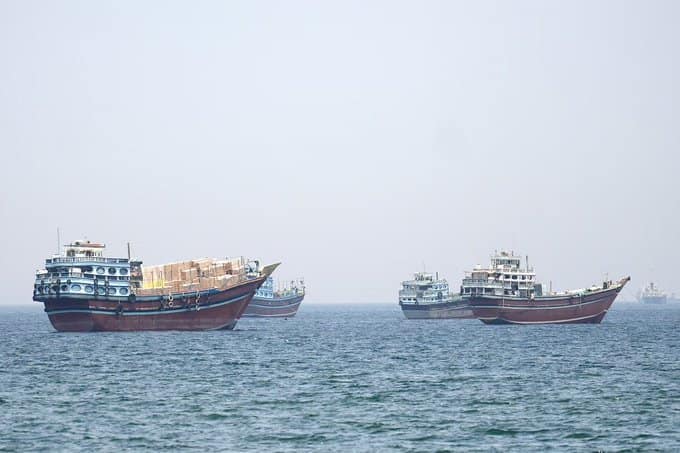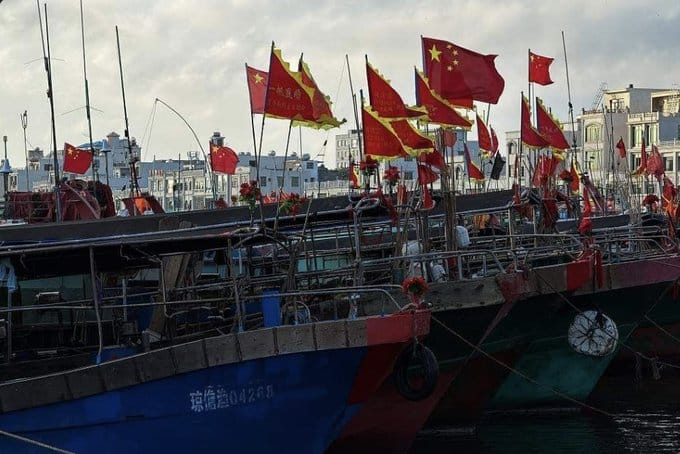
Cape Town – In a dramatic operation off the coast of South Africa, authorities have intercepted four Chinese-flagged fishing vessels that unlawfully entered the country’s Exclusive Economic Zone (EEZ) and territorial waters, in what officials are calling a serious breach of maritime law and a direct threat to the nation’s sovereign control over its rich marine resources.
The interception, which was confirmed by the Department of Forestry, Fisheries and the Environment, as well as the South African Navy, marks one of the most significant maritime enforcement actions in recent years. It underscores the growing challenge of illegal, unreported, and unregulated (IUU) fishing in the waters off Southern Africa, a problem that costs the continent billions of rands annually and depletes fish stocks that are vital for local food security and economic sustainability.
The Operation: Detection and Apprehension
According to official sources, the four vessels were first detected by South Africa’s coastal radar and surveillance systems as they moved suspiciously close to the coastline, venturing well inside the 200-nautical-mile EEZ, and in some instances, entering the 12-nautical-mile territorial waters without the required permits or prior notification.
The South African Navy was promptly alerted, and a patrol vessel was dispatched to investigate. Upon hailing the ships, it was confirmed that they were flying the flag of the People’s Republic of China and were crewed primarily by Chinese nationals. When questioned, the captains of the vessels were unable to produce valid licenses to fish in South African waters or provide a satisfactory explanation for their presence in the restricted zone.
Rear Admiral Bubele Mhlana, speaking on behalf of the Navy, confirmed that the vessels were escorted to a designated port for further inspection. “Our mandate is to protect the territorial integrity of our maritime domain,” Mhlana stated. “When we identified these vessels operating without authorization, we acted decisively to assert our sovereignty and bring them in for questioning.”
The Cargo: Evidence of Poaching?
The vessels are now undergoing a rigorous inspection by a multi-disciplinary team comprising fisheries control officers, environmental inspectors, and police. Authorities are combing through the ships’ logs, examining their catches, and analyzing their equipment to determine whether they were actively fishing while illegally inside South African waters.
Early indications suggest that the vessels may have been engaged in IUU fishing, a practice that involves fishing without permission, catching protected species, or using prohibited gear. South Africa’s waters are home to valuable stocks of hake, snoek, and various pelagic species, all of which are carefully managed under quota systems to prevent overexploitation.
“These interceptions are critical,” said a spokesperson for the Department of Forestry, Fisheries and the Environment. “Illegal fishing is not a victimless crime. It undermines our scientific management of stocks, it hurts our local fishermen who play by the rules, and it robs the South African people of a natural resource that belongs to them.”
A Global Problem with Local Consequences
The incident off the South African coast is a microcosm of a much larger global challenge. IUU fishing is estimated to account for up to 20% of the global catch, with an annual value of up to $23 billion. For developing nations like South Africa, with extensive coastlines but limited maritime patrol capacity, it is a persistent and frustrating threat.
Chinese fishing fleets have been at the center of numerous international incidents in recent years. The world’s largest distant-water fishing fleet has been accused of encroaching on the waters of multiple countries across the Pacific, the Indian Ocean, and off the coast of West Africa. While China has signed international agreements aimed at curbing illegal fishing, the sheer scale of its fleet makes monitoring and enforcement a diplomatic and logistical challenge.
The interception comes at a time of growing global scrutiny of Chinese maritime activities, not just in the South China Sea but in waters far from its shores. For South Africa, the incident presents a delicate diplomatic challenge: how to firmly enforce its laws while maintaining a constructive bilateral relationship with its largest trading partner.
Diplomatic Fallout and Next Steps
The Chinese Embassy in Pretoria has been officially notified of the incident. In initial responses, Chinese diplomats have stated that they are awaiting the outcome of the South African investigation and expect their nationals to be treated in accordance with international maritime law.
The vessels’ crews could face severe penalties if found guilty of illegal fishing. Under South Africa’s Marine Living Resources Act, they could be subject to hefty fines, the confiscation of their vessels and catch, and even criminal charges against the captains and owners.
Environmental groups in South Africa have hailed the interception as a welcome show of strength. “For too long, our waters have been treated as an open buffet by foreign fleets,” said a representative from a local marine conservation NGO. “This sends a clear message that South Africa is watching and that we will act to protect our marine heritage.”
As the inspection of the four Chinese vessels continues, the incident serves as a stark reminder that in the vast, blue expanse of its EEZ, South Africa’s sovereignty is only as strong as its willingness and ability to enforce it. The fate of the intercepted ships and their crews will now be decided by the evidence found in their holds and the legal processes that follow.
About The Author