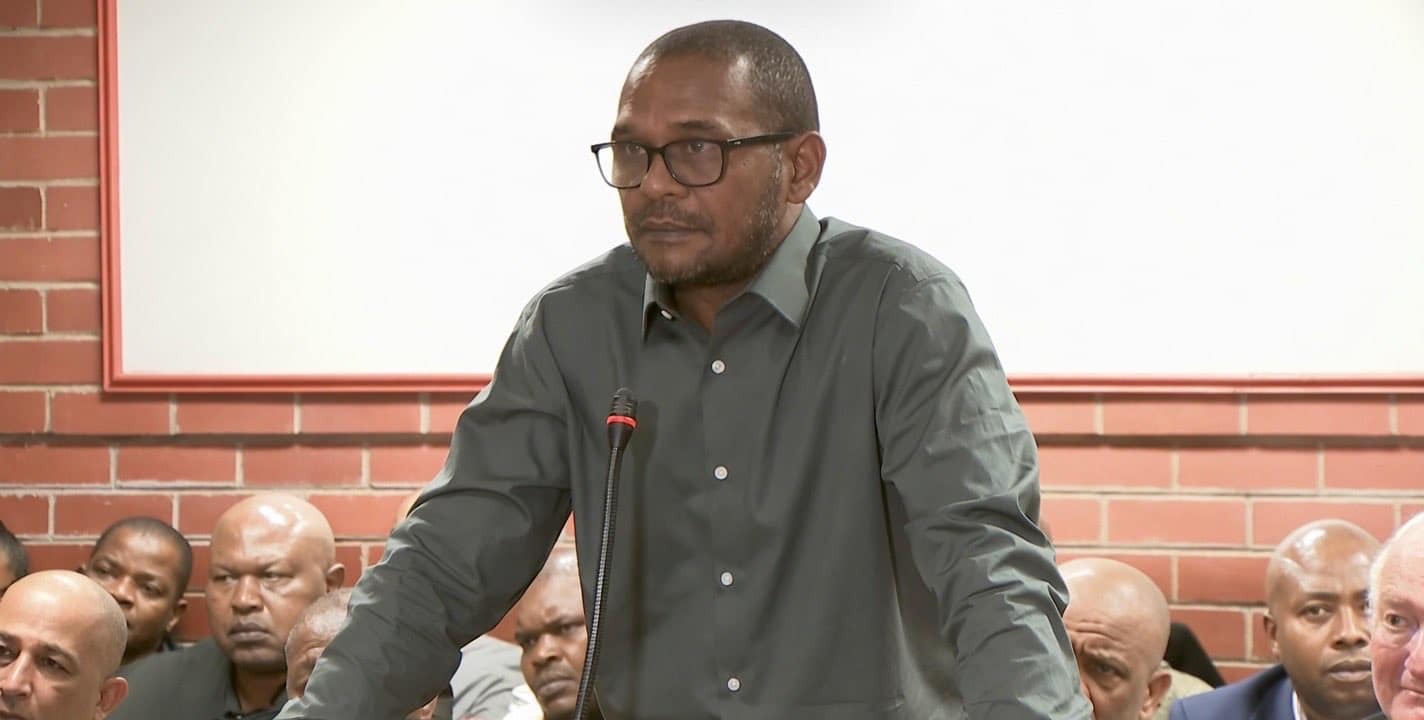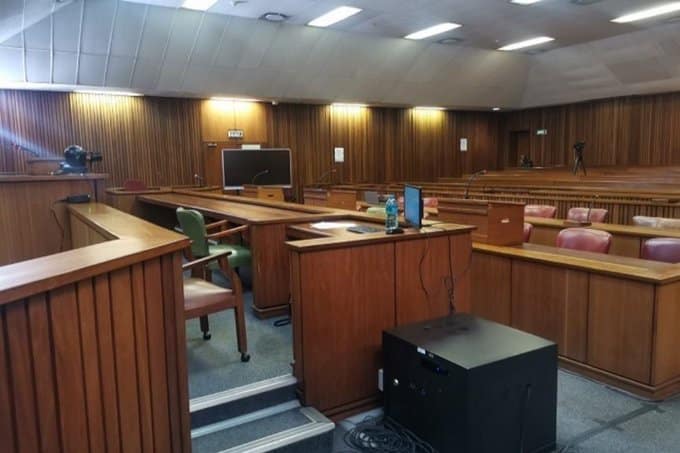
The heavy wooden doors of the High Court in Pretoria’s central district have swung open for many dramatic trials over the decades—political assassinations, state capture magnates, corruption scandals that shook the nation. But few have gripped South Africa’s collective heart like the murder trial of Senzo Meyiwa, the beloved Bafana Bafana captain whose death in 2014 became a national wound that refuses to heal.
On Monday, that wound will be probed once again as a new witness ascends the witness stand. The identity of the witness has been tightly guarded by the National Prosecuting Authority (NPA), but sources close to the trial have confirmed that the individual was not on the original witness list and has come forward only recently—sparking intense speculation about what new evidence may be introduced.
The trial, now in its third year, has been a labyrinth of delays, recanted testimonies, legal wrangling, and courtroom drama. Five men stand accused of murdering Meyiwa, who was shot dead on the night of October 26, 2014, at the home of his girlfriend, singer Kelly Khumalo, in Vosloorus, Ekurhuleni. All five have pleaded not guilty. The state alleges a botched robbery that turned fatal; the defense has floated theories ranging from an accidental shooting to a cover-up involving those present in the house.
Now, more than eleven years after the beloved goalkeeper fell, a new voice promises to break the silence—or deepen the mystery.
The Case So Far: A Trial Haunted by Ghosts
To understand the weight of Monday’s testimony, one must revisit the tortured path that led to this moment.
Senzo Meyiwa was just 27 years old when he died—at the peak of his career, the nation’s number one, a hero of the 2013 Africa Cup of Nations qualifying campaign. His death sent shockwaves through South Africa. For weeks, the country mourned. Flags flew at half-mast. Fans laid flowers outside the Orlando Stadium, his home ground.
But the investigation that followed was anything but heroic. For years, no arrests were made. Theories multiplied: a botched robbery, a love triangle gone wrong, a conspiracy involving those closest to him. The case grew cold, then colder.
It was not until 2020 that the state arrested five men: Muzikawukhulelwa Sibiya, Bongani Sandiso Ntanzi, Mthobisi Prince Mncube, Mthokoziseni Ziphozonke Maphisa, and Fisokuhle Ntuli. Their arrests were hailed as a breakthrough—but the trial, which finally began in 2022, has been anything but smooth.
Key witnesses have changed their stories. Forensic evidence has been disputed. The defense has relentlessly cross-examined state witnesses, exposing inconsistencies and alleged coaching. The trial has been adjourned dozens of times due to illness, legal technicalities, and once, a bomb scare.
To date, the state has called nearly thirty witnesses. None have provided the “smoking gun” that prosecutors desperately need.
Enter the new witness.
The New Witness: Who Are They?
The NPA has released few details, citing the need to protect the witness’s safety. What is known:
- The witness is not a family member of the accused or the deceased.
- They were not present at the Vosloorus home on the night of the murder.
- They have come forward voluntarily in recent weeks, claiming to have information that has not previously been presented to the court.
- Their testimony is expected to span multiple days.
Legal analysts have floated several possibilities:
Possibility 1: An Insider from the Investigation
The witness could be a former police officer or forensic expert who worked on the original investigation and has since developed a conscience about evidence that was suppressed or mishandled.
Possibility 2: An Associate of the Accused
The witness could be someone who was close to one or more of the five men and heard admissions or confessions that were never reported.
Possibility 3: A Bystander with Overheard Information
The witness could be someone who was in the vicinity of the Vosloorus home that night and saw or heard something crucial—a vehicle, a conversation, a figure fleeing the scene.
Possibility 4: A Digital Forensics Specialist
The witness could be an expert who has analyzed phone records, social media activity, or location data that places the accused at the scene in ways previously unestablished.
“The state is clearly hoping for a breakthrough,” said legal analyst and criminal defense attorney Mpumelelo Zikalala. “After three years of trial, the prosecution needs something dramatic. A new witness, late in the game, suggests they have found a missing piece. But the defense will tear into this witness’s credibility. They will ask: why now? Why not years ago? That is the question the state must answer.”
The Defense’s Response: Ready for Battle
Defense lawyers for the five accused have reacted warily to news of the new witness. In a joint statement, they said: “We have not been provided with the identity or statement of any new witness. The state is required to disclose all evidence to the defense in a timely manner. We will review whatever is presented and respond appropriately in court.”
Speaking outside the court last week, one of the defense attorneys, who asked not to be named, was more candid.
“This smells of desperation,” the attorney said. “The state’s case has been crumbling for months. Witnesses have contradicted themselves. Forensic evidence has been challenged. Now, on the eve of what should have been closing arguments, they produce a ‘new witness’? We will cross-examine this person thoroughly. If their story does not hold up, the state’s credibility will be shredded.”
The defense has consistently maintained that the five accused are scapegoats—pawns in a failed investigation that never seriously considered other suspects, including some of the people who were inside the house when Meyiwa was shot.
That theory has been fueled by the controversial testimony of several state witnesses, including Kelly Khumalo’s mother, Ntombifuthi Khumalo, who changed her account of the night multiple times under questioning.
The Meyiwa Family: A Long Wait for Justice
For the Meyiwa family, each adjournment, each delay, each new twist is another small death.
Senzo’s father, Samuel Meyiwa, has attended almost every court session since the trial began. Now in his late seventies, he walks with a cane but refuses to miss a single day. When asked about the new witness, his eyes filled with a mixture of hope and exhaustion.
“We have been here before,” he said quietly, speaking outside the court after a previous hearing. “New witnesses. New evidence. New promises. Then nothing changes. My son has been gone for eleven years. Eleven years. How many witnesses does it take to find the truth?”
Senzo’s mother, Ntombifuthi Meyiwa, passed away in 2019 without seeing justice done. Samuel carries her memory with him to court each day, along with a faded photograph of his son in his Bafana Bafana jersey.
“I want to see these men convicted, if they are guilty,” Samuel said. “But more than that, I want to know what happened. The whole truth. Not a version of it. Not a story that changes. The truth. That is all I have ever asked for.”
Sister Senzo’s sister, Nomalanga Meyiwa, has been more outspoken. In a recent interview, she accused the justice system of failing her family.
“Eleven years is not justice. It is torture,” she said. “Every delay, every postponement, every new witness—it rips the wound open again. We have learned not to hope. But we have not learned to stop caring.”
The Kelly Khumalo Factor: An Unresolved Shadow
No discussion of the Senzo Meyiwa trial is complete without addressing the elephant in the courtroom: Kelly Khumalo, the singer and reality TV star who was Meyiwa’s girlfriend at the time of his death. She was present in the house when he was shot and has been repeatedly implicated in conspiracy theories and social media speculation—though she has never been charged with any crime.
Khumalo has not been called as a state witness, a decision that has drawn sharp criticism from legal experts and the defense alike. Her legal team has consistently denied any involvement, and Khumalo herself has maintained that she has cooperated fully with investigators.
The new witness’s testimony could, potentially, shed light on Khumalo’s role—or lack thereof—on that fateful night. But legal sources caution against premature speculation.
“The state has made it clear that Kelly Khumalo is not a suspect,” said legal analyst Zikalala. “Unless the new witness provides evidence that directly implicates her, that position is unlikely to change. But the public’s fascination with her involvement will not disappear. It is the ghost that haunts this trial.”
The Technicalities: Admissibility and Timing
The introduction of a new witness at this late stage of the trial is procedurally unusual but not unprecedented. Section 167 of the Criminal Procedure Act allows the court to permit additional evidence at any time before judgment—provided that the evidence is relevant, credible, and could not reasonably have been obtained earlier.
“The state will have to satisfy the judge that this witness’s testimony is genuinely new and not simply a late addition to patch holes in their case,” said retired judge David Makhura. “If the defense can show that the state had access to this witness months or years ago and chose not to call them, the court may exclude the evidence. That is a high bar.”
The judge presiding over the trial, Tshifhiwa Maumela, has a reputation for patience and meticulousness. He has allowed numerous delays and procedural interventions, often to the frustration of the public. But he has also shown a willingness to admit evidence late if it serves the interests of justice.
Monday’s proceedings will begin with legal argument over the admissibility of the new witness. Only if Judge Maumela rules in the state’s favor will the witness take the stand, likely later in the week.
The Public’s Vigil: A Nation Still Watching
Despite the passage of time, the Senzo Meyiwa trial remains one of the most closely followed legal proceedings in South African history. Courtroom seats are filled daily by journalists, legal scholars, and ordinary citizens who have followed the case for over a decade.
Outside the court, a small group of Meyiwa supporters gathers each morning, holding placards that read: “Justice for Senzo” and “Eleven Years is Too Long.”
“The people have not forgotten,” said Thabo Molefe, 34, a construction worker who has taken unpaid leave to attend several days of the trial. “Senzo was not just a footballer. He was a symbol. He was us. When he died, something in this country broke. We are here to watch it being repaired—or to witness the failure.”
Social media, too, remains ablaze with commentary. Hashtags like #SenzoMeyiwa, #JusticeForSenzo, and #MeyiwaTrial trend regularly whenever new developments emerge. The new witness has already generated thousands of posts, many of them speculative, some of them reckless.
“Social media is not a court of law,” warned legal commentator Rebecca Nthulane. “But it reflects the public’s hunger for resolution. People are tired of theories. They want facts. This new witness may provide them—or may add another layer of confusion.”
What Comes Next
Monday’s proceedings will begin at 10 a.m. in Courtroom 4D of the Pretoria High Court. The state has indicated that the new witness will be the only matter on the day’s agenda, suggesting that the testimony—if admitted—will be lengthy.
If the witness is allowed to testify, the following scenarios are possible:
- The testimony is explosive and credible — leading to new lines of questioning, possible re-opening of previously closed evidence, and significant delays as the defense prepares to respond.
- The testimony is weak or contradictory — bolstering the defense’s claim that the state is scrambling, and potentially leading to an early acquittal of some or all of the accused.
- The testimony is blocked by the judge — a major blow to the prosecution, likely leading to renewed calls for the NPA to explain its handling of the case.
Whatever happens, the eyes of a wounded nation will be fixed on that courtroom.
Epilogue: The Weight of a Single Voice
As the sun rises over Pretoria on the morning of the new witness’s expected testimony, Samuel Meyiwa will make his way to the High Court, cane in hand, photograph in pocket. He will take his usual seat in the public gallery, third row from the front, left side. He will fold his hands and wait.
He has waited eleven years. He can wait one more day.
And somewhere in the bowels of the courthouse, a witness—whose name we do not yet know, whose face we have not yet seen—will prepare to speak. Their words may change everything. Or they may change nothing at all.
But they will be heard. And in a trial haunted by silence, that act alone is a kind of justice.
“I don’t know if this new person will tell the truth,” Samuel Meyiwa said quietly, as he turned to leave the court after a previous hearing. “But I know this: my son deserves someone to speak for him. He cannot speak anymore. So we must. And if this witness can speak for him, I will listen. I have always listened.”
The doors of the High Court will open. The witness will step forward. And South Africa will hold its breath.
About The Author