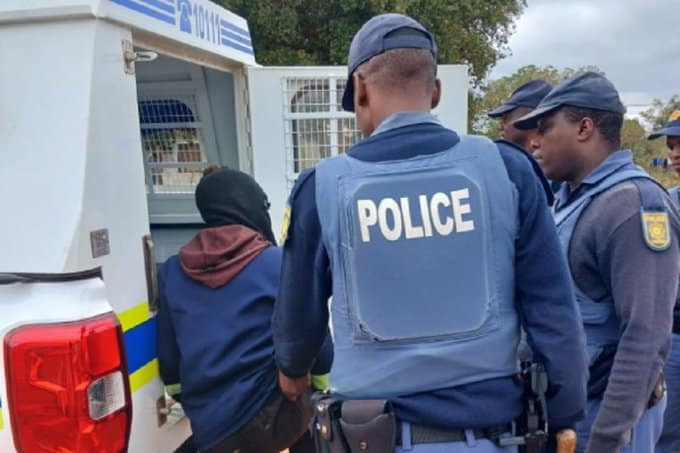
For seven days, from the dusty township streets of Khayelitsha to the plated-glass office towers of Sandton, from the sugarcane fields of KwaZulu-Natal to the mining belt of the Northern Cape, the South African Police Service moved with a singular, relentless purpose to squeeze the space where criminals breathe.
When the dust settled on the morning of 4 May 2026, the numbers were staggering.
Between 27 April and 3 May, SAPS announced the arrest of 13,373 suspects across all nine provinces under Operation Shanela, the multi-disciplinary crime-fighting initiative that has become the flagship of the country’s renewed war on lawlessness. The operation, which combines high-visibility patrols, intelligence-driven raids, roadblocks, and targeted operations at known crime hotspots, has delivered what Police Minister Senzo Mchunu called “the most productive week of arrests since the operation was revamped in late 2025.”
“Operation Shanela is not a public relations exercise,” Mchunu told reporters at a press briefing in Pretoria on Monday. “It is a surgical, sustained, and strategic offensive against the criminal networks that have held our communities hostage. These 13,373 arrests represent 13,373 potential moments of justice for victims. But more importantly, they represent 13,373 messages to would-be criminals: we are coming for you.”
Breaking Down the Numbers
The arrests spanned a wide spectrum of criminal activity, from serious violent crimes to petty offenses.
According to the detailed breakdown provided by National Police Commissioner General Fannie Masemola, the operation netted:
- 368 suspects arrested for murder
- 472 suspects arrested for rape and sexual assault
- 1,204 suspects arrested for assault with intent to cause grievous bodily harm
- 891 suspects arrested for robbery, including house robbery, business robbery, and carjacking
- 2,156 suspects arrested for drug-related offenses, including dealing and possession
- 1,678 suspects arrested for driving under the influence of alcohol
- 1,023 suspects arrested for illegal possession of firearms and ammunition
- 489 suspects arrested for burglary at residential and commercial premises
- The remaining 5,092 suspects faced charges ranging from fraud, theft, possession of stolen property, and contravention of protection orders to illegal immigration and malicious damage to property.
In addition to the arrests, police seized 247 illegal firearms, over 3,500 rounds of ammunition, 894 kilograms of various illicit drugs (including crystal meth, cocaine, and mandrax), and approximately 12,000 liters of illicit and counterfeit alcohol.
“It is important to note that these are not just statistics,” General Masemola said, his voice measured but firm. “Behind every number is an operation. Behind every operation are intelligence hours, surveillance, risk to police officers, and finally, the removal of a dangerous individual from circulation. Our members have worked around the clock, and I salute them.”
Provincial Hotspots
While every province contributed to the total, three provinces stood out for the sheer volume of arrests.
Gauteng, the country’s economic heartbeat and crime epicenter, led the pack with 4,012 arrests. High-density operations in Soweto, Tembisa, Alexandra, and the Johannesburg CBD accounted for the majority. In one notable raid in Hillbrow, police arrested 89 undocumented foreign nationals and seized counterfeit goods valued at over R2 million.
KwaZulu-Natal followed closely with 2,891 arrests. Operations in Umlazi, Inanda, and the Durban city center focused heavily on drug dens and illegal firearms. In Phoenix, a joint operation between SAPS and private security led to the dismantling of a hijacking syndicate that had been operating along the N2 corridor.
Western Cape recorded 1,978 arrests, with intense focus on gang-affiliated areas of the Cape Flats, including Hanover Park, Manenberg, and Philippi. Police seized 43 illegal firearms in the province alone.
The Eastern Cape, Free State, North West, Mpumalanga, Limpopo, and Northern Cape collectively accounted for the remaining 4,492 arrests.
Tactics and Technology
Operation Shanela, meaning “to sweep” or “to net” in Sesotho, employs a three-tiered strategy: visibility, intelligence, and community partnership.
During the week in question, police established 1,247 roadblocks and vehicle checkpoints nationwide, stopping and searching over 187,000 vehicles. They conducted 4,893 targeted raids at identified crime hotspots, including known drug houses, shebeens operating without licenses, and buildings housing suspected illegal immigrants.
“We are no longer reactive,” explained Major General Thulani Mkhwanazi, the national coordinator for Operation Shanela. “We are predictive. We use crime pattern analysis, hotspot mapping, and community tip-offs to deploy resources exactly where they are needed most. A criminal should wake up every morning wondering if today is the day we knock on their door.”
The operation also leveraged newly deployed technology, including automatic number plate recognition cameras at major intersections, drone surveillance in high-risk areas, and a centralized real-time crime intelligence center in Pretoria that coordinates operations across provincial lines.
Criticism and Praise
The massive arrest figures have drawn both applause and concern.
Community policing forums (CPFs) in several provinces praised the operation’s visibility. “For the first time in years, we saw police walking the beats in our townships at night,” said Thabo Mofokeng, chairperson of the Tembisa CPF. “That alone made a difference. People felt safe enough to sit outside their homes again.”
However, civil society organizations have raised alarms about potential rights violations. The Legal Resources Centre issued a statement noting that mass arrests often lead to overcrowding in holding cells and the detention of individuals who may later be released due to lack of evidence.
“Arrests are not convictions,” said advocate Naledi Mokoena of the LRC. “We welcome efforts to combat crime, but we must remain vigilant that the rights to due process, legal representation, and a fair trial are not sacrificed on the altar of statistics. We have seen too many cases where innocent people spend weeks in jail simply because they were in the wrong place at the wrong time.”
The South African Prisoners’ Rights Advocacy group also warned that the arrest surge would further strain an already overcrowded correctional system. As of Monday, remand detention facilities in Gauteng and KZN were operating at 187% capacity.
The Human Stories
Beyond the macro numbers, Operation Shanela unfolded in countless small moments that will never make a press release.
In Gqeberha, a 72-year-old grandmother finally saw the arrest of a neighborhood teenager who had been breaking into her home repeatedly for six months.
In Rustenburg, a survivor of domestic violence watched as police took away the ex-boyfriend who had violated a protection order 11 times.
In Polokwane, a tip-off from a taxi driver led to the recovery of a stolen vehicle and the arrest of a hijacking suspect who had been on the run for two years.
“These are the victories that do not make headlines,” said General Masemola. “But they are the victories that restore hope. One arrest at a time. One family at a time.”
What Comes Next
The arrested suspects will begin appearing in magistrates’ courts across the country this week, with the state expected to oppose bail in most serious cases. The National Prosecuting Authority has assigned additional prosecutors to handle the surge in dockets.
Meanwhile, Operation Shanela shows no signs of slowing. Commissioner Masemola confirmed that the next wave of operations is already being planned, with a focus on cross-border smuggling routes and the illegal mining sector.
“We have drawn a line in the sand,” Minister Mchunu said. “For decades, criminals believed they could operate with impunity—that the police were under-resourced, under-trained, or simply did not care. Operation Shanela proves otherwise. We care. We are capable. And we are coming.”
As the sun set over the Union Buildings on Monday evening, the blue lights of SAPS vans still flickered across the nation—a reminder that in the long war against crime, there are no final victories, only relentless campaigns.
For 13,373 suspects, the campaign has now moved from the streets to the courtroom. For the rest of South Africa, the question remains: Can this momentum be sustained?
The answer, according to the men and women in blue, is a firm and unyielding: Shanela. We sweep. We net. We do not stop.
About The Author